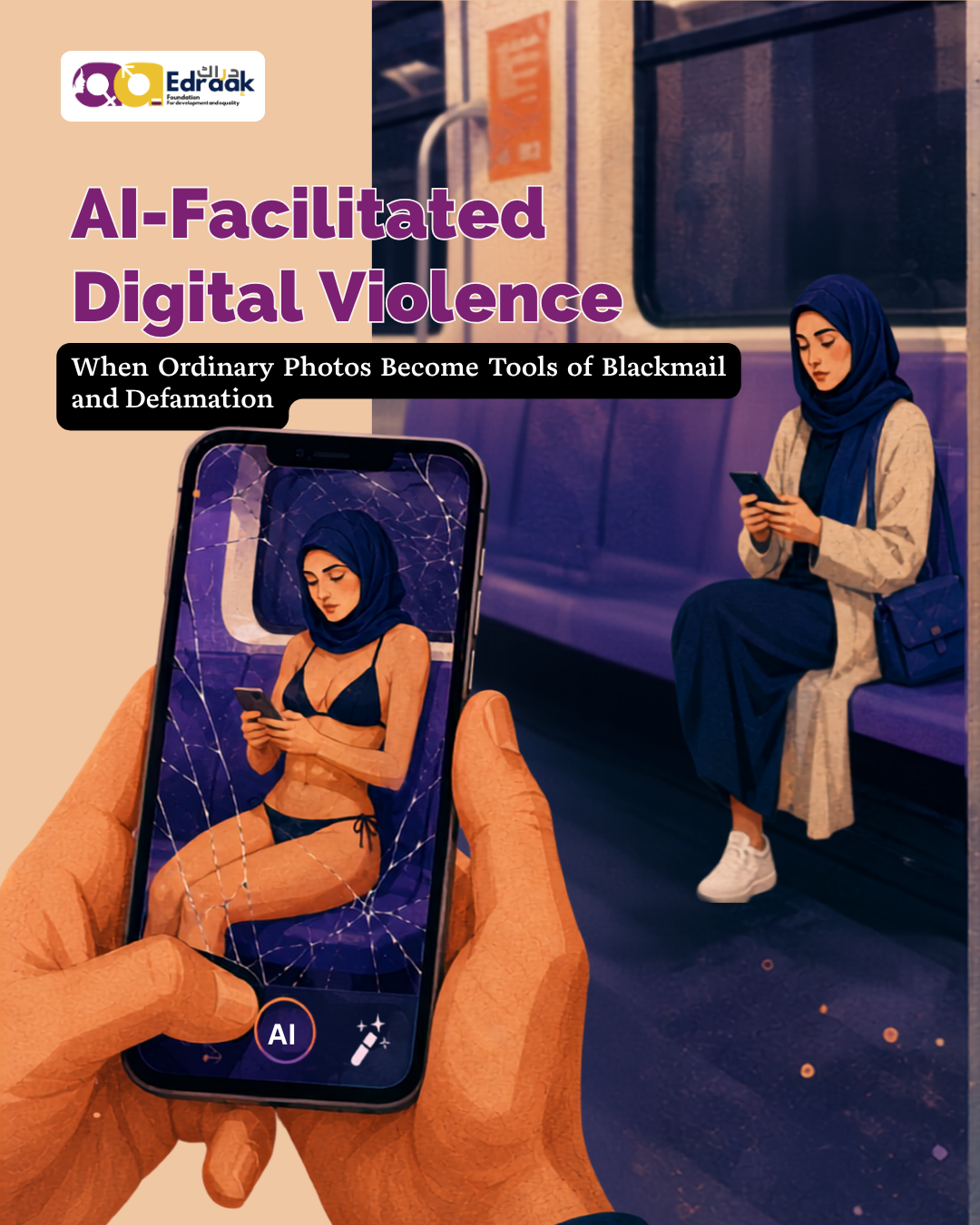
From the beginning of 2026 to the present, we have documented more than 16 cases in which AI tools were used to threaten, blackmail, or defame women and girls. In most of these cases, ordinary photos were manipulated to create fabricated sexually explicit images or videos.
1. A New Form of Violence That Can Target Anyone
We are witnessing a new form of violence against women and girls—one that technology is making easier to carry out and increasingly difficult to escape.
It does not target one particular group. We have seen it used against actresses, activists, journalists, and women working in public life, as well as students, teachers, working women, homemakers, and young girls.
Age, profession, or social background offers no real protection. In some cases, all an abuser needs is an ordinary photo found online and access to an AI tool, sometimes even a free one to create sexually explicit content depicting something that never actually happened. That fabricated content can then be used to threaten, blackmail, or publicly shame the victim.
2. The Harm Goes Far Beyond the Image
These cases often receive little public attention until they escalate, make the news, or lead to even more serious violence.
One recent example is the case of “Aya,” who tragically died by suicide in Belqas, Dakahlia Governorate, following the circulation of fabricated images used to defame her. Sadly, she is not the first. Other cases have ended in victims being killed, dying by suicide, or being subjected to severe public shaming and harassment.
The recent controversy surrounding the “Masaken El-Shoush” incident in Sohag is another stark reminder of the dangers associated with the circulation of sexual content and the allegations surrounding it. Investigations are still ongoing, and the exact nature of all the material circulating online has not been conclusively established. The incident resulted in the deaths of a woman and two young men, while images, videos, allegations, and competing narratives continued to spread online.
One of the most serious aspects of this kind of abuse is that putting the perpetrator behind bars does not necessarily mean the ordeal is over for the victim.
A court may convict the perpetrator, but the images can remain on people’s phones, stored in accounts, or saved elsewhere—and can resurface and be shared again months or even years later.
3. Recognizing the Reality—and Talking About It
A recent field study conducted by Edraak Foundation for Development and Equality with 110 women and girls active in public life clearly showed that digital violence is no longer limited to insults or online disputes.
AI tools have become part of the ways women are pressured, defamed, blackmailed, and silenced—including through fabricated images, videos, and audio recordings.
That is why, last April, Edraak Foundation issued a call for urgent legislative and regulatory action targeting generative AI websites and applications that enable what is commonly known as “nudification”—the creation and distribution of sexually explicit content using images of real people without their consent.
In July, during our discussions with policymakers and other stakeholders on AI-facilitated digital violence, one of the clearest conclusions was that we urgently need laws and regulatory frameworks that can keep pace with these emerging forms of digital crime.
4. The Judiciary Is Calling for Action Too
The judiciary has also begun to draw attention to this legal gap.
In the reasoning of a judgment issued by the Damanhour Criminal Court in June 2026 in a case involving the blackmail of a woman through AI-generated fabricated content that violated her dignity, the court emphasized that modern technologies were not developed to be misused to threaten people’s security or undermine their reputation and dignity.
The court called on the Egyptian legislature to urgently establish a legal framework governing the use of AI technologies and preventing their exploitation to violate privacy or facilitate defamation and blackmail.
5. What We Are Saying in Egypt Is Part of a Much Larger Global Conversation
The concerns we are raising in Egypt are part of a much broader global debate.
In July 2026, the preliminary report of the United Nations’ independent international scientific panel on AI explicitly warned that AI is contributing to the spread of sexual abuse material and fabricated sexual content, with women and children among those most at risk.
UNICEF has raised similar concerns. According to a study by UNICEF, ECPAT, and INTERPOL covering 11 countries, “at least 1.2 million children” had images of them manipulated into sexually explicit images over the course of a single year.
6. The Law Must Keep Pace with Technology
We need laws that can keep pace with emerging forms of digital crime, particularly abuses involving AI.
At the same time, we need faster, more direct channels for coordination with digital platforms so that non-consensual and fabricated sexual content can be removed as quickly as possible.
Victims should not have to spend days or weeks trying to convince a platform that the fact that her face appears in a video does not mean that the video is real—or that she ever participated in it.
You can access Edraak’s Digital Safety Guide, which offers practical guidance on how to respond to this form of digital violence, through the link below. _الدليل الإرشادي وصلة آمنة
To report cases of digital violence:
– National Council for Women: 15115
– Cybercrime Hotline: 108