Edraak Foundation has released a qualitative study titled “How Do Women in Egypt Make Their Medical Decisions Regarding Their Sexual and Reproductive Health?” The study draws on the experiences of 135 participants through focus group discussions conducted across three governorates — Cairo, Dakahlia, and Aswan.
The research highlights the social, cultural, and economic factors that influence women’s health-related decisions, including family pressure, the concept of virginity, lack of sexual education, fear of stigma, and the dominance of healthcare providers in medical decision-making.
Findings reveal that the uterus is often perceived as part of a woman’s gender identity, that postponing treatment until after marriage remains common due to prevailing social norms, and that negative personal experiences within the healthcare system deeply affect women’s trust in health services.
The study recommends reforming the relationship between healthcare providers and women, enhancing sexual education, and empowering women to make informed decisions that respect their privacy, autonomy, and dignity.
📎 To read the study summary: How do women in Egypt make medical decisions regarding their sexual and reproductive health
Author: mohamed
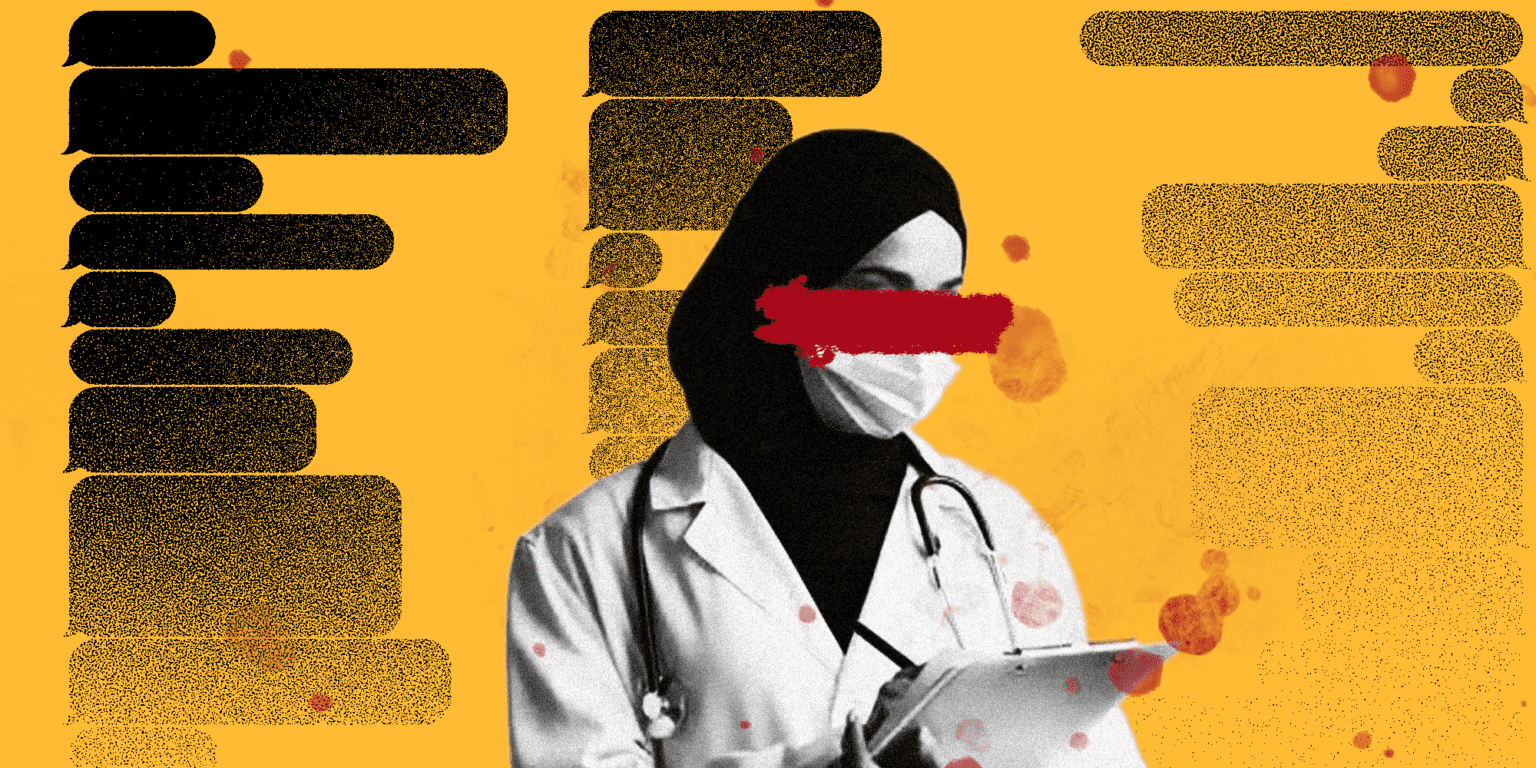
Digital Sexual Harassment Targets SRHR Activists in Egypt
Written by: Isra Saleh
Direct messaging (DMs), Mai points out, is often the main channel of interaction with such content due to societal restrictions around discussing sexuality. Thus, many prefer to ask questions privately. Yet these private channels are just as often flooded with unsolicited sexual images and explicit harassment, transforming a supposed educational space into a site of abuse.
In a world where knowledge about the body is restricted and sexual and reproductive health and rights (SRHR) are deemed “taboo”, those who attempt to break the silence often become targets of harassment, abuse, and defamation. This pattern is not accidental. It reflects a deeper patriarchal entitlement that treats women’s bodies as publicly accessible and punishes those who claim authority over sexual knowledge.
In Egypt, the issue is intensified as sexuality is tightly interwoven with honour, family reputation, and state-endorsed moral discourse. Accordingly, women SRHR activists challenge a multi-layered patriarchal social construction, including both public and private patriarchal control at the same time. As a result, the challenges they are exposed to extend far beyond scarce resources or social stigma to also include various forms of sexual harassment, abuse, and every tactic to intimidate women who dare to open a serious and scientific discussion about SRHR and push them into silence.
Read the full article at the following link:
Digital Sexual Harassment Targets SRHR Activists in Egypt
Activity summary 2025
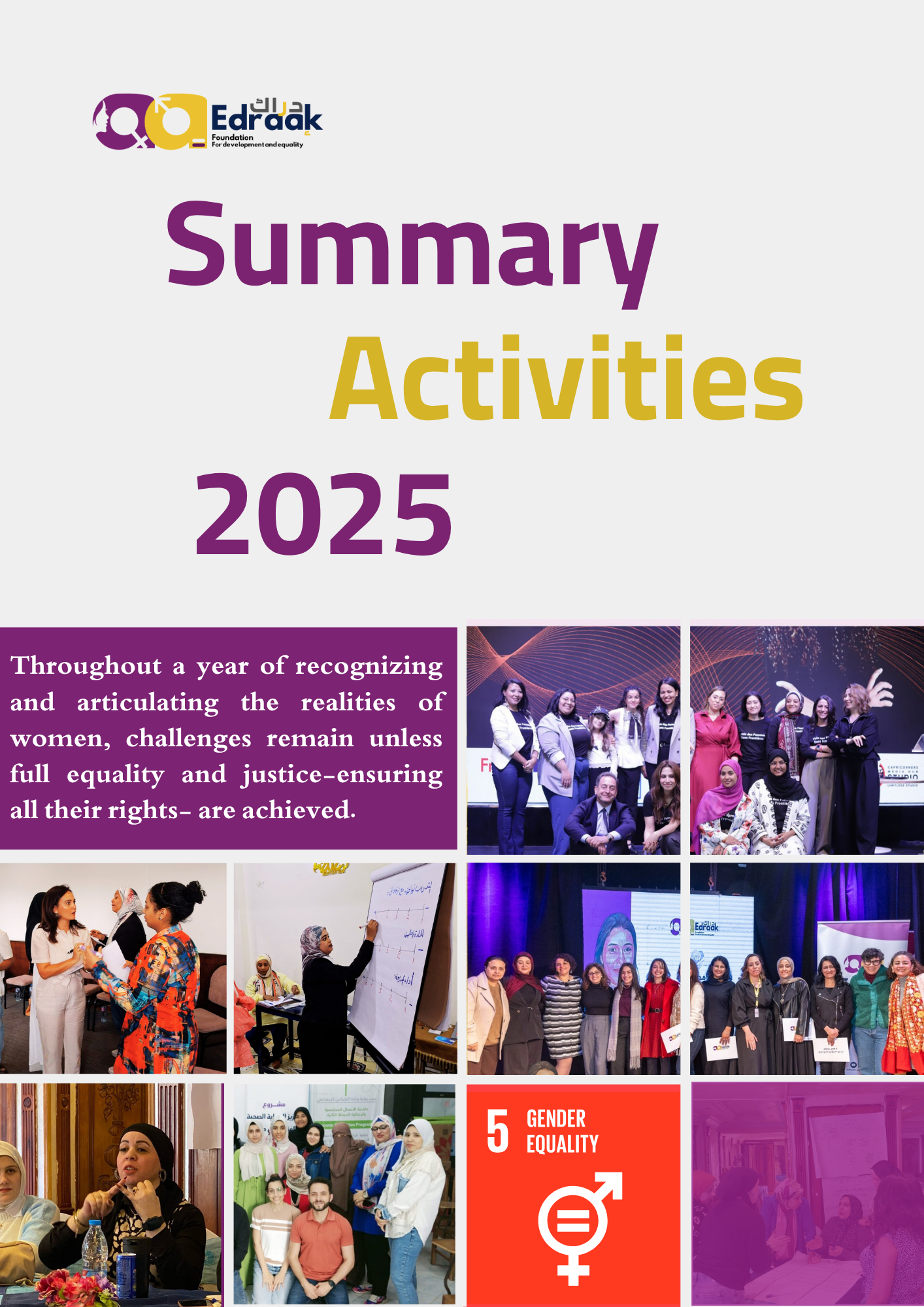
Edraak Foundation for Development and Equality is pleased to share with you the 2025 Activity Summary, which documents the foundation’s key achievements over the course of the year, including reports, studies, campaigns, workshops, training programs, and community events, as part of our ongoing work to support women and girls and to express their issues with honesty and responsibility.
This report reflects part of the foundation’s efforts to create safer spaces for expression, learning, and participation, and to work on a range of issues, including digital violence, sexual and reproductive health, research writing, and audio content and podcast production, in addition to advocacy, monitoring, and knowledge production.
To read the activity summary
Activity summary EN 2025
Fear harassment, not false accusations
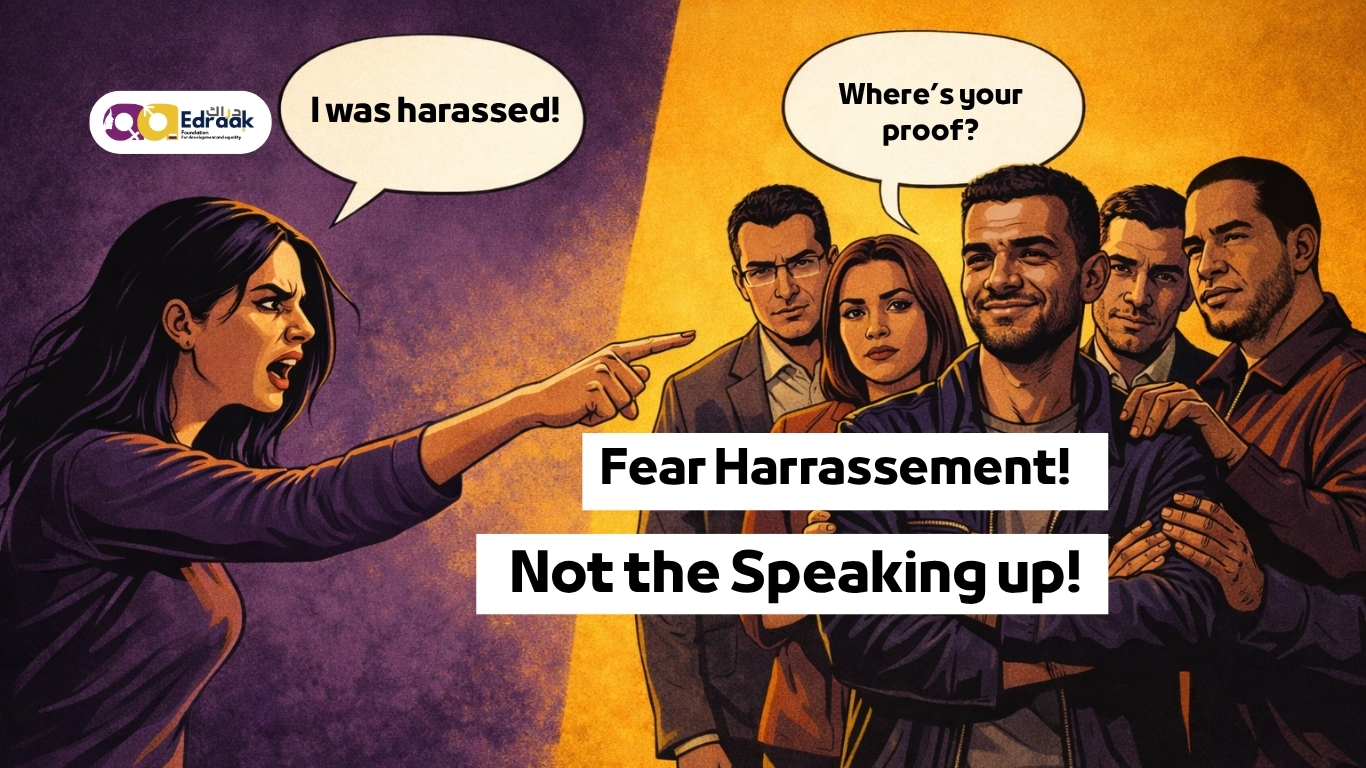
Every time a woman comes forward and says, “He sexually harassed me,” the first question often asked is: “Are we supposed to believe her without evidence?”
At first glance, this may seem like a reasonable question. Any allegation should be subject to scrutiny. Justice requires evidence and due process, and the principle that a person is innocent until proven guilty remains fundamental. The problem, however, is that this question is often raised in isolation from the reality of how sexual harassment actually occurs. It is treated as though it concerned a clear, material crime with witnesses and tangible traces, when in fact harassment rarely takes that form.
Sexual harassment is not like theft, where something visible has been taken, nor is it a crime that always leaves medically documented evidence. It often happens in concealment: in the dark, in crowded public spaces, on public transport, behind closed office doors, in moments of abuse of authority, or within relationships marked by clear imbalances of power. It may happen in seconds, sometimes with no witnesses at all, and sometimes in front of witnesses who choose to look away. Its very nature is that it often occurs in secrecy. To demand that a survivor immediately produce proof is therefore to impose a second burden on top of the harm itself: the burden of proving what was designed to leave little trace.
The reporting gap and the myth of widespread false accusations
A statistical analysis published in 2012 compiled data from multiple sources to compare public fears of false accusations with the actual barriers surrounding the reporting of rape and sexual assault.
What the data consistently show is not an epidemic of false reporting, but a profound crisis of underreporting. Some estimates cited in the study suggest that reporting rates may not exceed 10% in certain contexts, meaning that approximately 90 out of every 100 incidents never reach law enforcement at all. Other studies place non-reporting rates between 75% and 95%. While figures vary across studies and settings, the consistent finding is that a vast proportion of sexual violence never enters the criminal justice system in the first place.
Why does this happen? Because reporting is not a simple act. In practice, it often means that a woman must submit to invasive questioning about the details of her body, her choices, and her private life. She may be asked what she was wearing, where she was, why she went there, why she was out at that hour, why she did not resist, why she remained silent, or why she is speaking now. It means entering a long and exhausting process that may still end without accountability: the case may be dismissed, closed, or result in acquittal for lack of sufficient evidence. In some cases, reporting also exposes women to very real risks of retaliation, especially when the perpetrator holds social, professional, or institutional power.
By contrast, the most methodologically rigorous estimates, including research cited by the National District Attorneys Association (NDAA), place false reports within a range of 2% to 8% of reports made to the police. Two clarifications are essential here. First, this percentage refers only to cases that were formally reported, not to the full number of incidents that occurred. Second, a false report is not the same as a case that did not end in conviction. The absence of a conviction does not mean the absence of a crime. Evidence may be insufficient, witness testimony may conflict, a survivor may withdraw under pressure, or institutional processes may themselves be flawed.
When these realities are placed side by side, the imbalance becomes clear. Public discourse often magnifies the small statistical possibility of false accusation while minimizing the overwhelming scale of abuse that remains undisclosed, unreported, or unaddressed.
What does it mean to “believe survivors”?
When we say Believe Survivors, we are not calling for the abandonment of justice, nor are we arguing that allegations should replace investigation. Rather, we are calling for a shift in the starting point. Instead of beginning with automatic suspicion, we begin with serious, good-faith listening.
Believing survivors means refusing to treat dishonesty as the default assumption. It means recognizing that women who come forward often do so with full awareness of the costs they may pay: damage to reputation, strained family and social relationships, professional consequences, online abuse, and pressure from both the perpetrator’s community and their own. In many societies, a woman who speaks about sexual violence knows that her private life, dignity, and credibility may be placed under harsher scrutiny than the conduct of the person she accuses.
To acknowledge this reality is not to suspend standards of proof. It is simply to understand that speaking out is rarely easy, socially rewarded, or risk-free. The claim that accusations are an easy instrument of revenge ignores the immense social and psychological cost that many women bear when they choose to speak.
Justice requires evidence, but society chooses where to place its doubt
Criminal justice must continue to rely on investigation, evidence, and rigorous procedural standards. This is a basic right owed to any accused person. But the public conversation is broader than the courtroom. It is also about whose pain we minimize, whose fear we amplify, and whose voice we treat as credible from the outset.
When society is more afraid of false accusations than of harassment itself, it sends a devastating message to survivors: if you speak, your first battle will not be against the violence you endured, but against the assumption that you are lying.
We need to recalibrate our moral compass. A society that begins with mockery, doubt, or suspicion makes it harder for survivors to come forward. A society that listens seriously while preserving the demands of justice helps narrow the enormous gap between the scale of sexual violence and the small fraction of cases that are ever reported.
Fear harassment, not disclosure. Because the data, even with all the limitations inherent in social research, do not point to a flood of false accusations. They point instead to a vast ocean of violations that remain unheard, unreported, and unaddressed.
Not for lack of effort …. but by exclusion
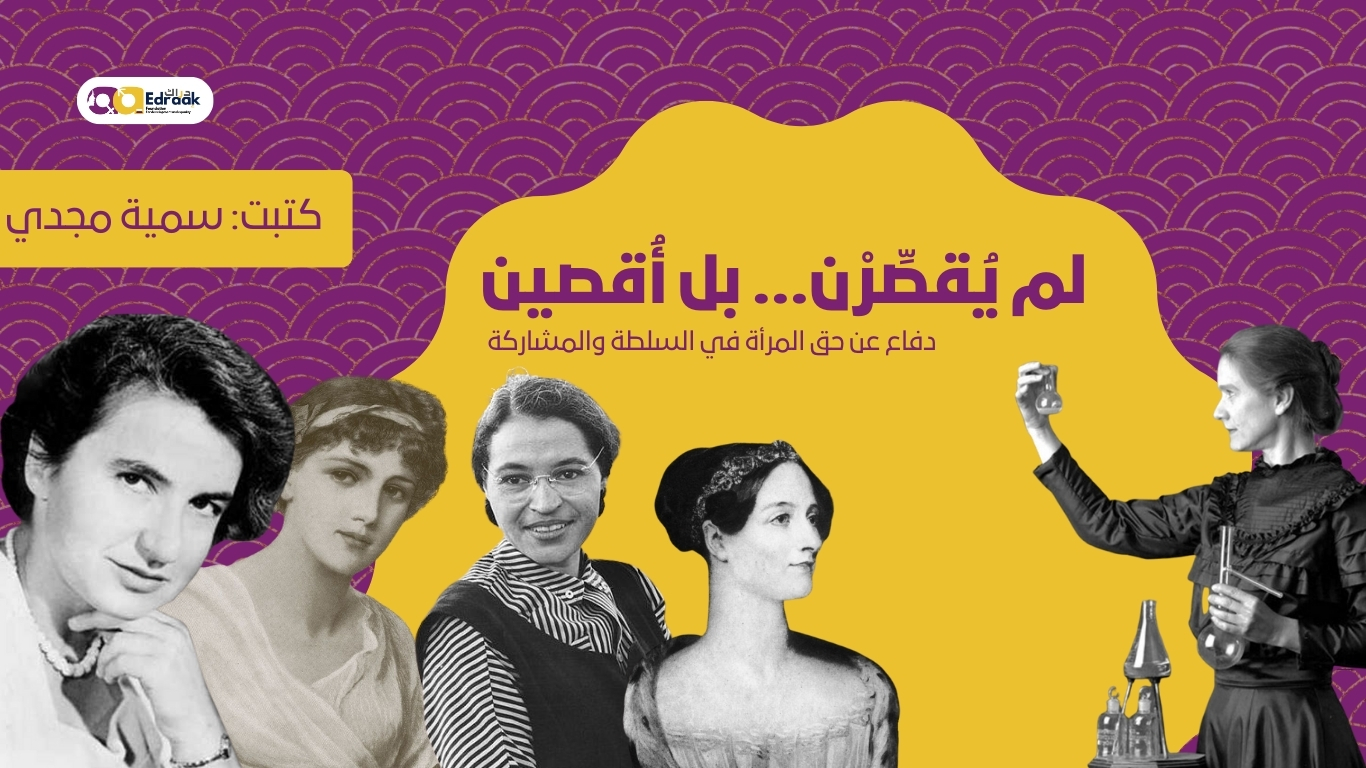
The renewed debate surrounding the appointment of Egyptian women to leadership roles within Egypt’s House of Representatives has once again stirred familiar questions about women’s legitimacy in holding positions of power, their standing in society, and the persistent attempt to tie that legitimacy to selective readings of women’s “historical achievements.” Such arguments are often used to imply an inherent deficiency in women’s capacities as a sex thereby justifying the withdrawal of their most basic rights. Yet the debate, as it is currently framed, is built on clear fallacies. It is neither coherent nor evidence-based; rather, it seeks to distort reality. This text aims to dismantle those assumptions carefully, in order to foreground the facts and to restore a truthful picture of women’s capabilities and their place in society.
Maternal death was not a “natural condition” it was a consequence of neglect
From the beginning of the twentieth century through its mid-point, maternal mortality during pregnancy and childbirth was extremely high worldwide even in countries with relatively strong resources because obstetrics and maternal care were still underdeveloped, and regular, specialized healthcare services were not available to women at scale. In that era, the risk of death in childbirth was treated as an ordinary feature of women’s lives, in the absence of preventive plans and advanced medical interventions of the kind we now consider standard.
With medical progress in the second half of the twentieth century starting with the discovery of antibiotics and the development of institutional maternal care maternal deaths declined dramatically across the world. This shift makes one central point unmistakable: the availability of specialized healthcare saves lives, year after year, particularly for women who were finally able to experience childbearing as part of a normal life course, rather than as a recurring encounter with imminent death.
What the numbers tell us: progress, but not equality
According to UNICEF data, global deaths related to pregnancy and childbirth declined by approximately 40% between 2000 and 2023 from around 328 to 197 deaths per 100,000 live births largely due to the expansion of healthcare services and improvements in the quality of care before and after birth.
Despite this progress, the gap between lower- and higher-income countries remains stark. In low-income countries, maternal mortality reaches about 346 deaths per 100,000 live births, compared to only 10 per 100,000 in high-income countries. This disparity reveals a profound inequality in women’s chances of survival and in their ability to fulfill reproductive roles alongside other roles in education, work, and public life.
How does this connect to reproductive roles and women’s status in society?
The long history of high maternal mortality and inadequate healthcare reflects, in part, the traditional social positioning of women where women were often viewed first and foremost as reproductive caregivers: a “source of births,” rather than a full human being with rights and freedoms. In that period and still today in many societies pregnancy and repeated childbearing are treated as a core expectation placed upon women. This expectation frequently pulls girls out of education and employment and pushes them into narrowly domestic roles.
The social assumption that a woman’s primary function is childbirth and family care not education or work has historically contributed to depriving girls of adequate schooling and appropriate healthcare. This, in turn, increased health risks, restricted life opportunities, and weakened women’s participation in economic and political life.
Today, in many low-income settings, child marriage and girls’ withdrawal from school under pressure of early marriage and early childbearing remain widespread reflecting the continued dominance of social norms over women’s ability to shape their futures, rather than enabling their full participation in society based on their capabilities.
Education and early marriage: a social lens with layered impacts
One of the most significant obstacles women face is not their capacity, but the social expectations and predefined roles imposed on them from childhood. From an early age, girls in many societies are raised around ideals of appearance and obedience, and are socialized into the notion that their future is confined to marriage and family care. These early gender templates limit girls’ educational opportunities, weaken their ability to make independent decisions, and normalize a society that demands women conform to narrowly defined roles.
The effects extend into working life. The more a girl learns and completes her education, the more her chances increase to exercise her right to work and to participate politically. Conversely, the absence of education or the dominance of traditional templates constrains choices, pushing girls into predetermined pathways such as early marriage or full dependency.
Reality shows that in low-income countries, or in societies that fail to provide women with comprehensive education and health protection, these social templates continue to reproduce constraints on women’s participation even alongside medical progress and modern schooling. The challenge, therefore, is not only enabling women to reach positions of authority, but also dismantling stereotypes from childhood and ensuring equal educational and health opportunities.
All of this results in women’s participation in public life whether in the labour market, political life, or community decision-making being far lower than it should be, not because of “fate,” and not because women are inherently unqualified as some claim, but because the social system did not provide equal opportunities from the outset.
Rights and equality are not granted based on “historical achievements”
Equality in rights is not bestowed on the basis of historical accomplishments, numbers of inventions, or the accumulation of awards. It is an inherent entitlement that belongs to every human being at birth, regardless of sex or background.
Linking women’s political participation and their access to leadership roles to “proof” in the form of historical achievements or comparing the number of scientists between men and women, or between peoples is a logical fallacy used to justify exclusion. Basic rights such as education, health, work, and political representation are not privileges to be earned; they are rights that must be guaranteed equally to every citizen, from the moment of birth.
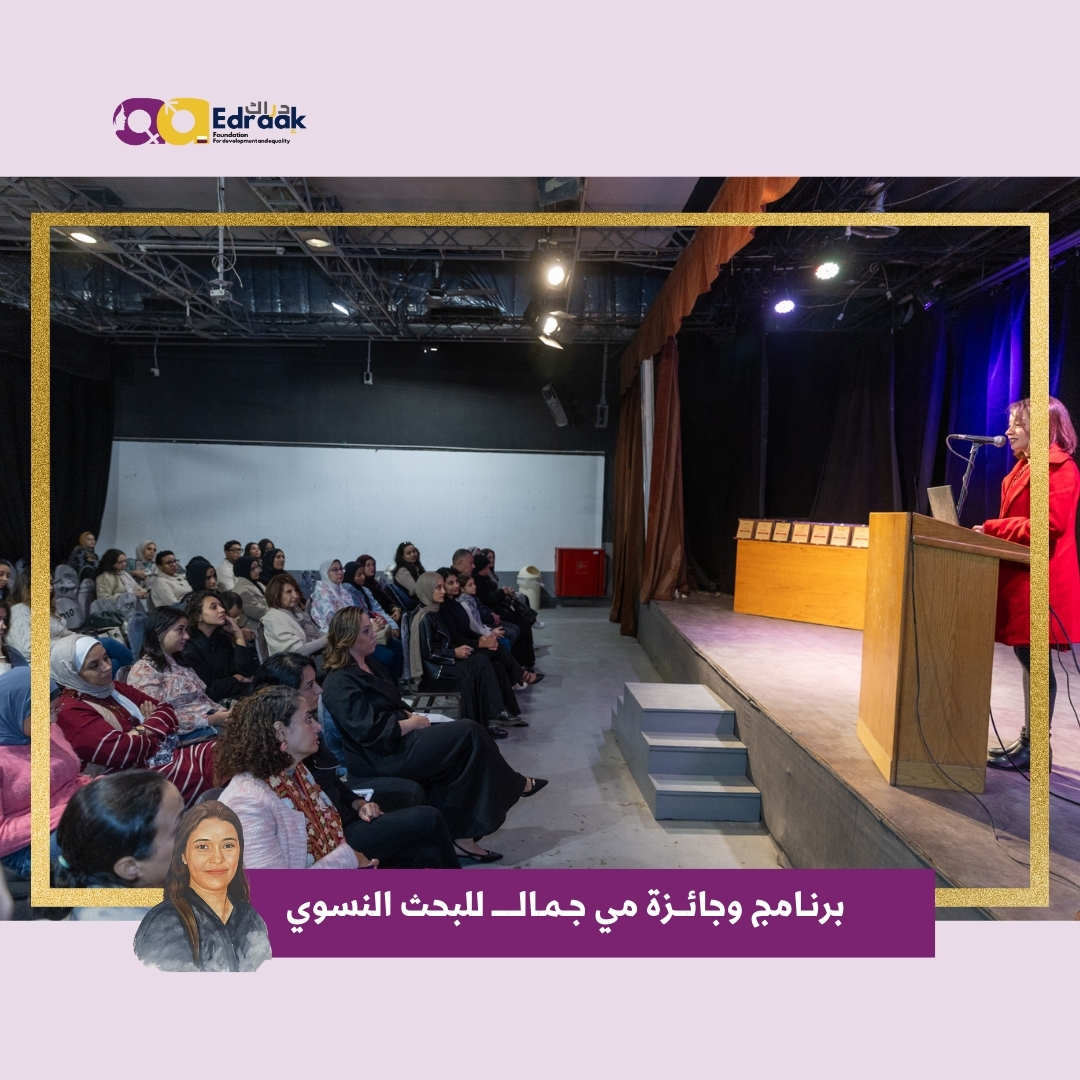
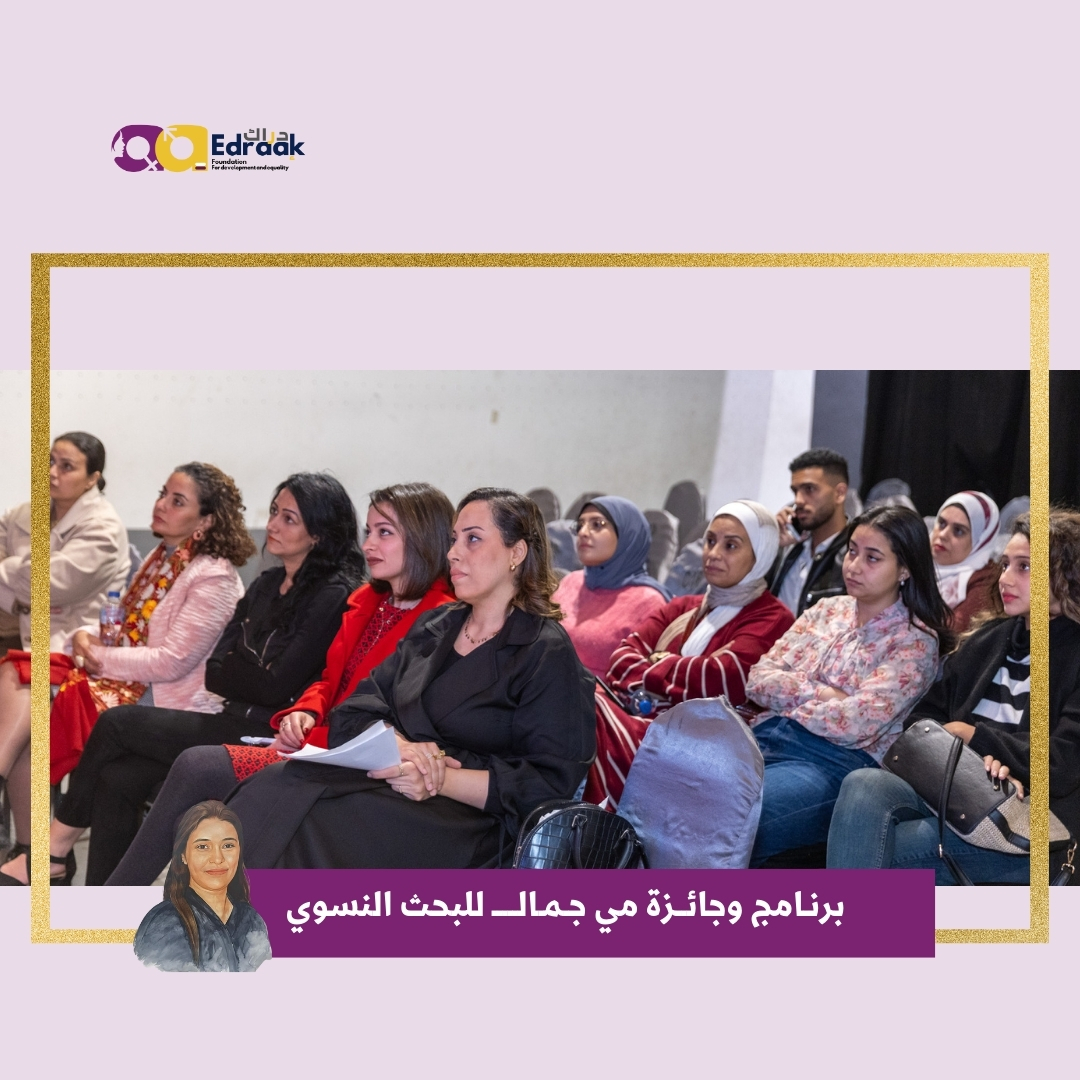
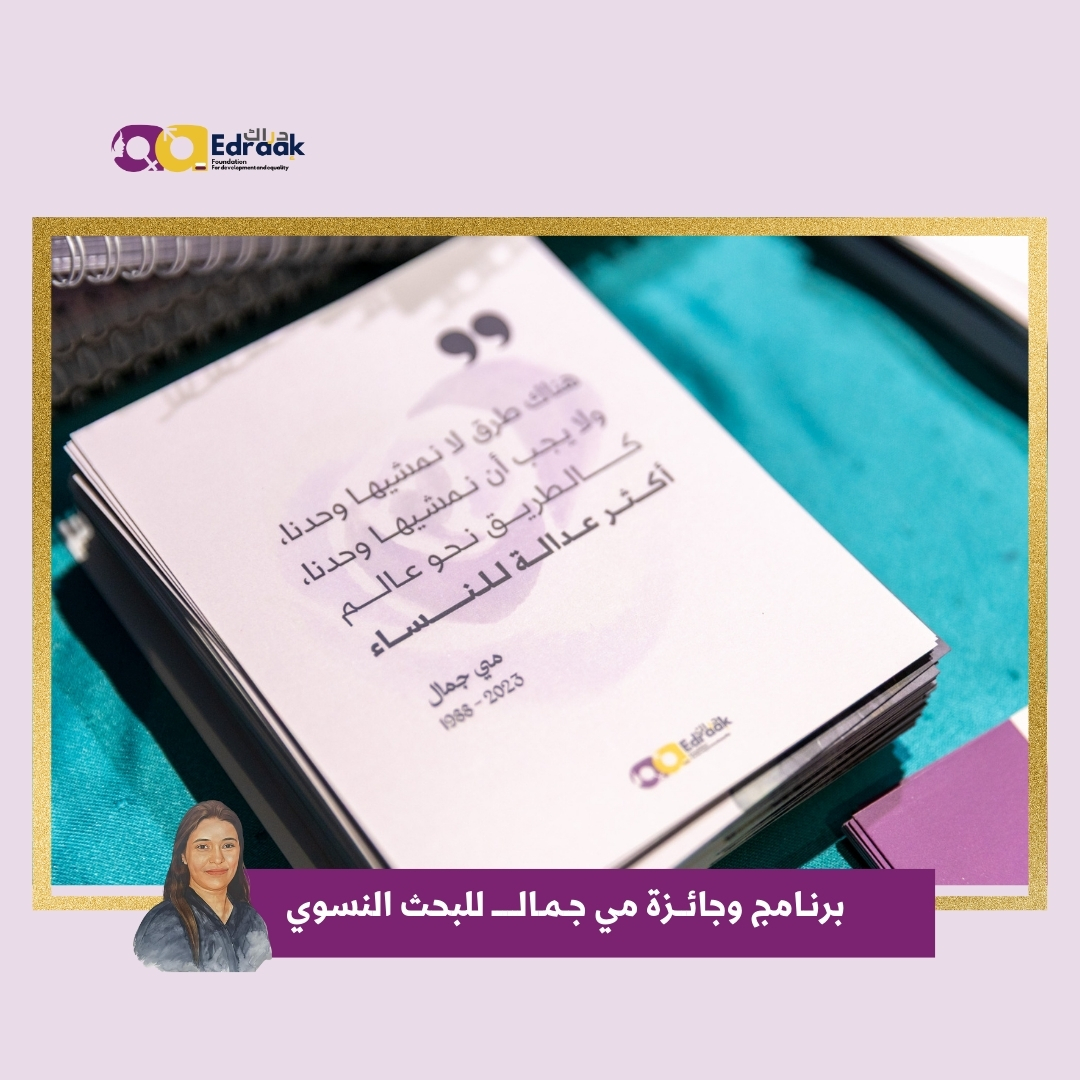
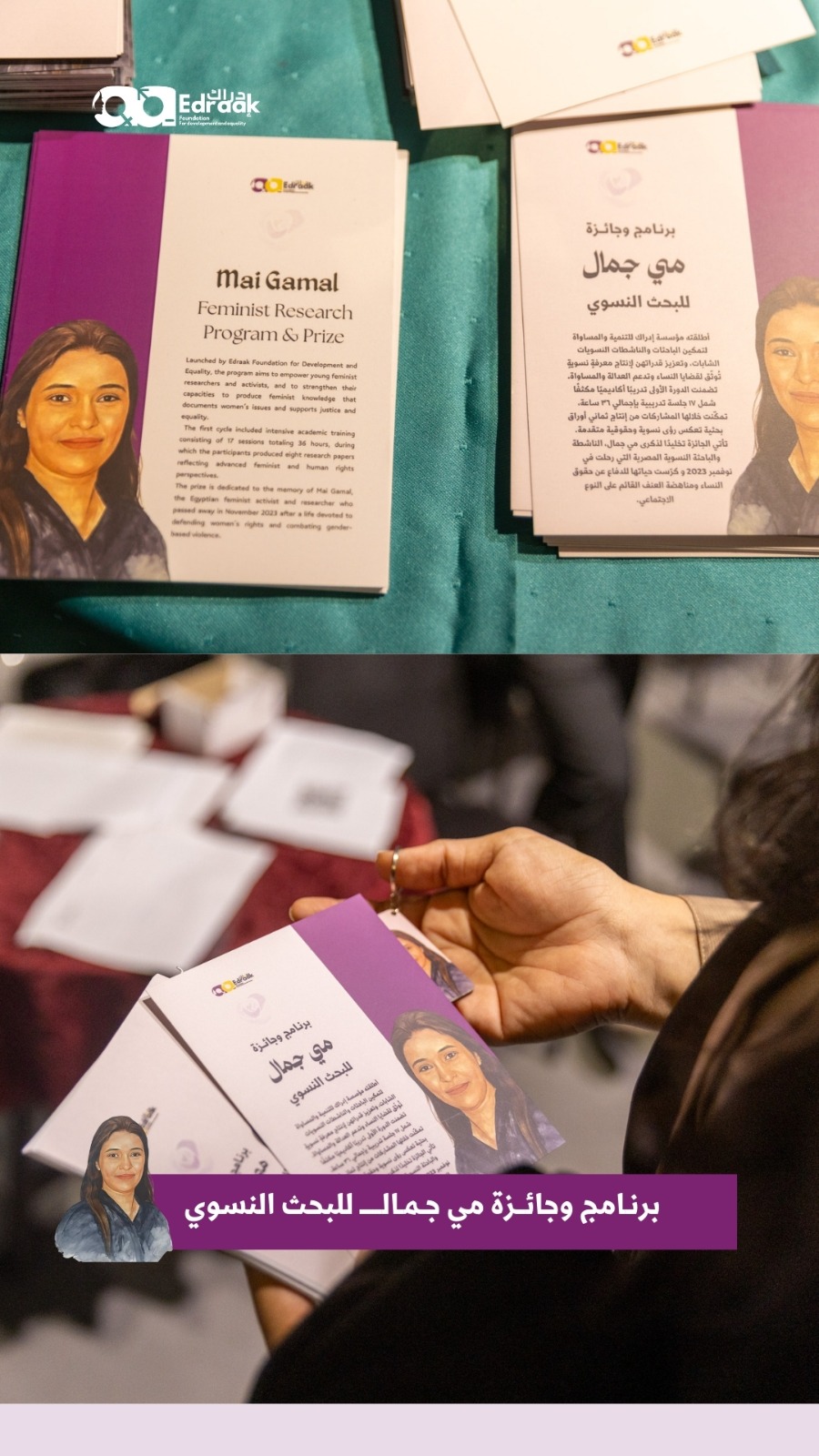
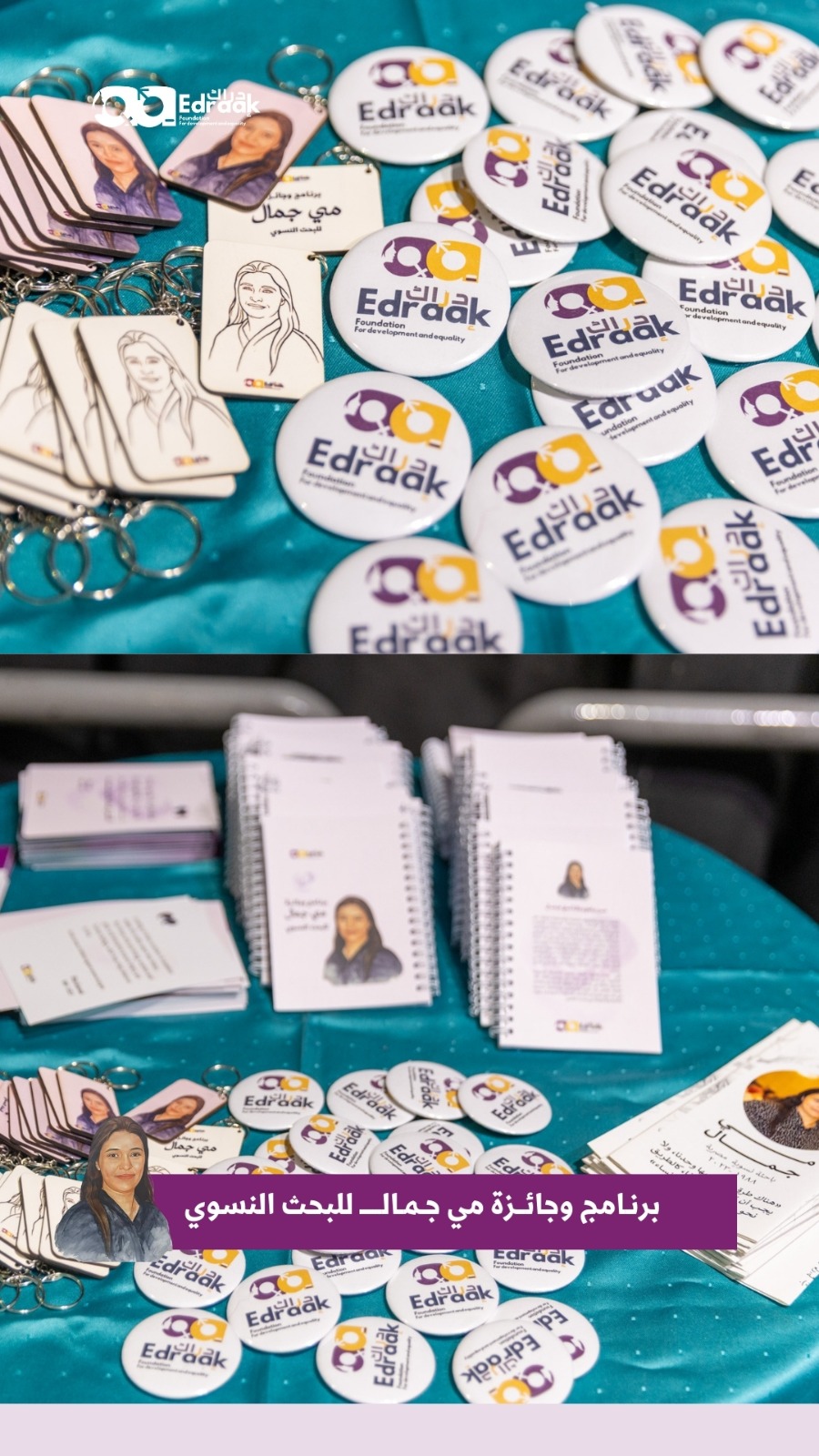
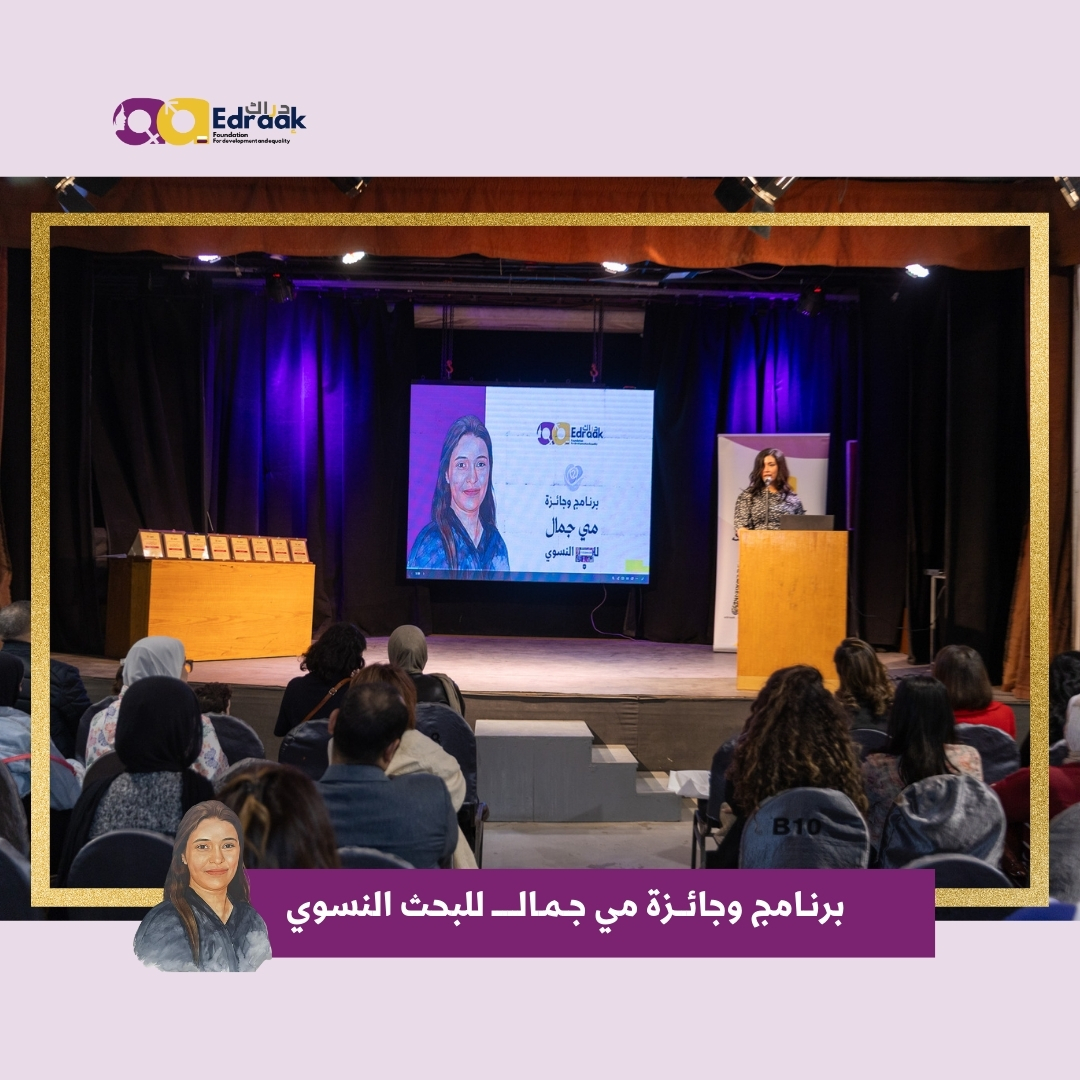
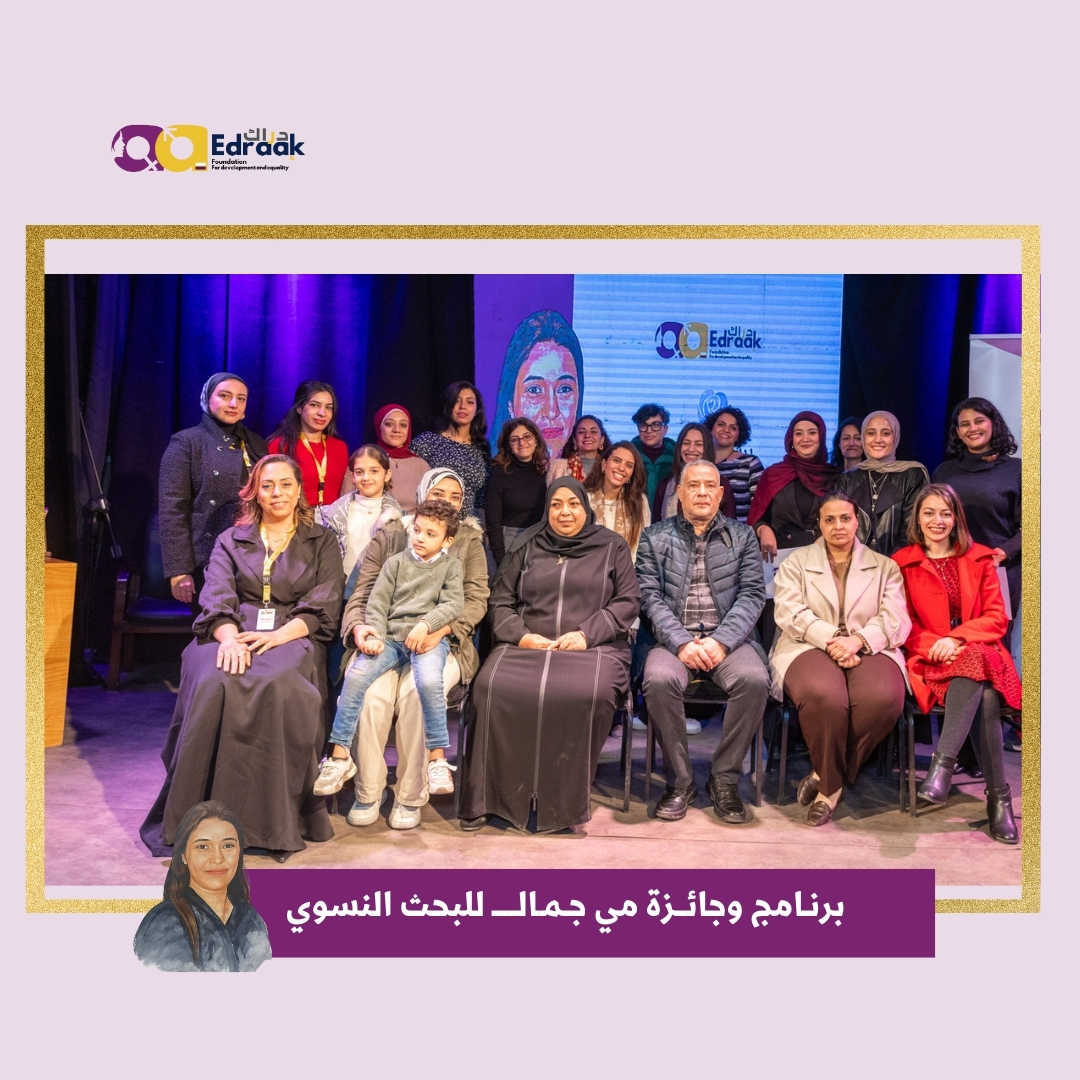
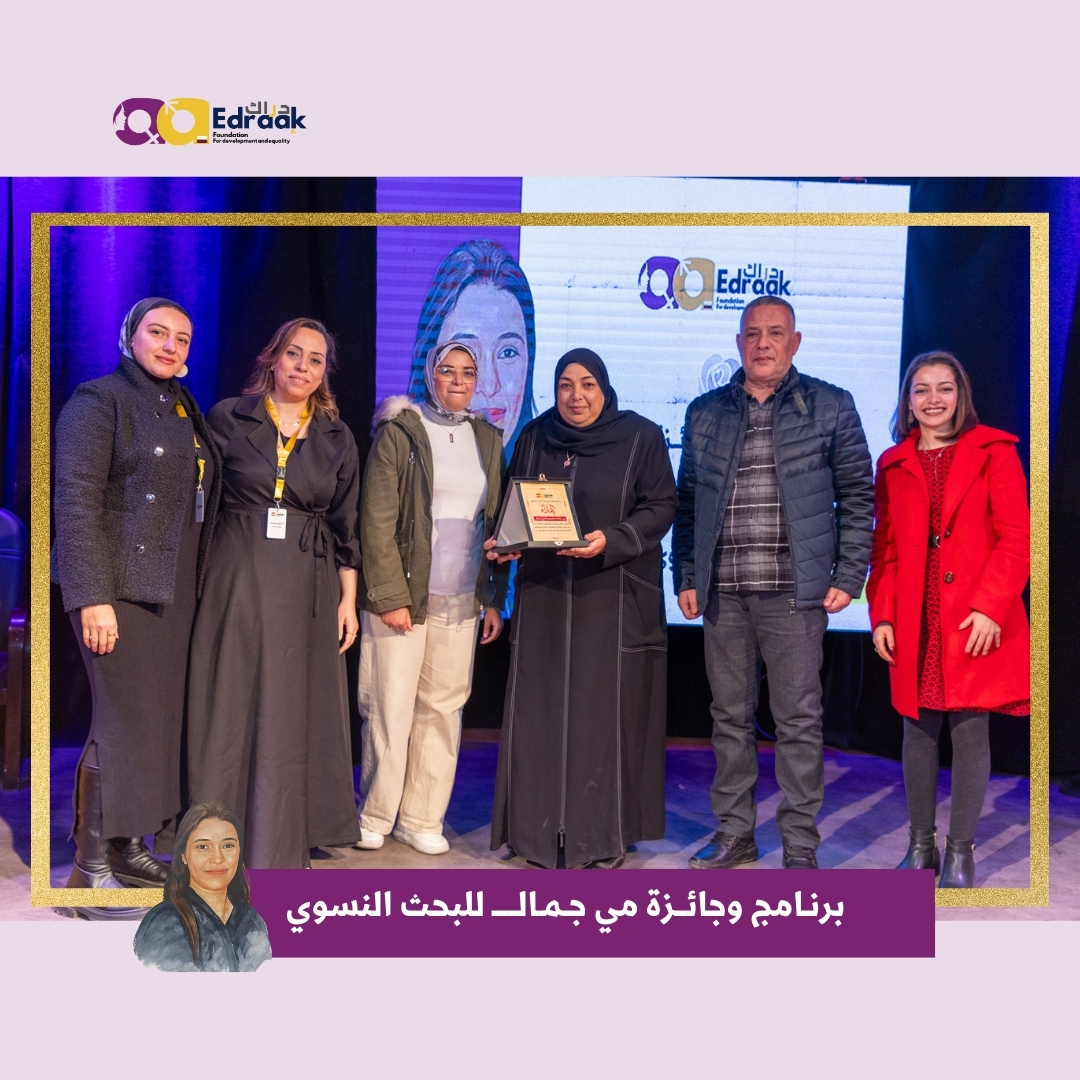
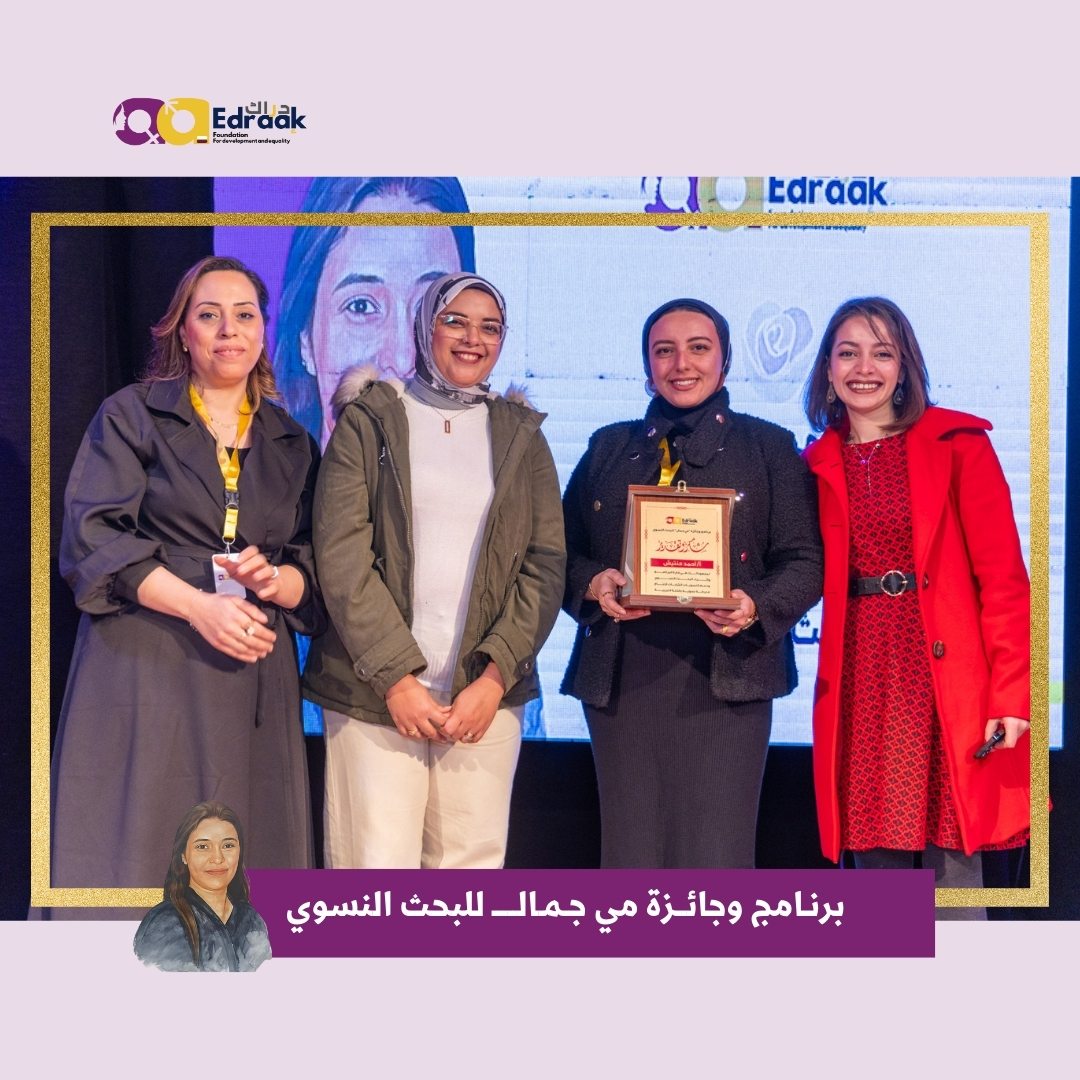
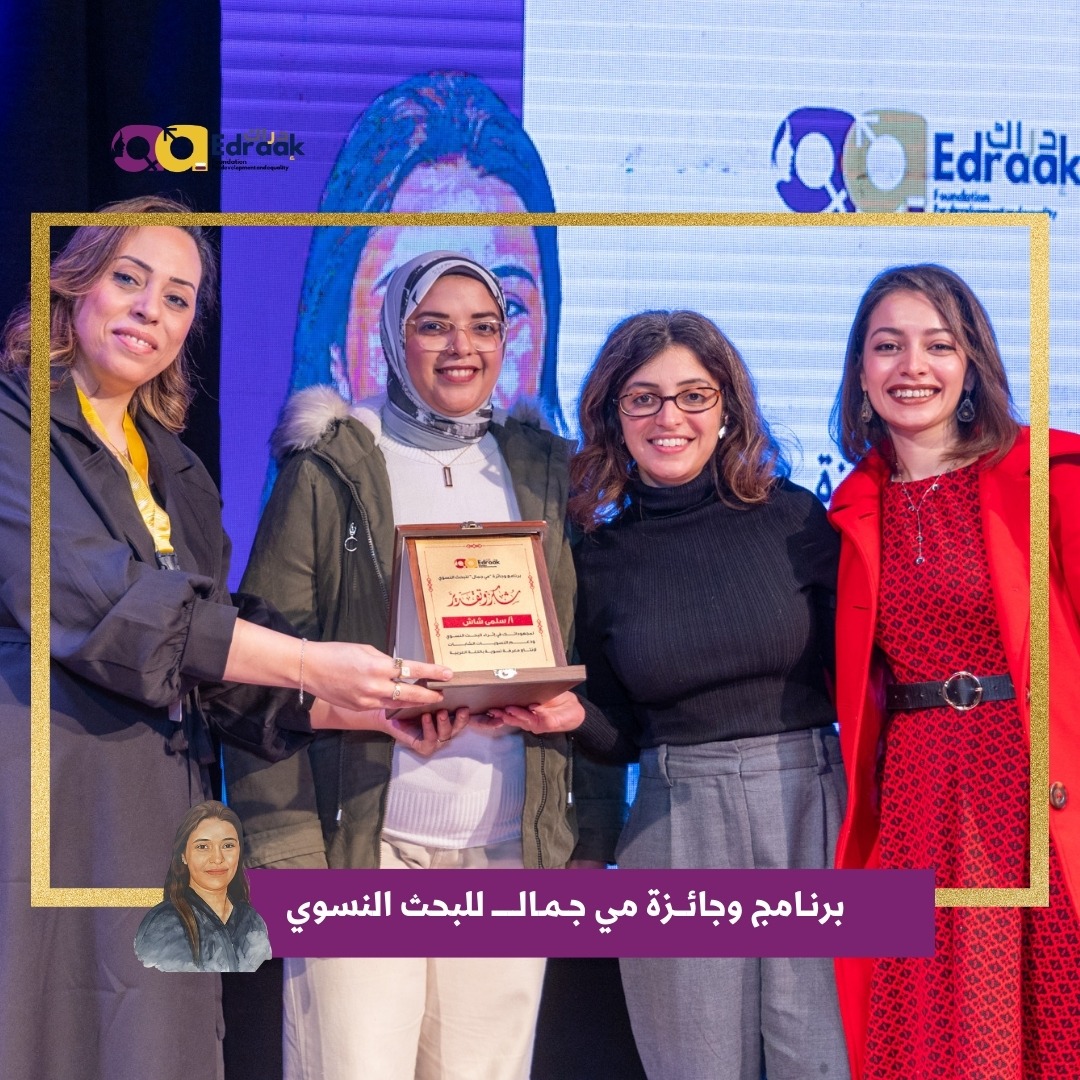
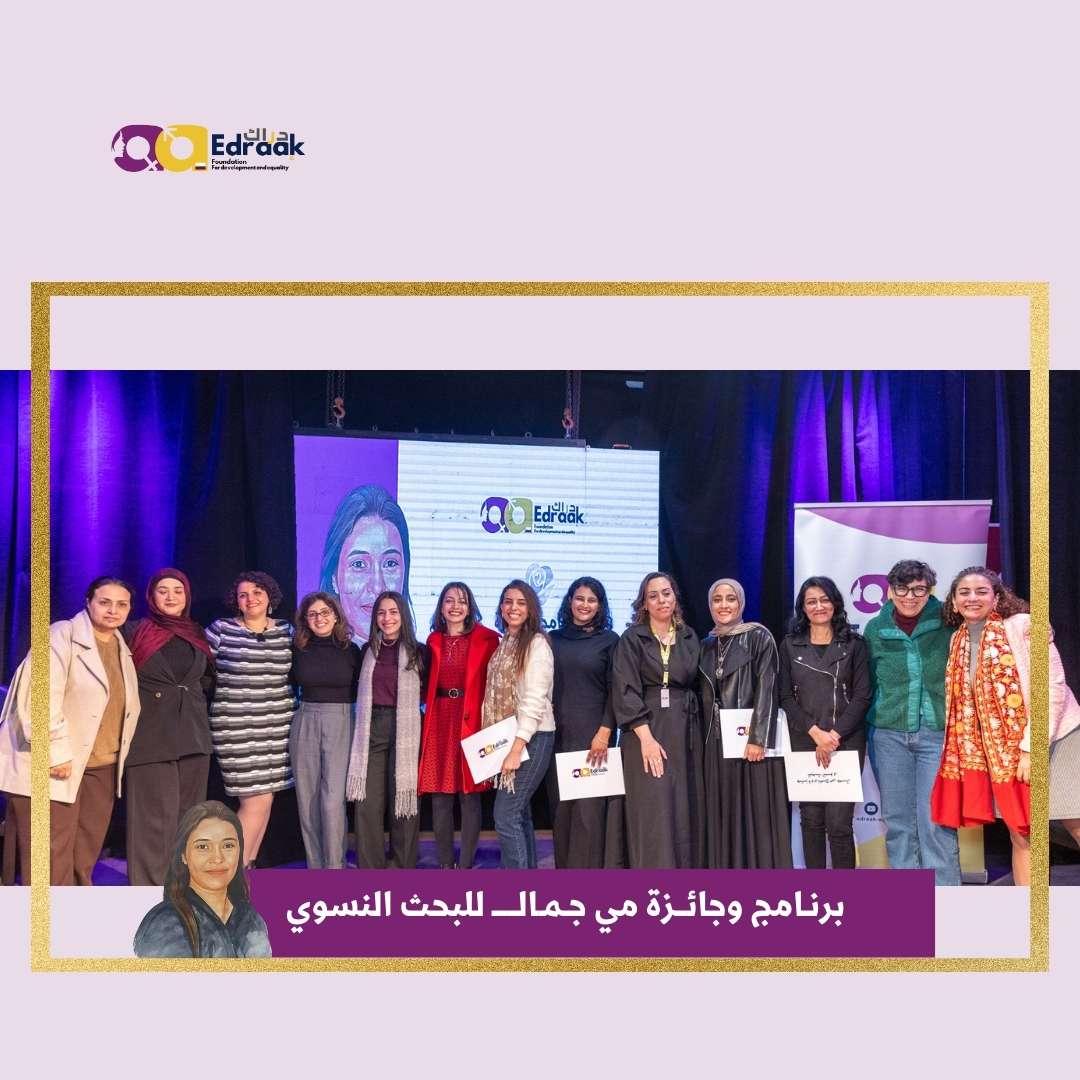
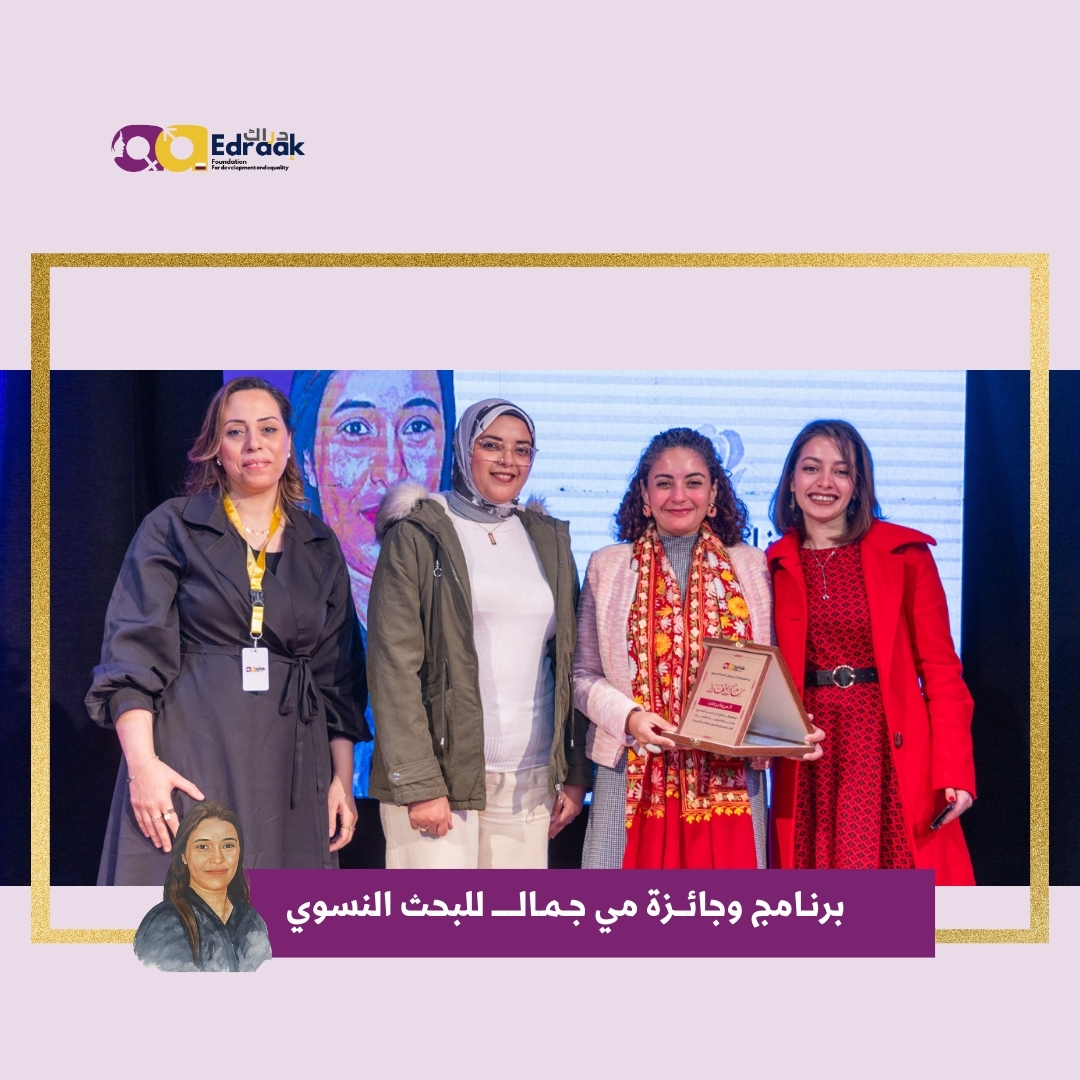
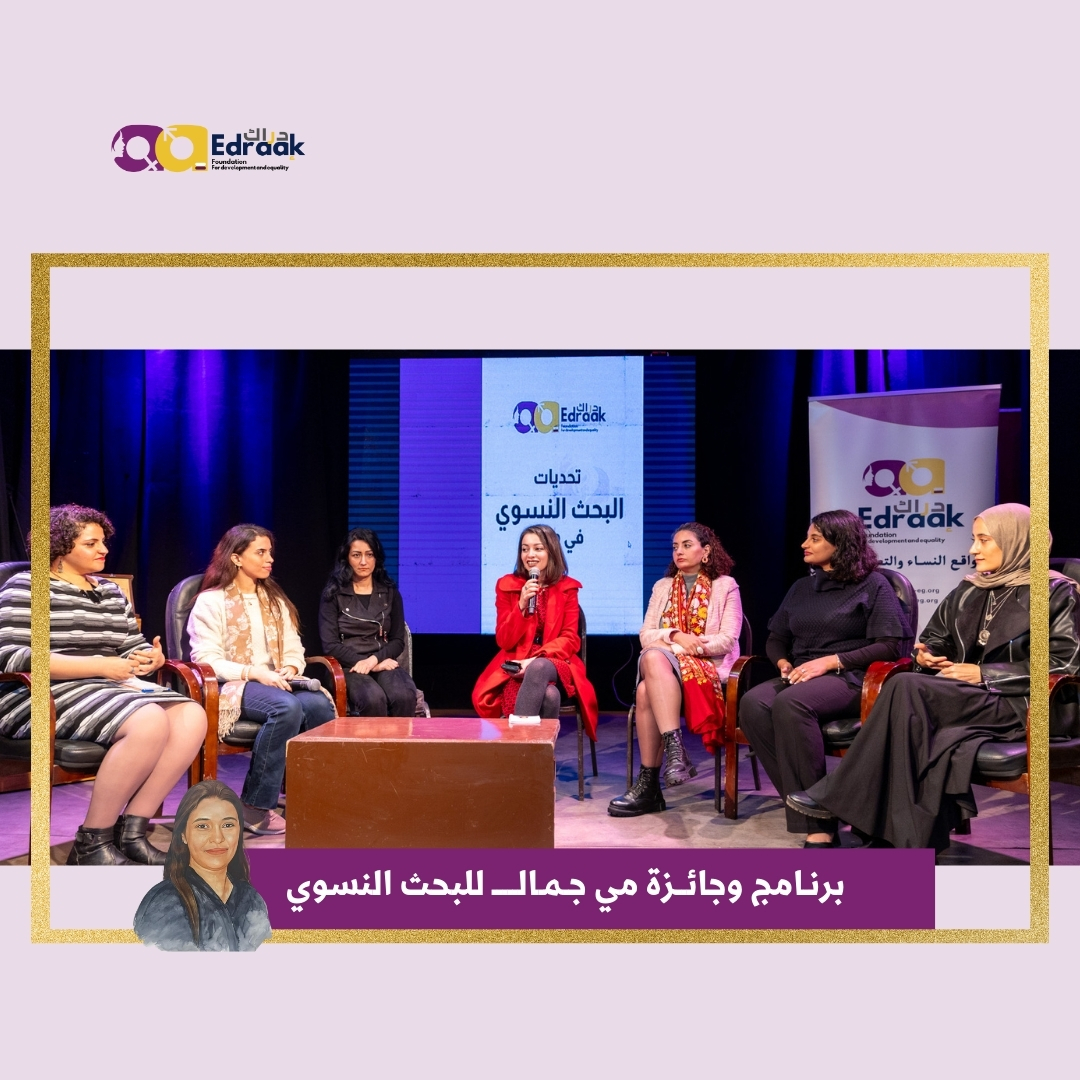
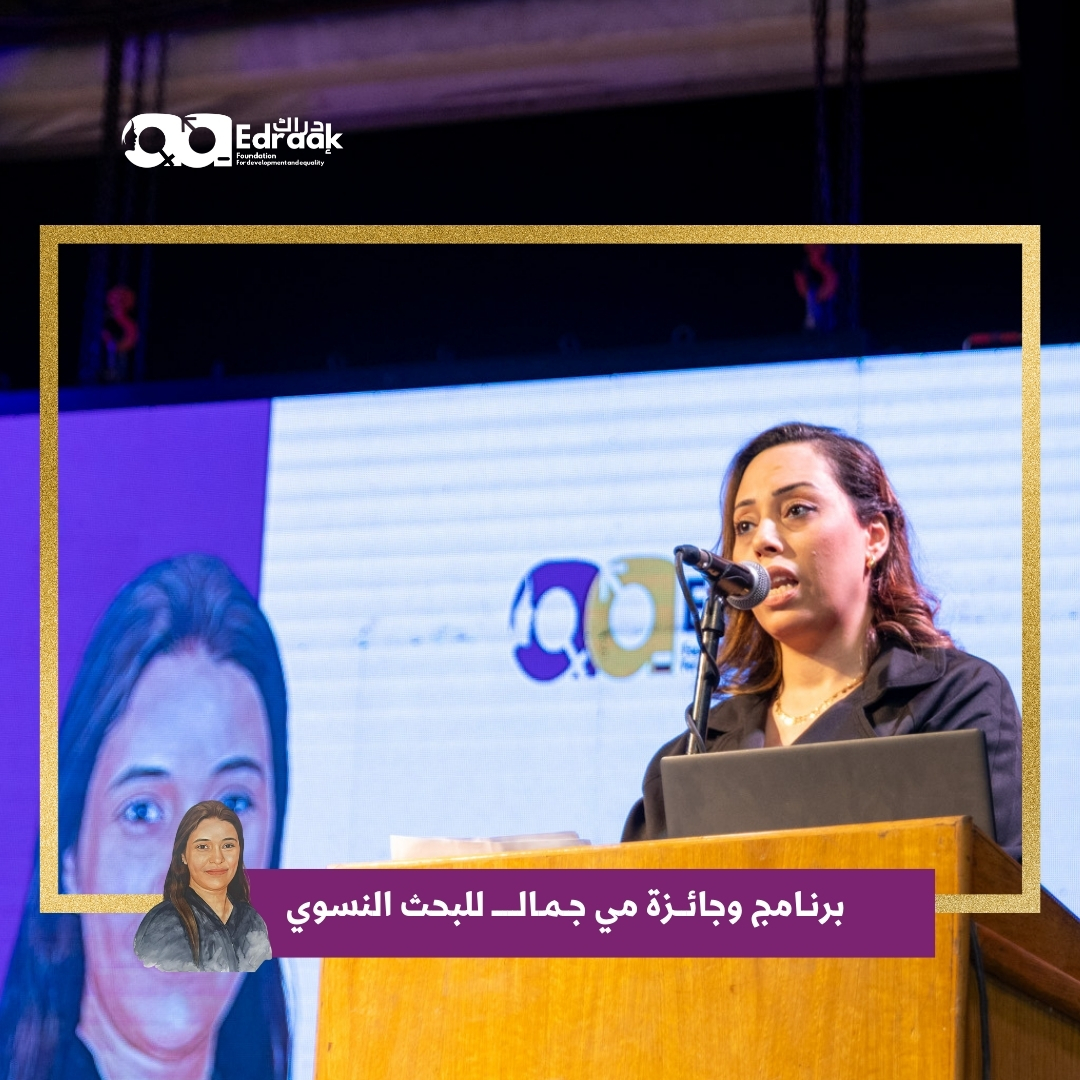
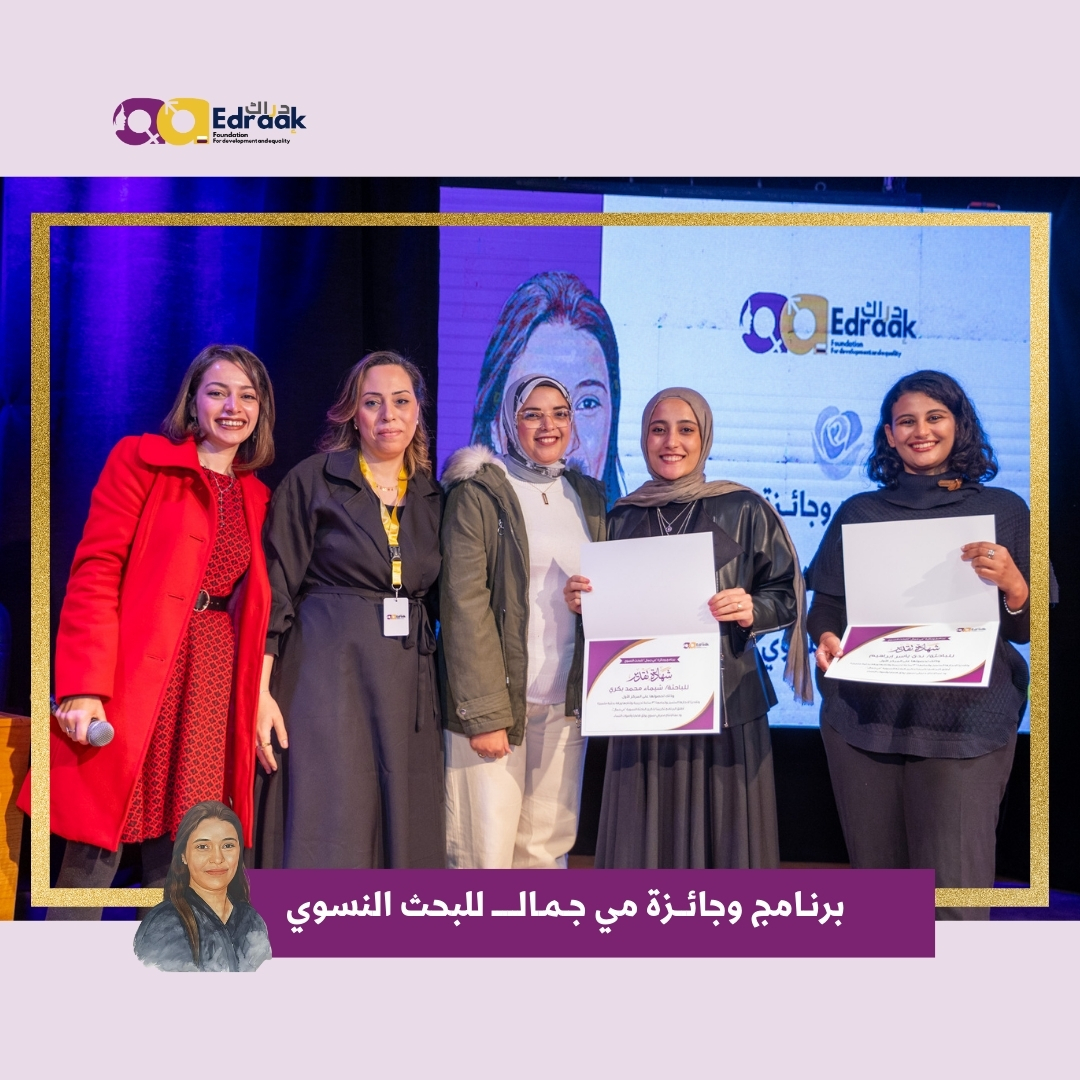
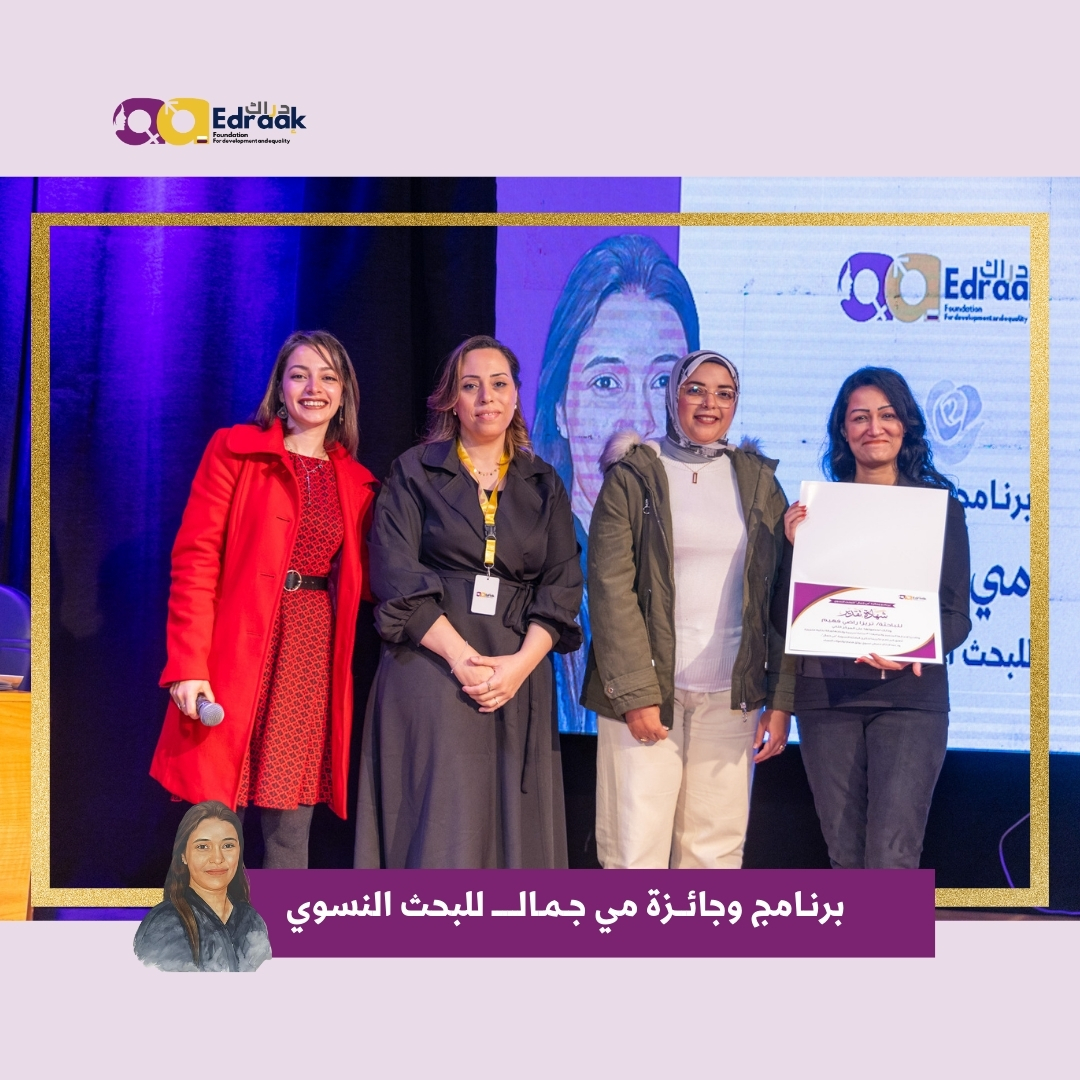
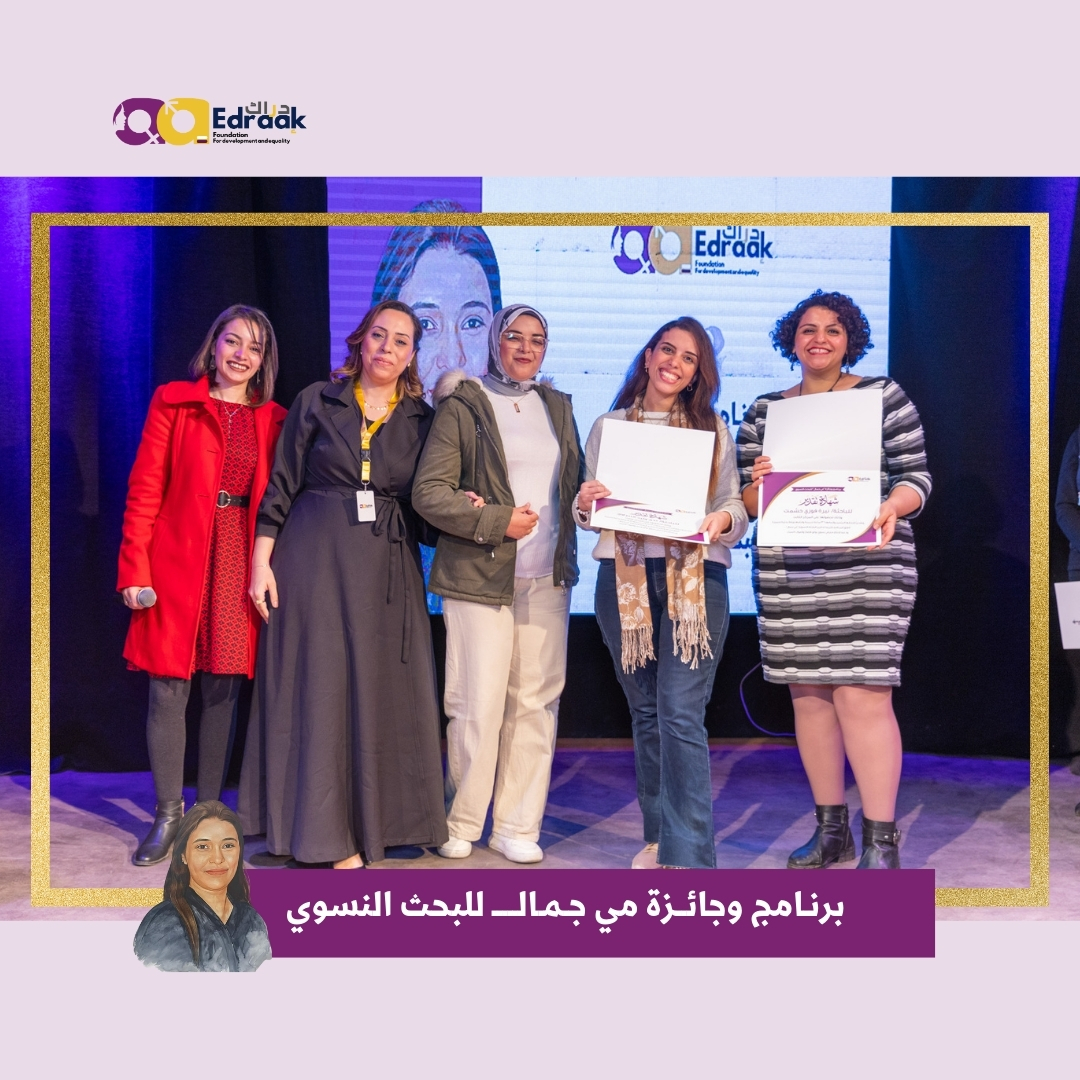
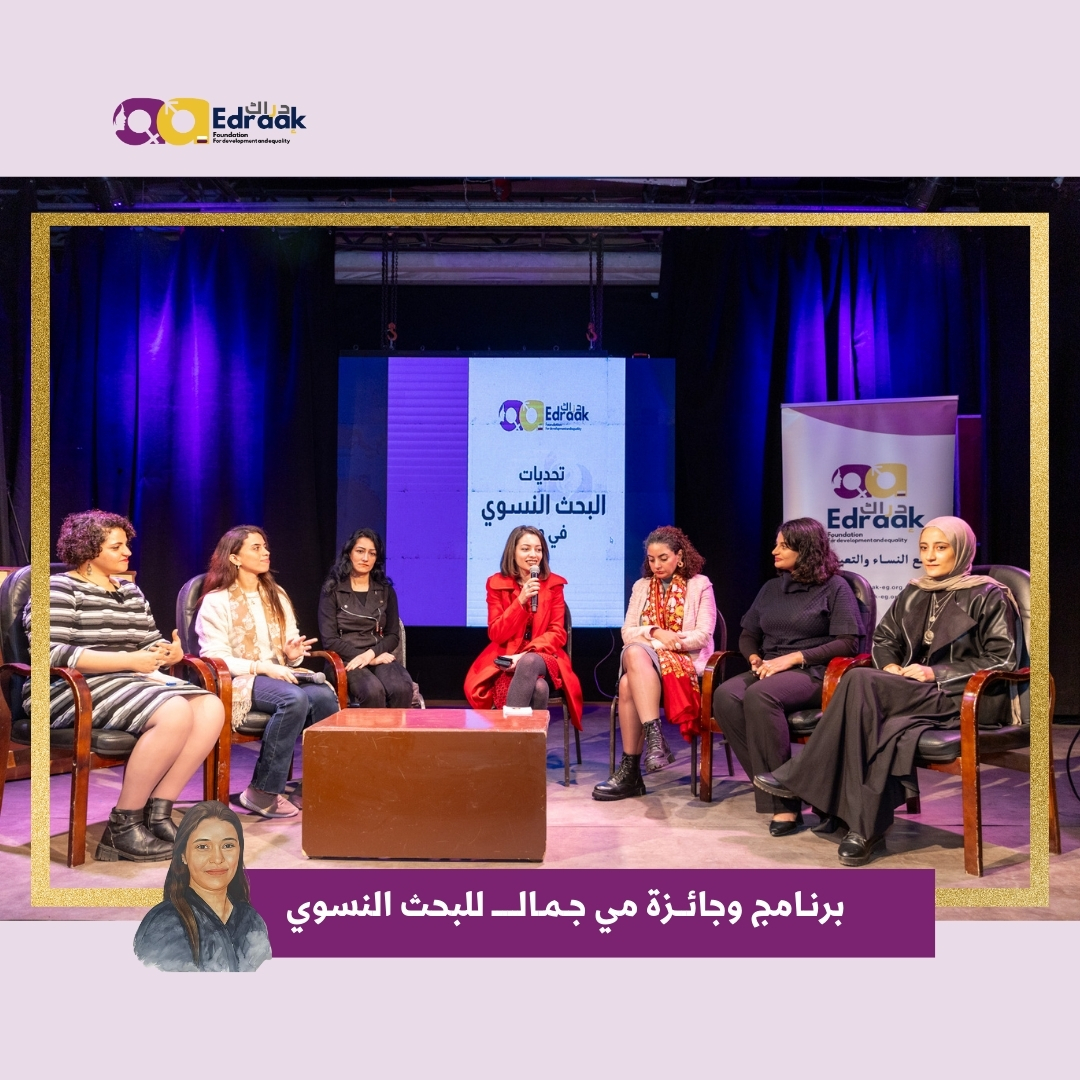
Awards Announcement Ceremony of the “Mai Gamal” Program and Award for Feminist Research
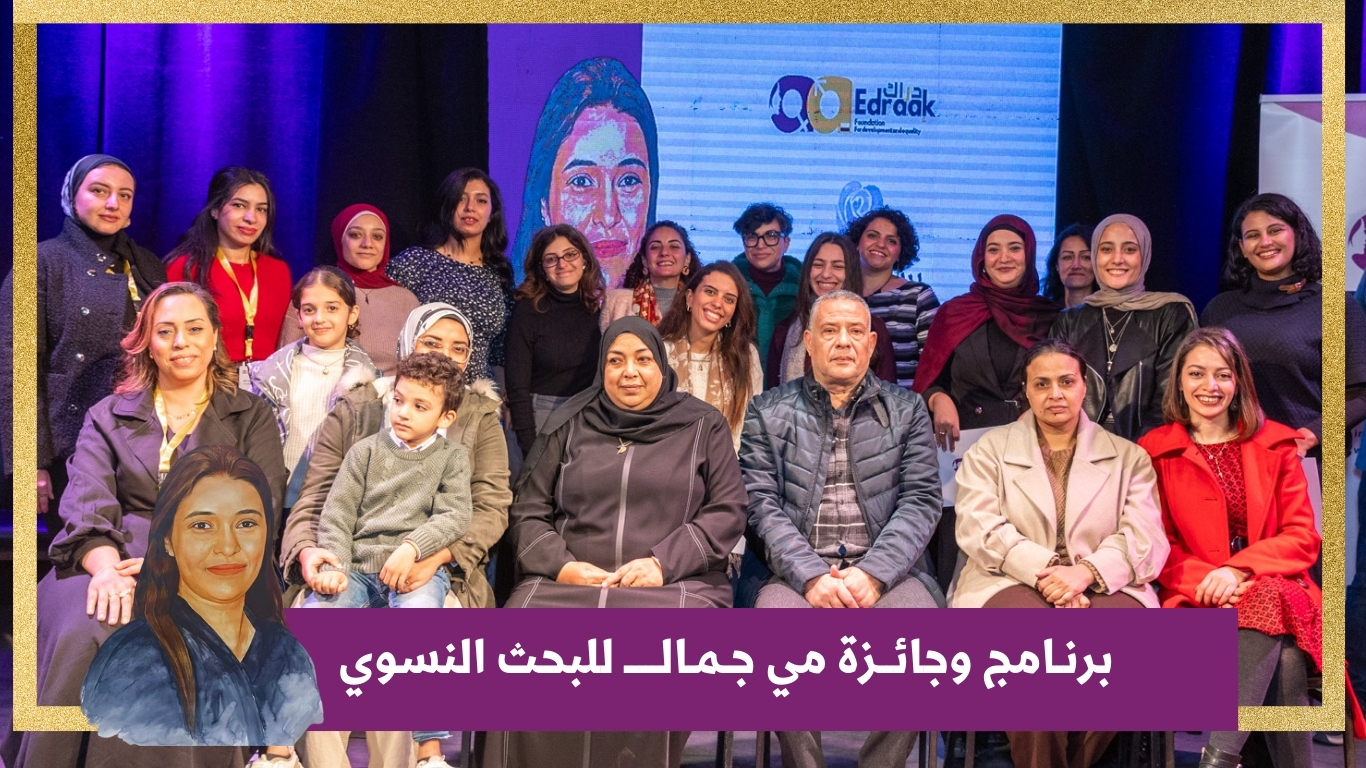
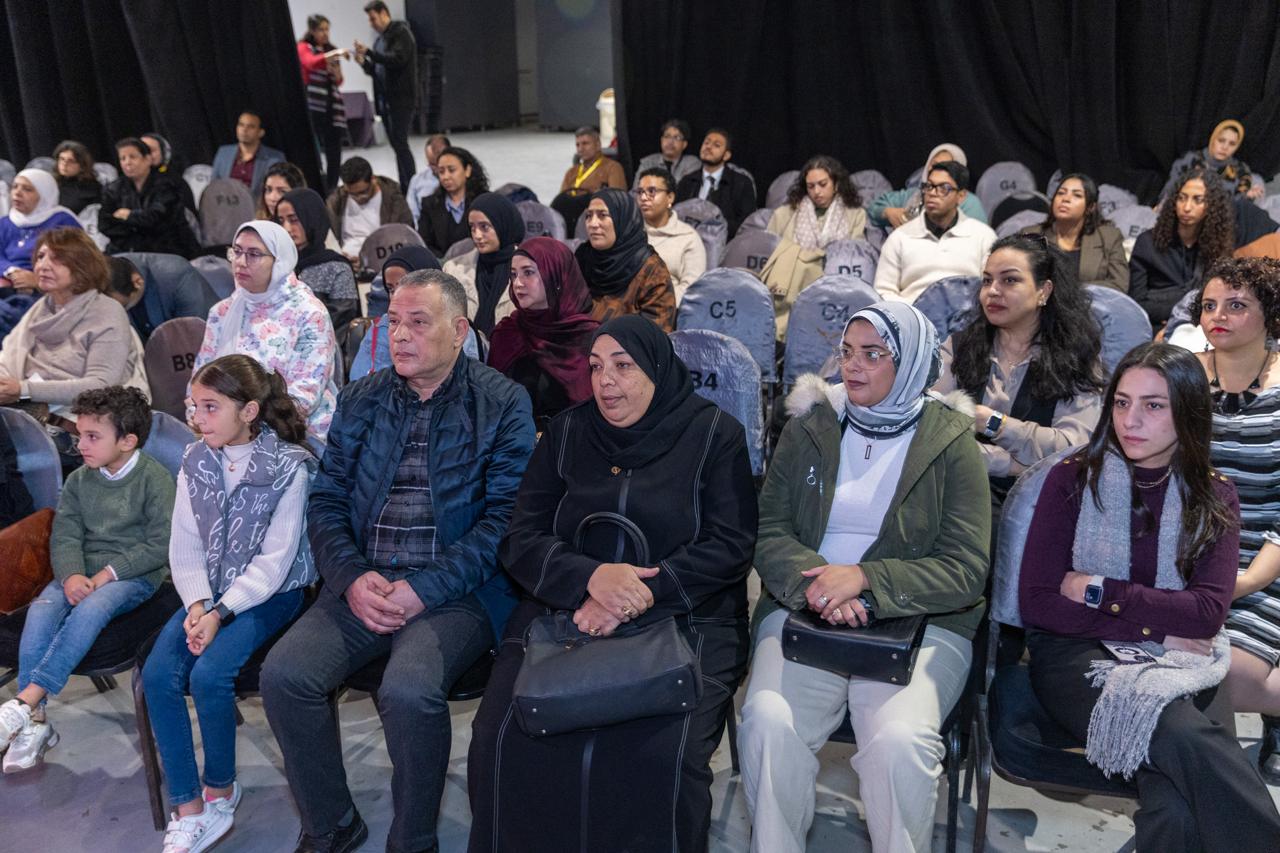
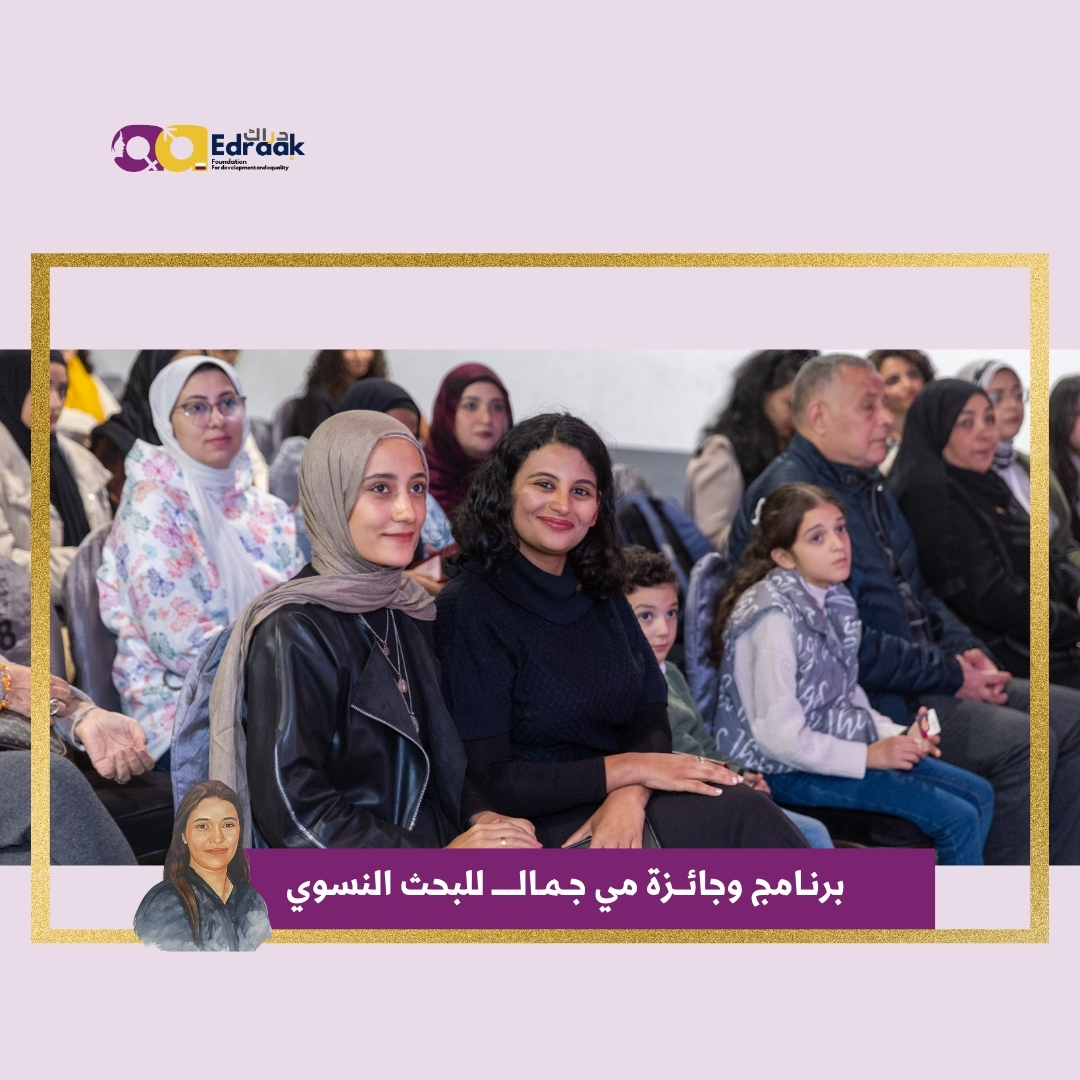
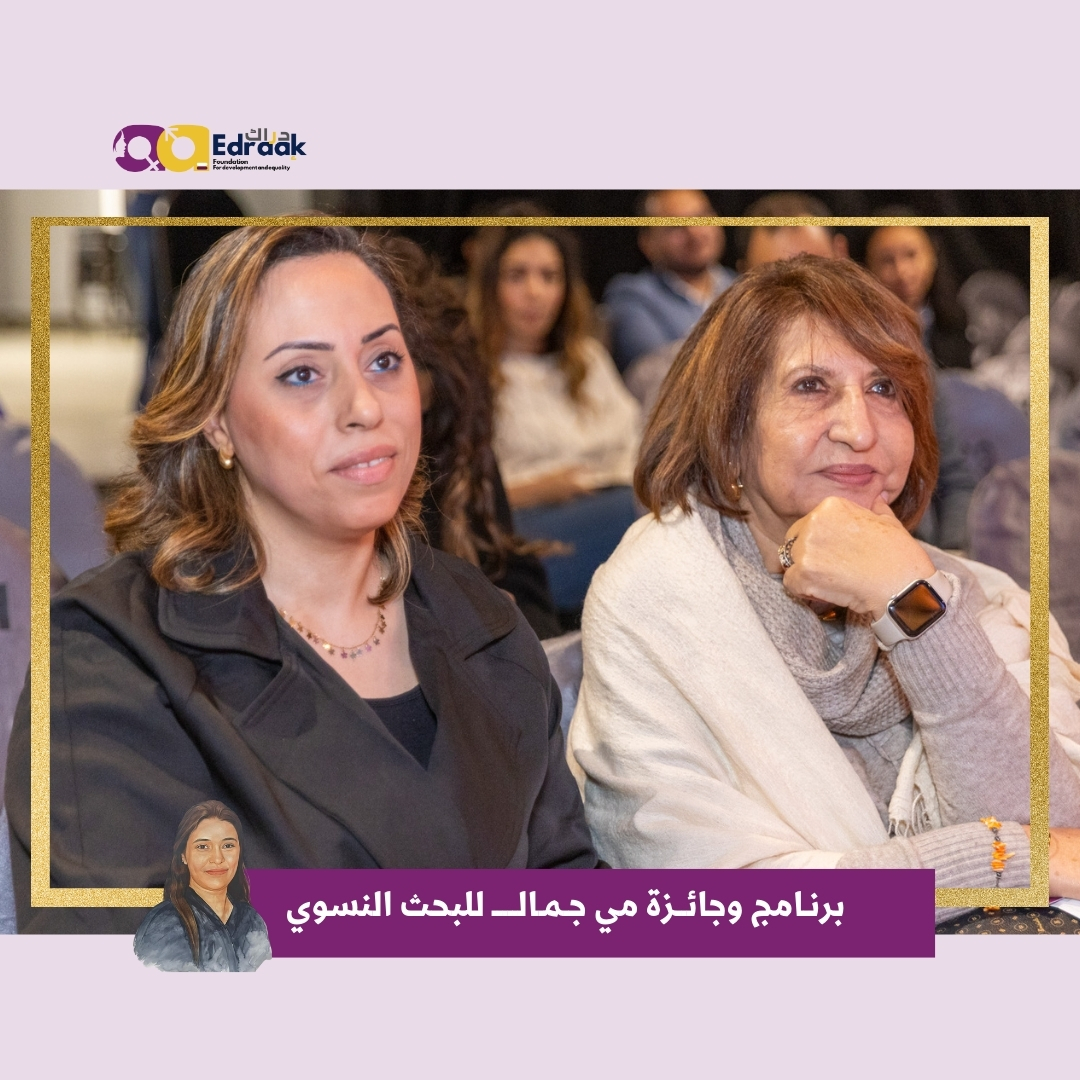
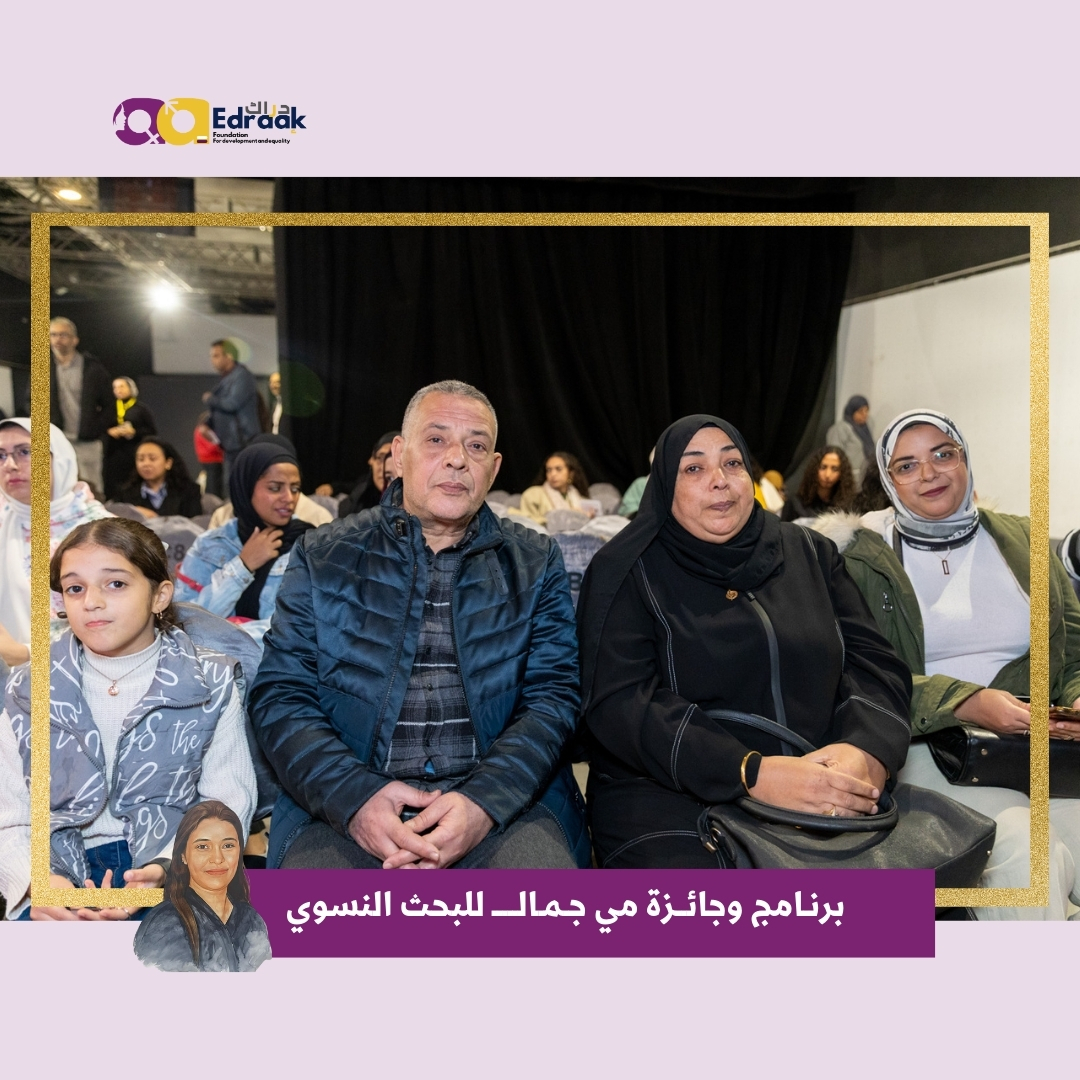
Edraak Foundation for Development and Equality held the Awards Announcement Ceremony of the “Mai Gamal” Program and Award for Feminist Research, marking the conclusion of its first round.
The program, launched in November 2024, was established in commemoration of the late co-founder of Edraak and feminist researcher Mai Gamal, and in recognition of her enduring commitment to supporting the production of feminist knowledge in Arabic.
The ceremony opened with a keynote address delivered by Ms. Nagwa Ibrahim, Executive Director of Edraak Foundation. In her remarks, she reflected on the memory of Mai Gamal, her achievements, and her intellectual and human journey. She emphasized that the program is not merely a training initiative or an award, but a sincere effort to continue the path that Mai believed in the path of knowledge by creating space for emerging feminist voices. The address also included a note of appreciation to Mai Gamal’s family for attending the ceremony and participating in the award distribution.
In her speech, Ms. Gehad Rawy, Program Coordinator, introduced the program, its philosophy, and its training journey. She also shared her personal experience with the program, highlighting its role as a space for learning, support, and meaningful exchange among researchers. Additionally, Somaya El-Mahdy delivered a presentation outlining the program’s outputs and training track, which included 36 hours of training and 35 individual mentoring sessions, resulting in the production of rigorous feminist research papers.
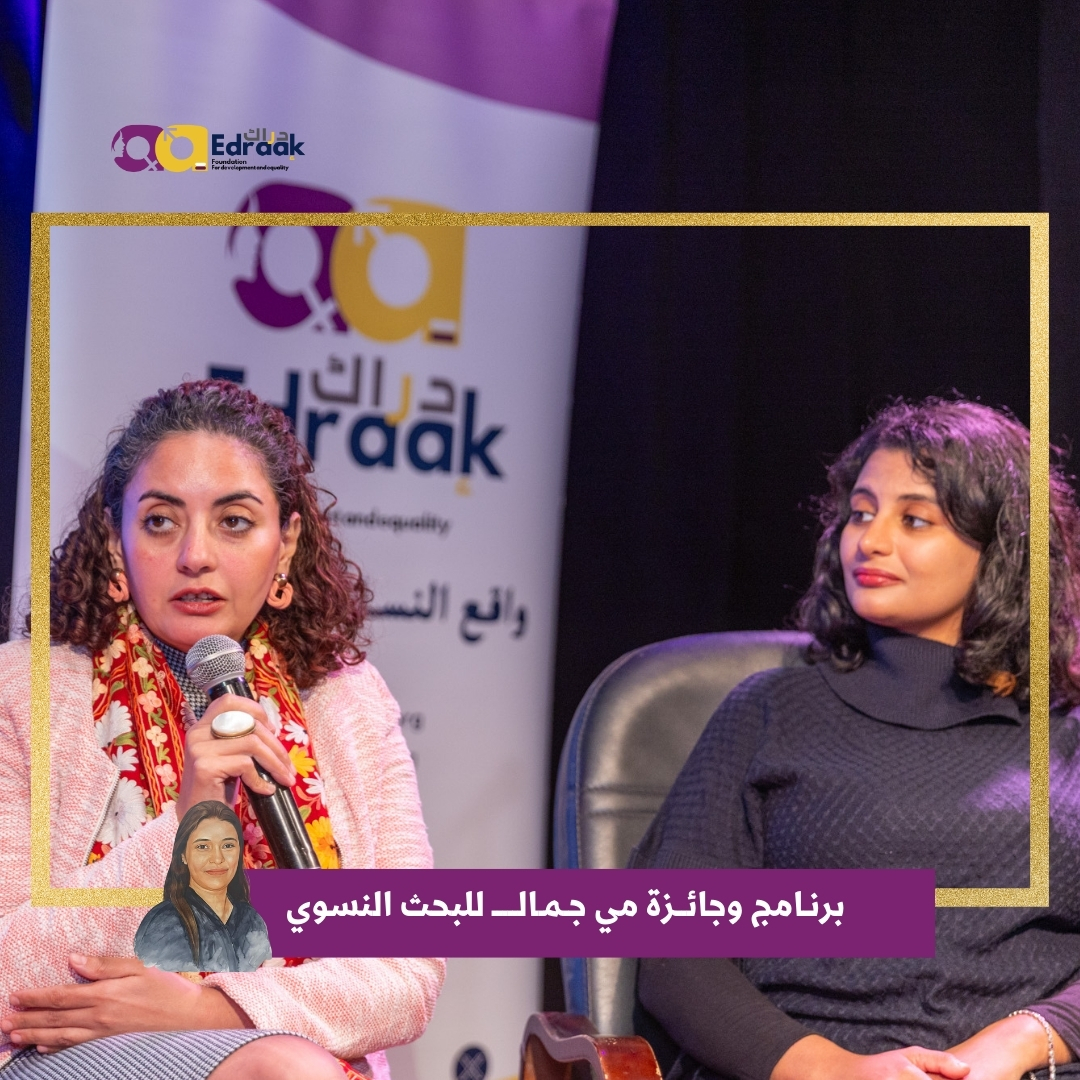
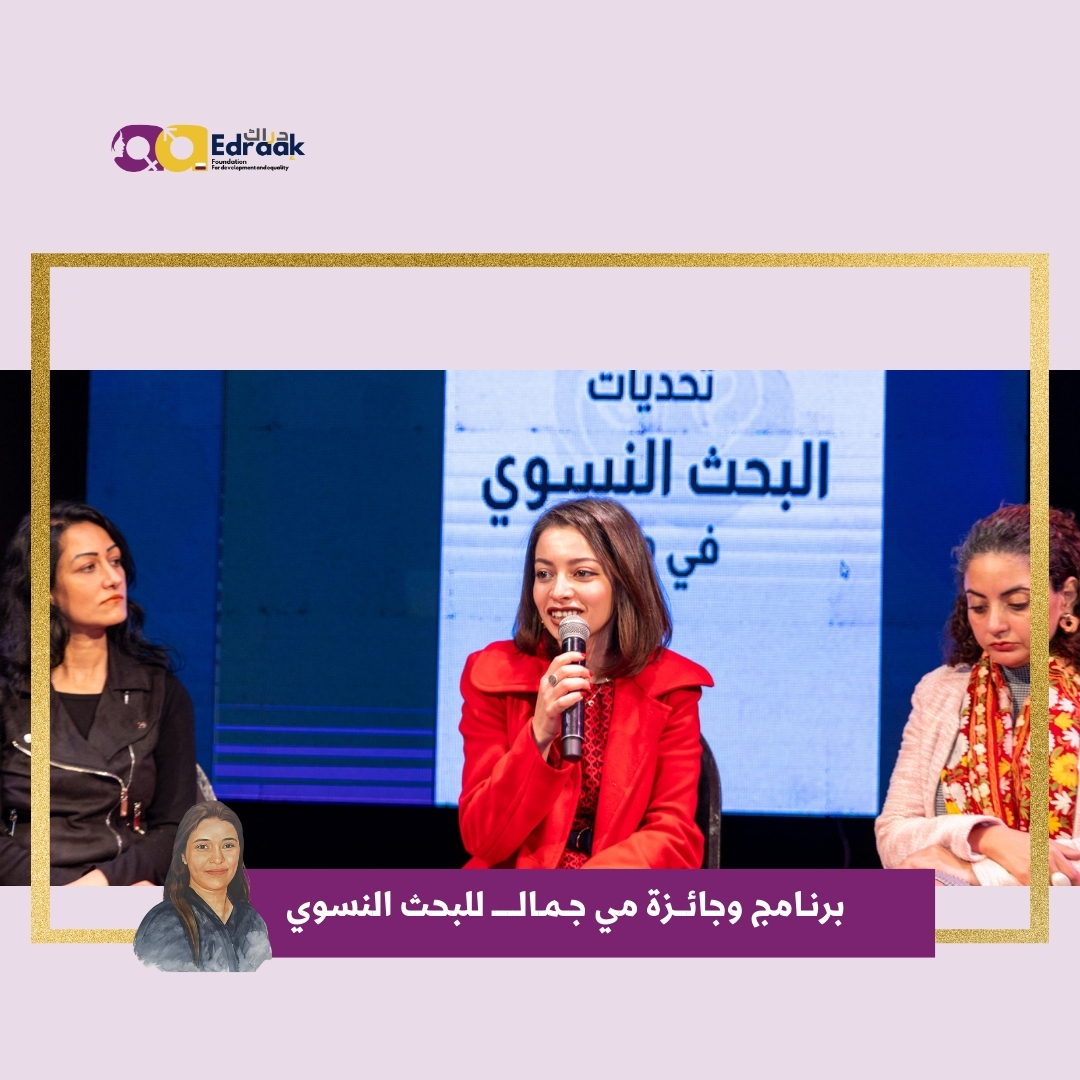
The ceremony also featured a panel discussion that brought together researchers Gehad Rawy and Marwa Barakat with participating researchers. The discussion addressed key challenges facing feminist research in Egypt, including limited access to sources, lack of academic recognition, and the social and political constraints confronting women researchers. The dialogue was characterized by honesty, depth, and the exchange of lived experiences.
During the event, certificates of appreciation were presented to a number of trainers, reviewers, and supporters of the program, in recognition of their contributions to enriching feminist research and supporting young feminists.
Honorees included:
Salma Shash, Marwa Barakat, Dr. Hend Ahmed Zaki, Dr. Omnia Khalil, Mona Ezzat, Dina Abdel-Naby, Dr. Hala Kamal, Dr. Hoda El-Sadda, Dr. Reem Saad, Salma El-Naqqash, Amal El-Mohandes, Shaimaa Kadry, and Nada Nashaat.
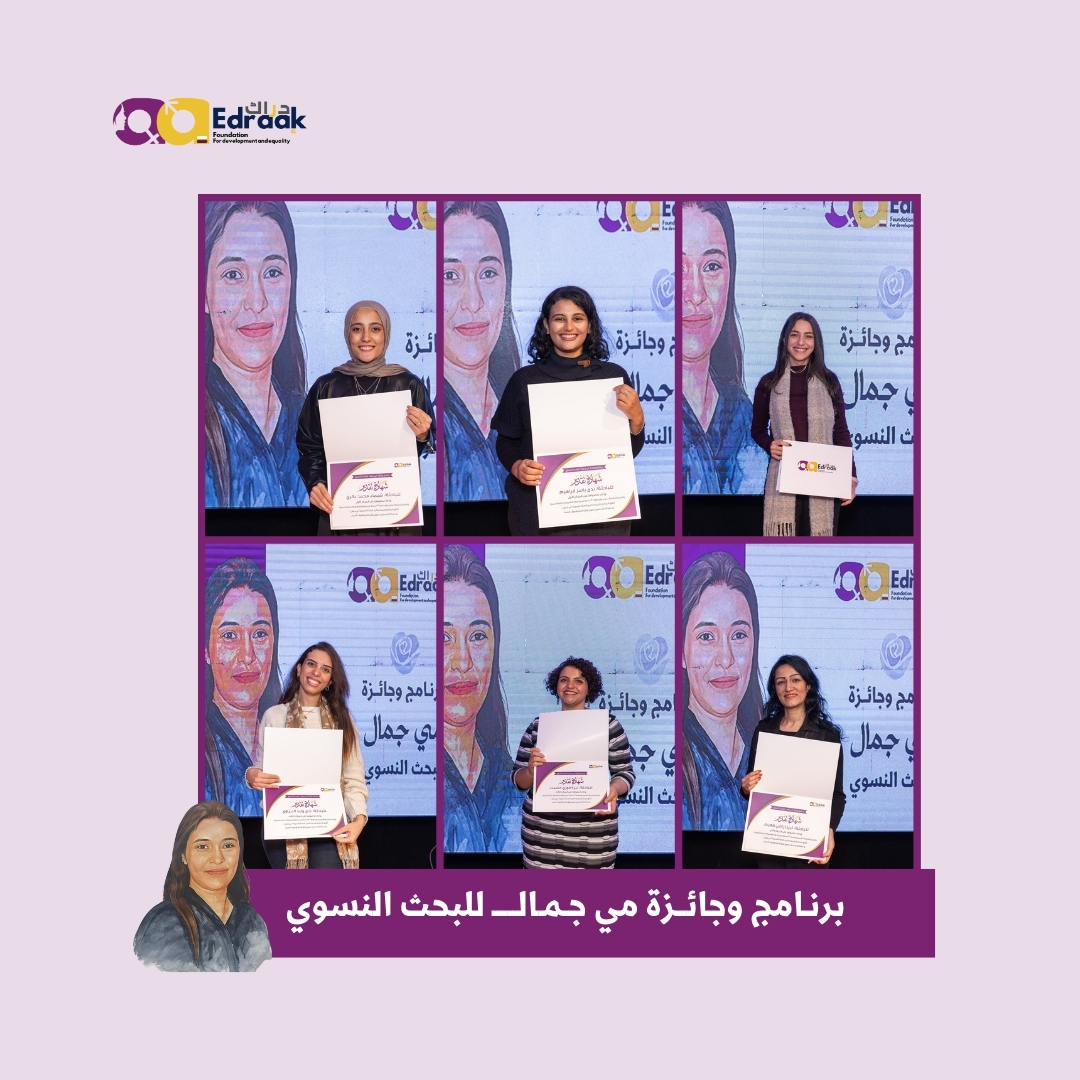
Outstanding young researchers were also recognized as award recipients:
First Place Award
– Shaimaa Mohamed Bakry
– Nada Yasser Ibrahim
Second Place Award
– Teresa Rady Fahim
Third Place Award
– Nayera Fawzy Heshmat
– Nada Waleed El-Nabrawy
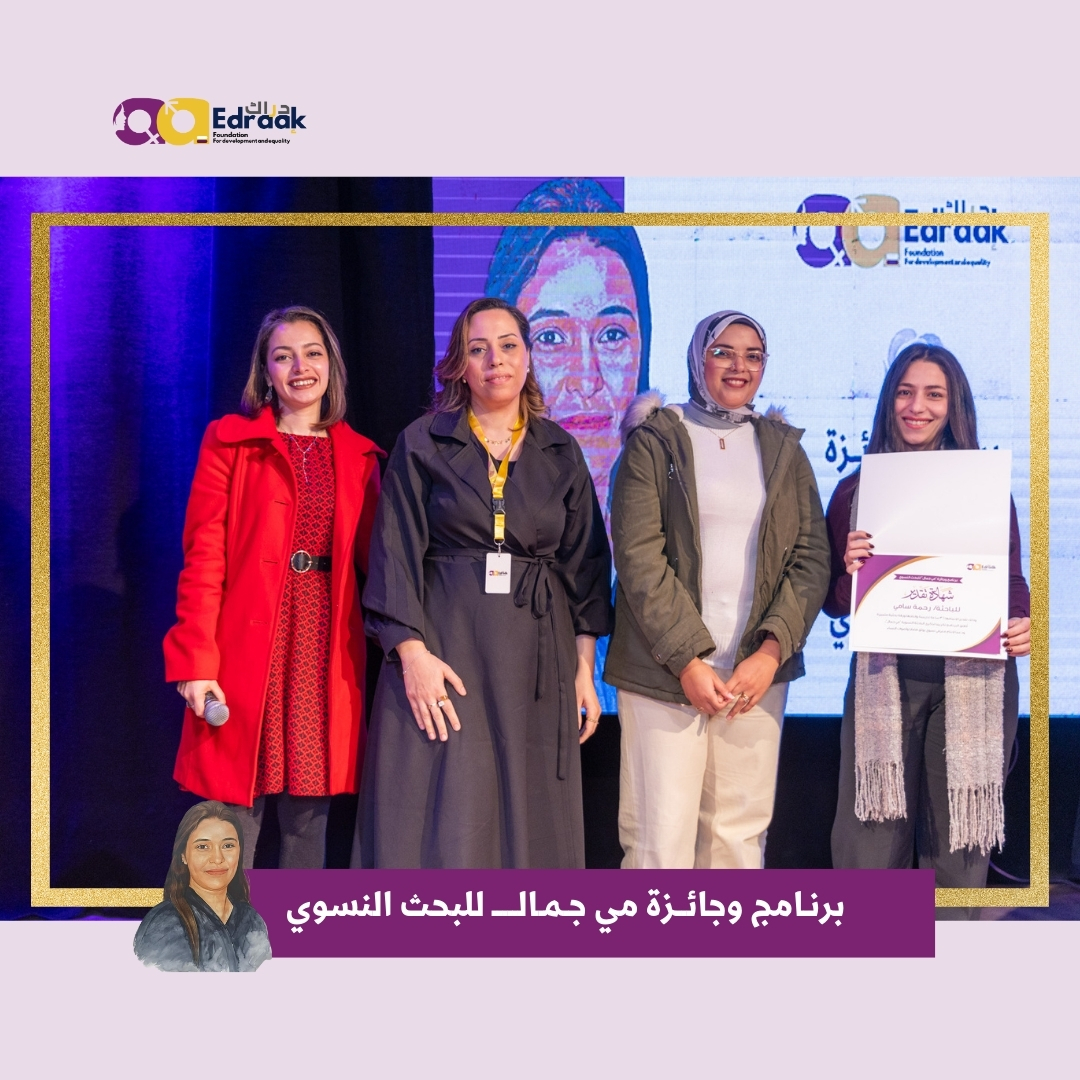
Certificates of Completion and Excellence were awarded to participants who successfully completed the program and produced distinguished feminist research papers:
– Shaimaa Magdy Abdallah
– Asmaa Hussein Mohamed
– Rahma Samy
These awards represent a first step in a broader research journey that Edraak Foundation hopes will continue and expand. The program aims to serve as a catalyst for further feminist knowledge production and to amplify young voices capable of asking critical questions and opening new spaces for understanding and change.
Edraak Foundation extends its sincere gratitude to all volunteers and contributors who dedicated their time and effort to bringing the “Mai Gamal” Program to life, including those involved in training, coordination, review, and administration.
Special and heartfelt thanks are extended to Mai Gamal’s family for attending the ceremony and sharing these meaningful moments.
This ceremony marked the conclusion of the first Round of the “Mai Gamal” Program and Award for Feminist Research. With great hope, Edraak Foundation looks forward to future Rounds that will continue this path and expand spaces for feminist knowledge, in loyalty to Mai and in belief in the future.

Motherhood Beyond the Calendar
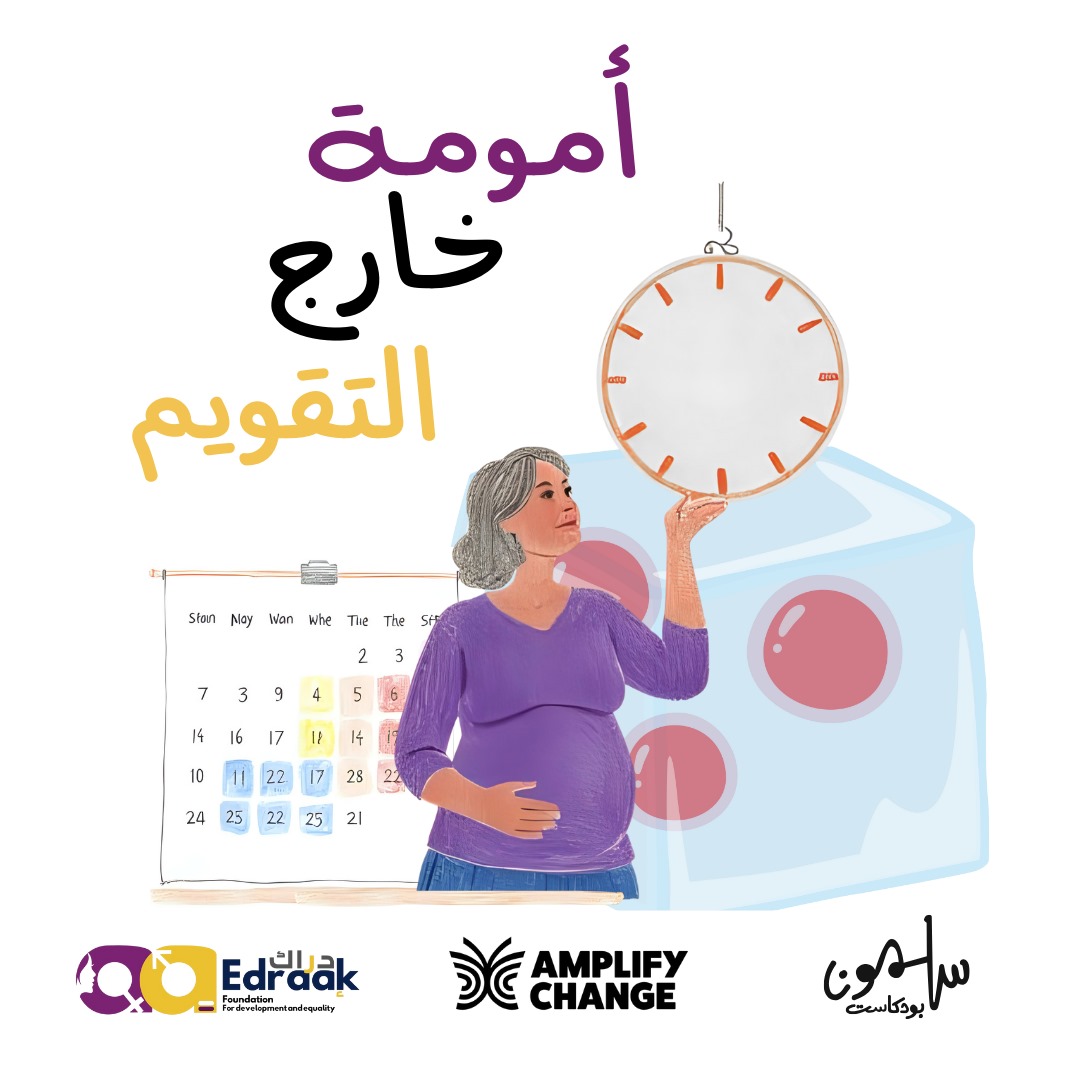
In the episode “Motherhood Beyond the Calendar” from Salmon Podcast, and in collaboration with Edrak for Development and Equality, we open a bold conversation about egg freezing as a scientific and practical option that allows women to take control of their decisions regarding motherhood and the timing of having children.
The episode explores the concept of the right to choose, free from social pressure or stigma, and discusses how egg freezing can be seen as a tool for empowering women to plan their futures with greater freedom.
During the episode, we host Dr. Yasmine Abu El-Azm, a Consultant in Obstetrics and Gynecology from Egypt, who shares her medical expertise and perspective on the topic from both a scientific and human standpoint. We also hear from women in Jordan and Ethiopia who share their personal experiences.
🎥 Watch the episode here
The Right to Natural Birth Between Economic Pressures and Climate Change
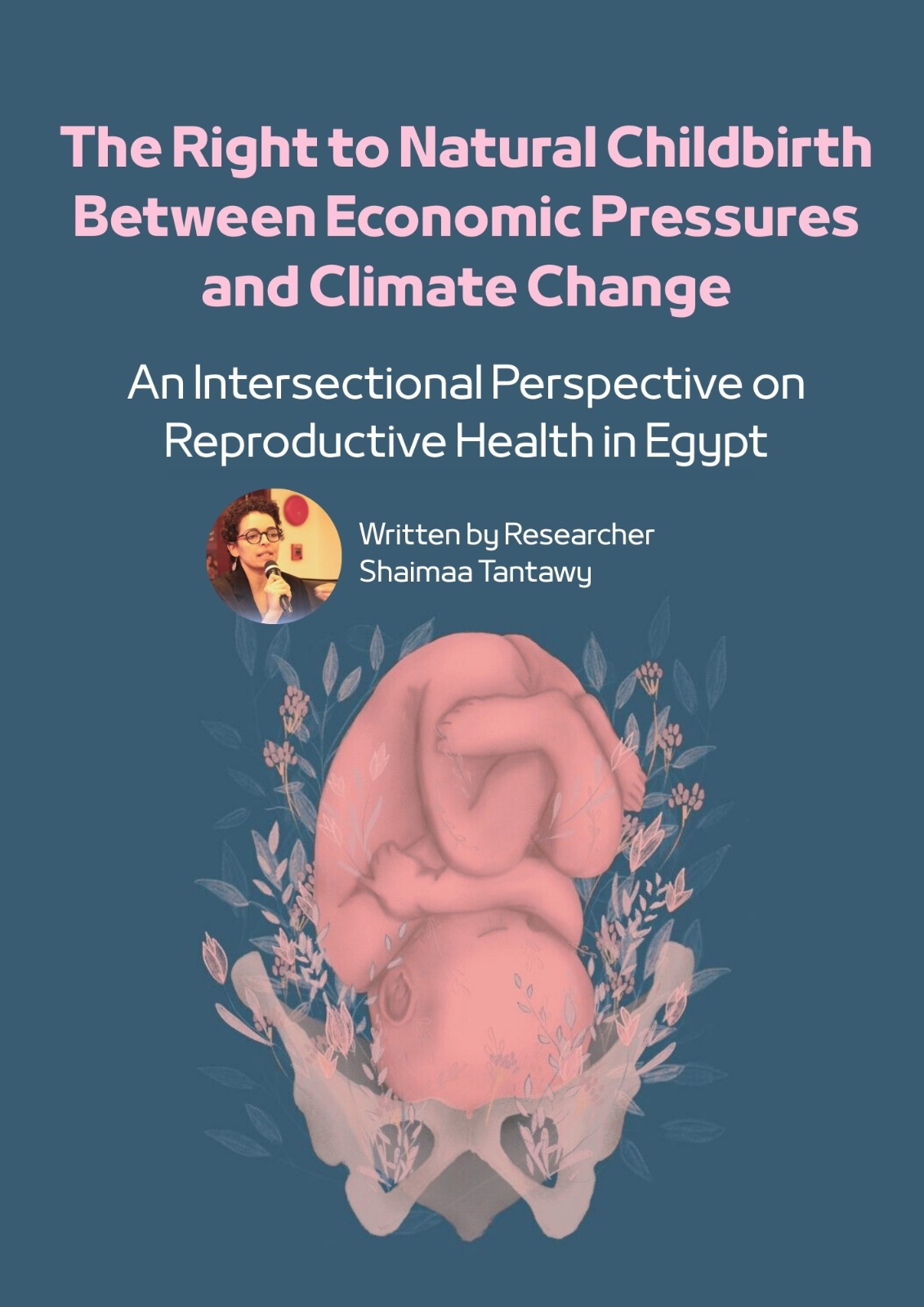
When we speak of the right to natural birth in Egypt, it quickly becomes clear that it is not a right equally available to all. Rather, it resembles a privilege shaped by multiple intersecting factors such as class, geographic location, economic capacity, and social identity. Women in rural areas face conditions that differ fundamentally from those of women in urban centers; and women in Greater Cairo do not live within the same contexts as women in remote governorates. Even within each governorate, conditions vary according to inflation levels, rising prices, and the ability to obtain essential nutritional supplements and vitamins for pregnancy alongside the uneven impacts of climate change from one area to another.
Customs and traditions play a pivotal role in shaping women’s reproductive experiences. Extended families often intervene in women’s choices, while women’s pain and complaints are dismissed as “exaggeration” or “spoiling.” Ultimately, decision-making remains in the hands of male family members particularly the husband’s family within a deeply entrenched patriarchal structure.
This inequality is clearly reflected in the distribution of caesarean and natural births. While caesarean rates rise sharply in urban centers and private hospitals where they constitute more than 63% of total births in Egypt in 2022 (one of the highest rates globally, compared to the international recommendation of 10–15%) some villages still maintain natural birth (i.e., vaginal birth), often attended by traditional birth attendants “midwife”, either due to the absence of adequately equipped health facilities or because caesarean deliveries have become prohibitively expensive.
Within this context, women’s choices are directly shaped by geography, socio-economic status, and the degree of climate-related stress. Maternal mortality in Egypt remains around 37 deaths per 100,000 live births (2020), with higher rates in rural areas and Upper Egypt compared to urban regions. In this way, it may appear that some women “choose” natural birth in remote areas; yet this “choice” often does not stem from genuine autonomy, but from the absence of even the most basic life-saving medical services if complications arise.
If we add to this picture the realities faced by women with disabilities and refugee women, the contours of compounded marginalization become even clearer. Women with disabilities encounter intensified barriers in accessing antenatal care and safe childbirth beginning with physical inaccessibility and the lack of appropriate accommodations in hospitals, extending to stigmatizing attitudes that expose them to discrimination by medical staff themselves, and culminating in weak health policies that fail to address their specific needs. In Egypt, studies indicate that women with disabilities have significantly lower access to reproductive health services than other women, and are more vulnerable to medical neglect or to decisions imposed on their bodies without full, informed consent.
Refugee women whether from Sudan, Syria, or elsewhere face additional challenges linked to economic precarity and limited legal protection, which often push them toward unsafe deliveries under harsh living conditions. A report by the UN High Commissioner for Refugees notes that refugee women in Egypt face serious difficulties in covering childbirth costs; in some private hospitals, the cost of a caesarean delivery can equal several months of a household’s income, leading many to resort to less safe alternatives. This is compounded by exposure to discriminatory or racist practices in certain health facilities, which deepens isolation and increases risks to their lives and the lives of their children.
In these situations, the right to natural birth or even the right to a safe birth in the first place becomes an unattainable privilege. Here, class, geography, disability, and refugee status intersect to determine which women can access basic rights, and which women are excluded from even the minimum forms of protection and care.
Toward Reproductive Justice: Recommendations to Secure the Right to Natural Birth
After examining the economic, climatic, and social factors reshaping the reality of natural birth in Egypt, the state must place women at the center of public-health interventions not treating them as instruments for demographic objectives related to controlling fertility rates, but recognizing them as rights-holders with entitlements to bodily, reproductive, and sexual health. It becomes necessary to move toward practical recommendations that guarantee this right as part of gender justice.
To ensure that natural birth becomes a real right for all women, we recommend the following:
1. Guarantee natural birth as a genuine and safe option
Consistent with Article 12 of the International Covenant on Economic, Social and Cultural Rights (ICESCR), which affirms the right of every person to the highest attainable standard of health, the state should develop health infrastructure in both public and private hospitals and train medical staff in safe, modern practices that support natural birth.
2. Provide integrated nutrition and comprehensive healthcare for pregnant women
In line with Article 12 of the Convention on the Elimination of All Forms of Discrimination against Women (CEDAW), which calls for ensuring “adequate nutrition during pregnancy and lactation,” the state should commit to providing subsidized essential vitamins and nutritional supplements in order to protect women’s health and newborn outcomes and to reduce the economic burden on families.
3. Strengthen oversight of private medical institutions
Drawing on General Comment No. 22 of the Committee on Economic, Social and Cultural Rights, which underscores non-discrimination in access to sexual and reproductive health services, the state should establish effective oversight mechanisms to ensure that private hospitals reduce unnecessary caesarean births and protect women from financial exploitation.
4. Protect the most marginalized women
In accordance with CEDAW’s non-discrimination principles, tailored policies should address the realities of women in rural areas, women with disabilities, and refugee women guaranteeing their access to safe healthcare that is free or low-cost, including antenatal, childbirth, and postnatal care.
5. Enable meaningful participation by civil society
In the spirit of the International Conference on Population and Development (ICPD, Cairo 1994), which emphasized the role of local communities in advancing reproductive health, the state should allow civil society organizations to play their role in raising awareness among women and medical personnel and in providing psychosocial support without restriction or undue interference.
6. Confront discrimination and gender-based violence within medical settings
Consistent with Article 12 of CEDAW, which obliges states to ensure healthcare free from discrimination, reproductive health policies should include mandatory training for doctors and health workers on gender-sensitive care, and should end violent, coercive, or humiliating practices against women during pregnancy and childbirth.
Ensuring a safe natural birth is not merely a health issue it is a matter of social justice and human rights. Unless the economic, discriminatory, and climate-related barriers that constrain women’s choices are removed, natural birth will remain a privilege for some rather than a guaranteed right for all women.
The Right to Natural Birth: Between Economic Pressures and Climate Change
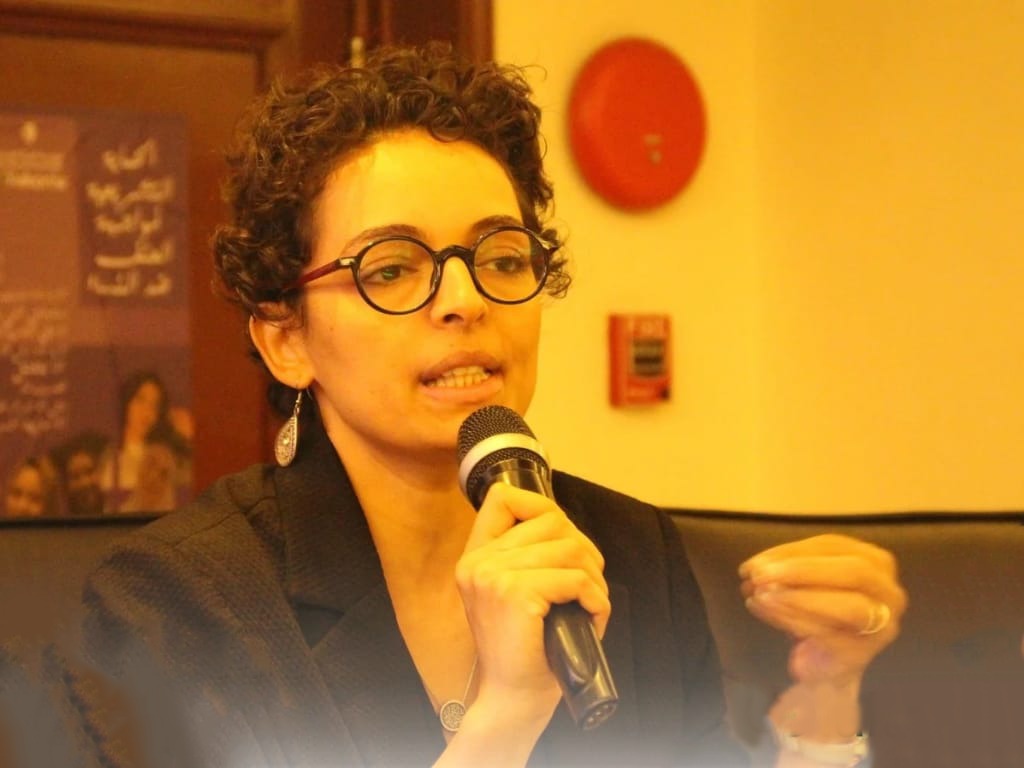
By Shaimaa Tantawy
Last month, the official spokesperson for Egypt’s Ministry of Health and Population issued a formal statement announcing the introduction of new standards for the medical sector to promote natural birth and reduce caesarean births, which the Ministry described as “medically unjustified.” The statement outlined a package of mandatory regulatory measures applicable to all medical facilities, aimed at reducing caesarean-section rates which according to the Deputy Minister of Health, based on data from the 2021 Egypt Demographic and Health Survey surpassed an alarming 72% of total births in Egypt last year.
This medically unjustified surge reveals a crisis far deeper than a mere “clinical choice.” It exposes the pathways through which healthcare institutions engage with women’s overall health on the one hand, and their sexual and reproductive health on the other. This statistic raises numerous urgent questions: How are decisions made when women’s lives and health are at stake? Are women transparently informed and meaningfully supported to understand all available options? Do women make autonomous decisions regarding their own bodies, their health, and the health of their children or are these rights over women’s reproductive bodies systematically constrained by male family authority on one side and male-dominated state institutions on the other? Do physicians approach these decisions purely from a medical perspective, or do financial incentives and time–cost calculations shape decision-making given that caesarean births can be scheduled more predictably and may yield higher financial returns relative to time, compared to natural births?
This disregard for women’s health and for their physical and psychological recovery raises broader questions about the right to natural birth as an essential and integral component of the right to health, and about how this issue intersects with escalating economic pressures and climate crises that are fundamentally reshaping daily life.
A Suspended Right: Natural Birth Between Policy Decisions and Lived Reality
While discussing natural birth as a right may appear self-evident for women, the most pressing question remains: Which women actually possess the freedom to make informed and voluntary choices? And what meaning does this “right” hold if it is presented in the form of mandatory procedures, without providing the tools and mechanisms that ensure implementation on the ground and make it a realistic, accessible option for all?
Natural birth cannot be discussed in isolation from the adequacy of medical infrastructure and facilities, nor from the existence of healthcare institutions that genuinely recognize the importance of women’s reproductive health and recovery. This also requires trained medical personnel who operate from principles of care and wellbeing rather than profit-and-loss calculations or the minimization of women’s pain and complaints as exaggeration. The right to natural birth is intrinsically linked to dismantling gender stereotypes about women’s capacity to endure, and to recognizing that women’s health conditions today have fundamentally changed from what they once were. These transformations include escalating economic pressures, the impacts of climate change and rising temperatures, and, finally, the scarcity of healthy, balanced nutrition that provides mothers and fetuses with essential nutrients all within a context of limited or ineffective governmental support.
Nevertheless, women are expected to choose natural birth, while private hospitals impose a contradictory reality predicated on increasing caesarean births as more profitable and less demanding for physicians. In the absence of serious oversight mechanisms, the question persists: How will the state ensure that the “procedural package” announced by the Ministry of Health translates into actual implementation? Do women in rural areas or in more structurally vulnerable governorates possess the same access to safe natural birth as urban women who can afford higher-quality healthcare?
In this sense, the right to natural birth becomes a conditional and circumscribed right indeed, closer to a privilege accessible to some rather than a fundamental guarantee for all women.
From Inflation to Desertification: How Women’s Health and Their Right to Natural Birth Are Being Reshaped
Economic and social pressures intersect with climate change to render pregnancy and childbirth an increasingly harsh experience for women, fundamentally reshaping their relationship with the right to natural birth.
At the economic level, women and their families bear exorbitant costs throughout pregnancy to secure adequate nutrition, dietary supplements, and vitamins, amid the absence of supportive governmental policies that provide these basic necessities equitably and accessibly. Official data indicate that approximately 29.7% of Egyptians live below the poverty line (CAPMAS, 2023), meaning that a substantial segment of pregnant women lack the means to afford the food or medication necessary to maintain their health and that of their fetuses consequently losing the capacity to physically prepare their bodies for a safe natural birth.
The state is presumed to provide tools and mechanisms that support women in improving their health before and during pregnancy, through the provision of essential vitamins and nutritional support for both mother and fetus. However, women are left to confront an inflated pharmaceutical and food market that compels them to expend substantial sums throughout pregnancy merely to maintain the health conditions that enable natural birth. The critical question thus arises: How will the state provide a comprehensive health program for pregnant women one that includes subsidized nutritional supplements and fortified vitamins during pregnancy and lactation thereby supporting natural birth? Can the state prioritize women and their reproductive health with the same level of commitment demonstrated in the provision of contraception within population policies?
At the environmental level, manifestations of climate change including desertification and the contraction of green spaces have significantly contributed to rising temperatures and worsening heat stress. This, in turn, restricts pregnant women’s options to engage in even the most basic forms of physical activity, such as walking an activity often considered supportive of physical readiness for childbirth. However, the absence of women-friendly public spaces denies them this possibility, while streets remain unsafe due to gender-based violence. Thus, even simple daily movement becomes an additional risk rather than a means of care and health.
Women in the labour market face a compounded burden of paid work and unpaid domestic labour, as workplaces generally do not adopt gender-responsive policies, particularly regarding pregnant women. This renders the experience of working during pregnancy insufficiently protected by labour laws and workplace policies. Additionally, many women work in deteriorating governmental facilities that lack adequate infrastructure to cope with rising temperatures and intensifying climate impacts, while others engage in informal or daily wage labour for meagre compensation within unprotected work environments further compounded by severe climatic conditions.
Meanwhile, women who do not participate in the public labour market are not spared the burden of exhausting domestic work under deteriorating climatic and economic conditions often within private domains where compounded forms of violence and discrimination are practiced against them.
In all cases, it becomes evident that what is termed the “right to natural birth” is a conditional and constrained right, governed by economic, climatic, and cultural systems that do not center women’s health and wellbeing as a core priority. As these economic and climate challenges intensify, their impact remains most severe on the most vulnerable women from women in provinces and rural areas, to women with disabilities and refugee women who find themselves facing compounded adversity within a reality that neither recognizes their choices nor provides the minimum standard of safe care. This raises a critical question: What impact does discrimination produce when it intersects with deficiencies in healthcare services?
Further details to follow in the forthcoming installment…