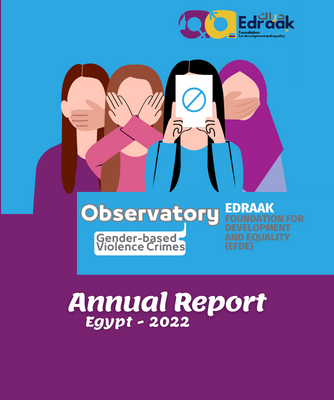
Gender-Based Violence Crimes Observatory Report 2022

The report aims to provide an analytical reading of the violent crimes against women and girls in Egypt during the year 2022. The report incorporates both descriptive and analytical approaches in collecting information and data, following the monitoring of and documenting the media coverage of the majority of gender-based violence crimes against women and girls posted in official and private newspapers issued in the spatial scope of the Arab Republic of Egypt and during a time frame that includes the year 2022.

You can view the report here: تقرير مرصد جرائم العنف 2022

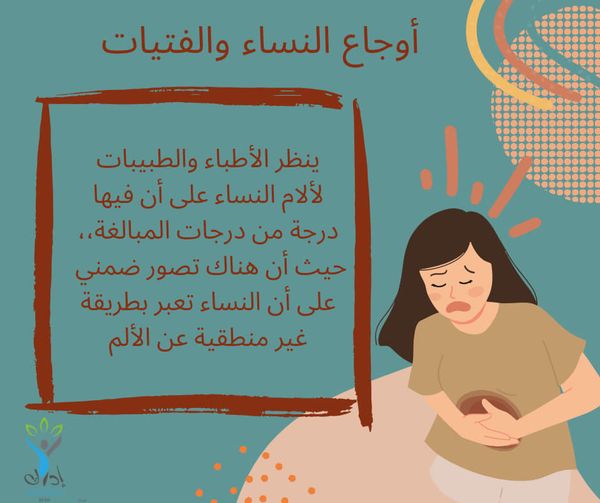
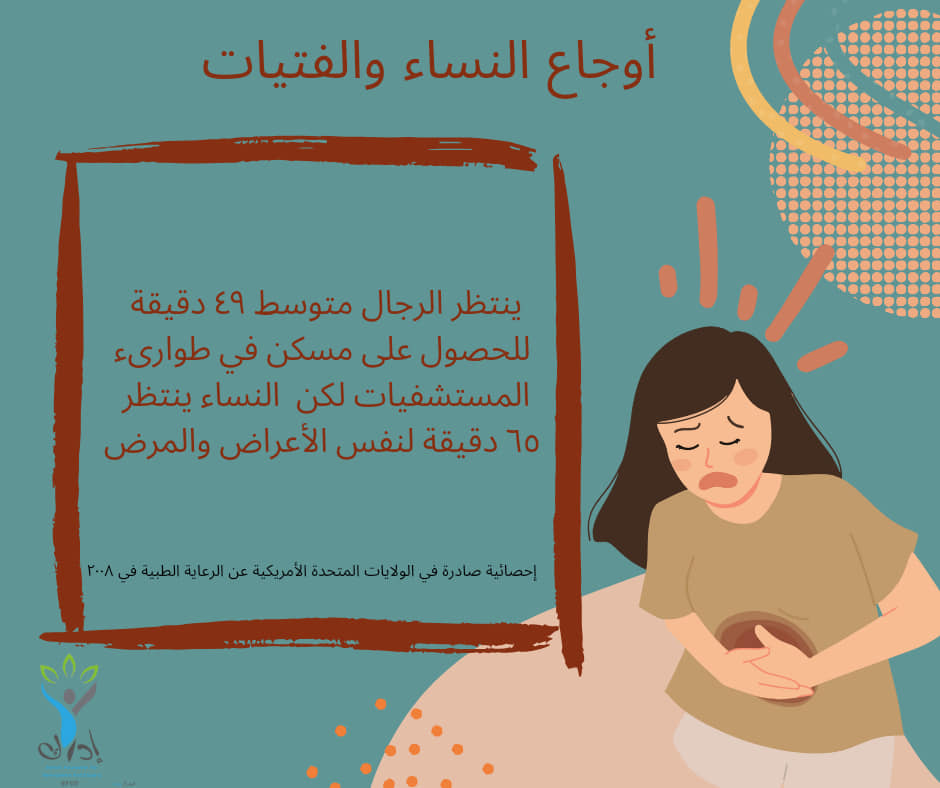
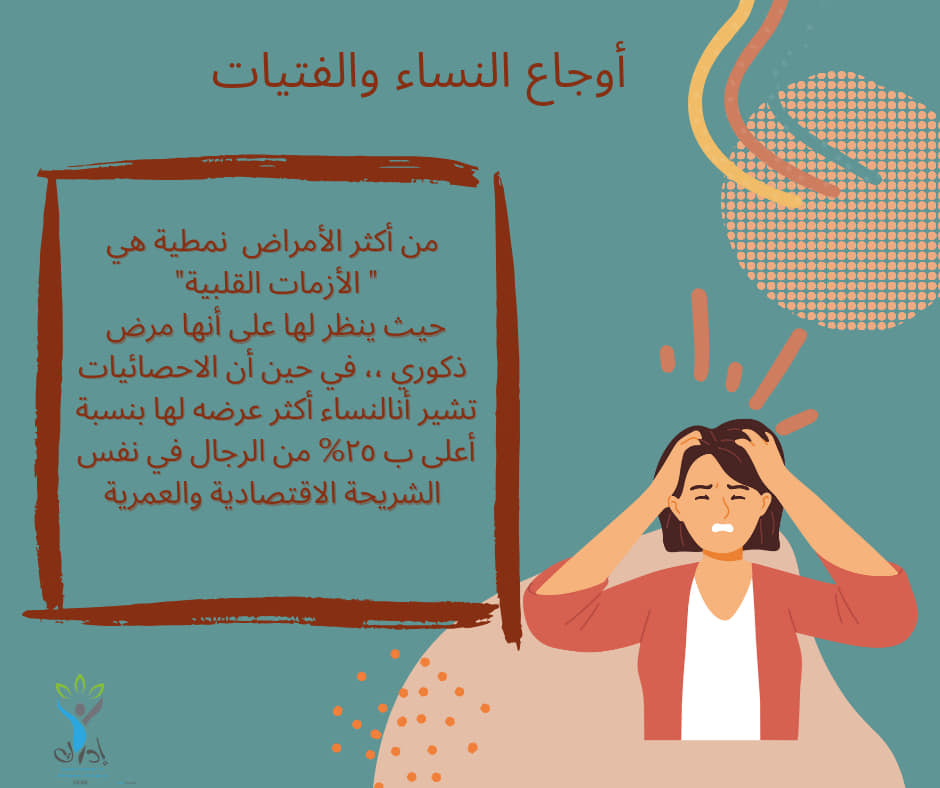
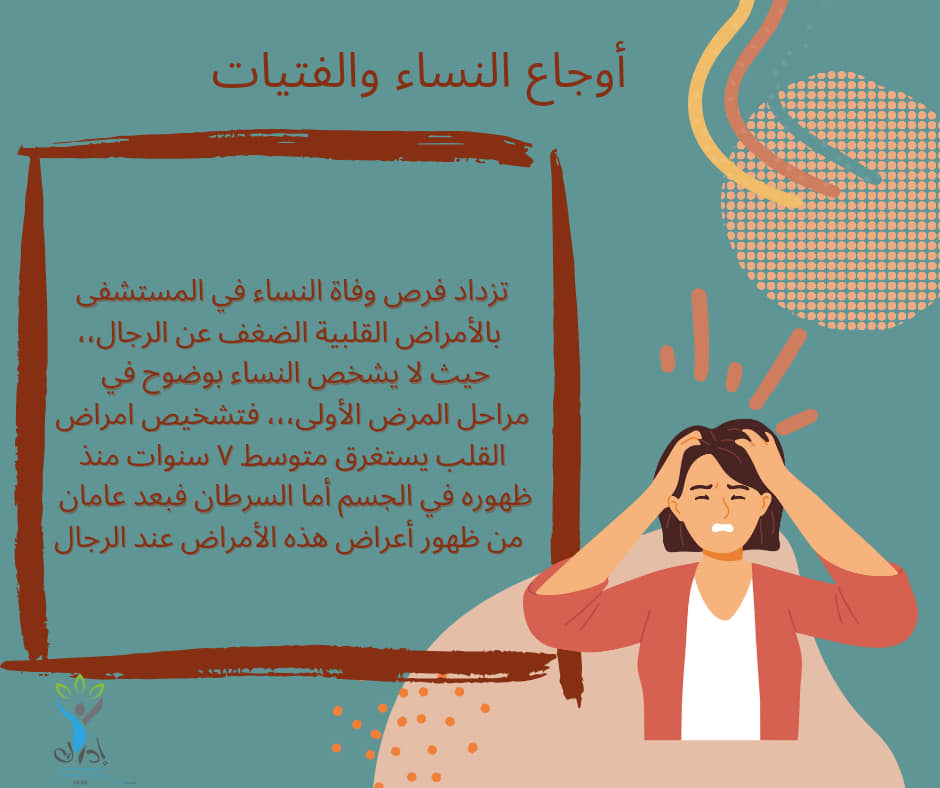
Girls’ aches and pains

Women are often subjected to underestimation and minimization of their sufferings and issues, even within the medical sector, which is responsible for understanding all human pains. However,  due to the role played by culture and its influence on medical workers, they underestimate women’s pain and complaints, especially those related to menstrual pain.

Therefore, the campaign is dedicated to highlighting this underestimation and its impact on women’s health. It uses the scientific content provided by the episode of the Al-Daheeh program as a guide.

I’m the big sister

I’m the big sister

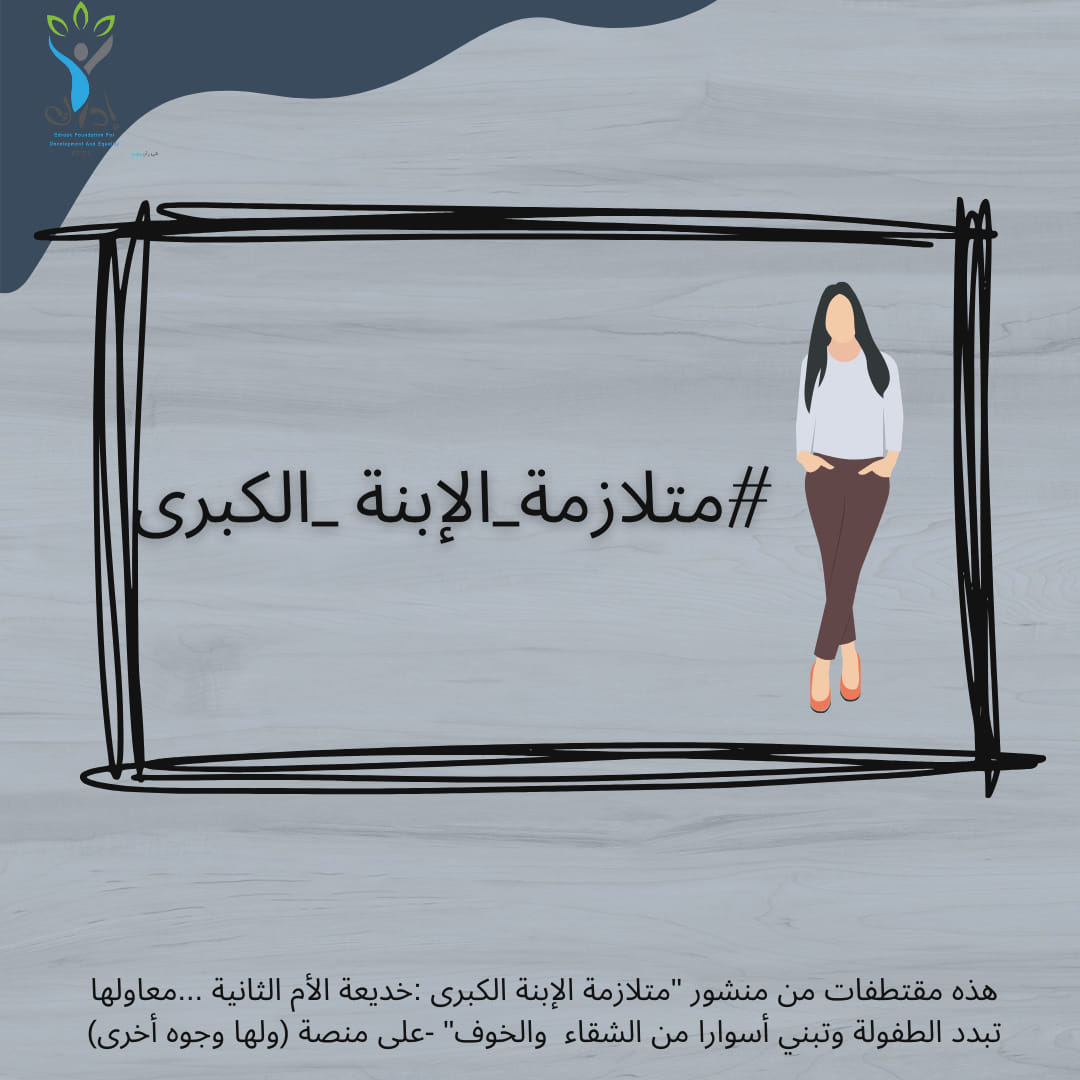
Being the eldest daughter in the family means that everyone expects you to be a substitute for the mother, her hands and eyes in the house. You are not a child in this house, but rather a partner of the mother and father in their duties towards this family. We launched this campaign after an article was published a few days ago on the platform “ولها وجوه أخرى – Wlaha Wogoh Okhra”.

Ms. Shaimaa Saleem talks about how girls’ lives are completely different if she is the first child in the family or the second child after a male sibling, how this affects her view of herself and others’ view of her and how she interacts with them and indirectly forces her to bear a responsibility that her younger sisters/brothers do not bear as well as the high expectations that everyone sets for her and consequently, the greater punishment, both physically and psychologically,  if she does not conform to these expectations.

How many times have we heard a parent bragging that their daughter “washes, mops, cooks, and takes care of her mother and sisters”? How many times have we heard the phrase “Have another child and his sisters will take care of him?” How many times have we treated the marriage of our older sisters as a tragedy, as if our mother herself decided to leave the house and live with another man and not our sister? …. How many times have we, as older daughters, taken on the responsibility of dealing with the problems of our younger siblings not as their sister but as their mother? How many times have we decided to give up our dreams in favor of taking care of a sick parent?

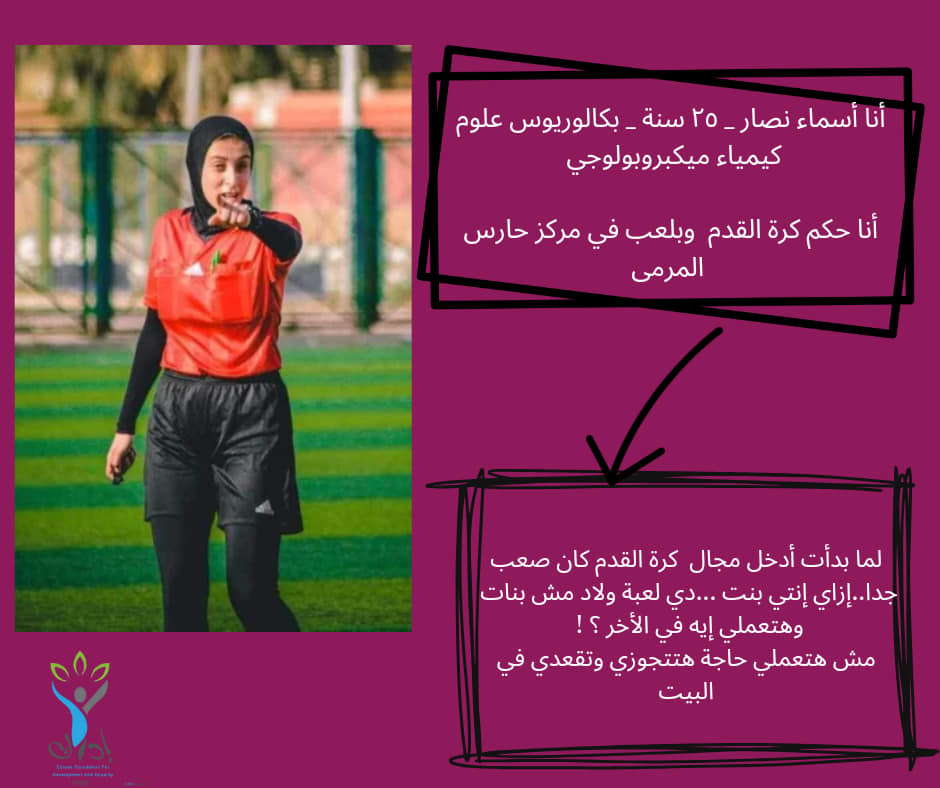
The eldest daughters did not choose these responsibilities, they were forced on them by their families and society. Because their stories deserve to be heard, the “I’m the big sister” campaign worked on publishing stories shared by women – who are/were eldest daughters- following the campaign’s aim to emphasize the reality of their sufferings under the hashtag #أنا_الأخت_الكبيرة
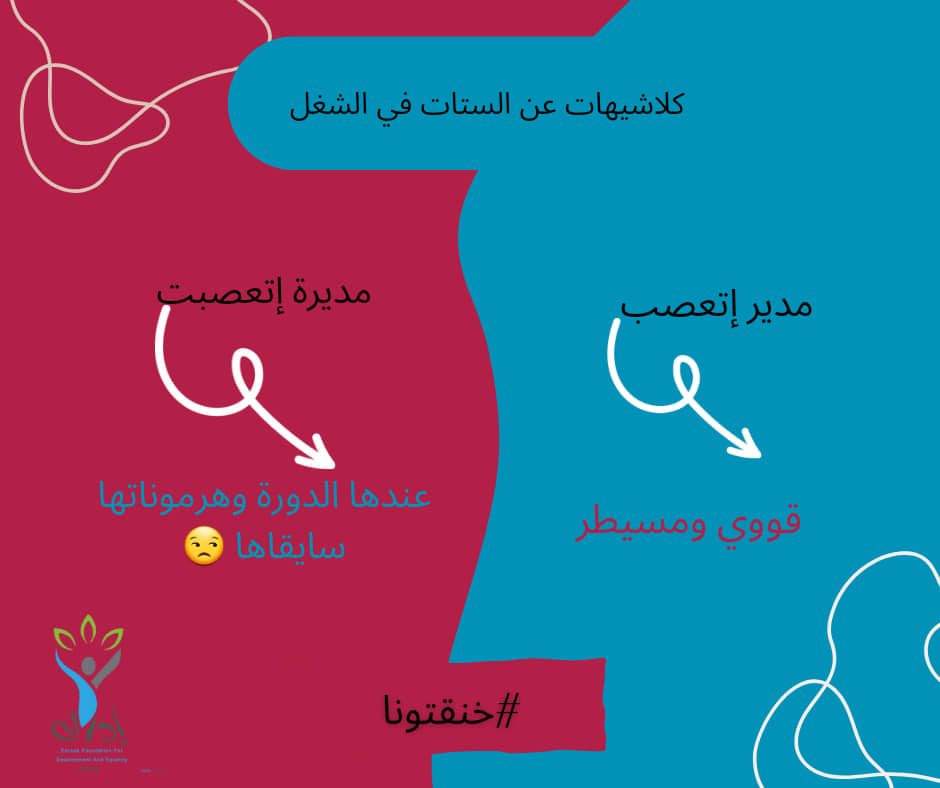
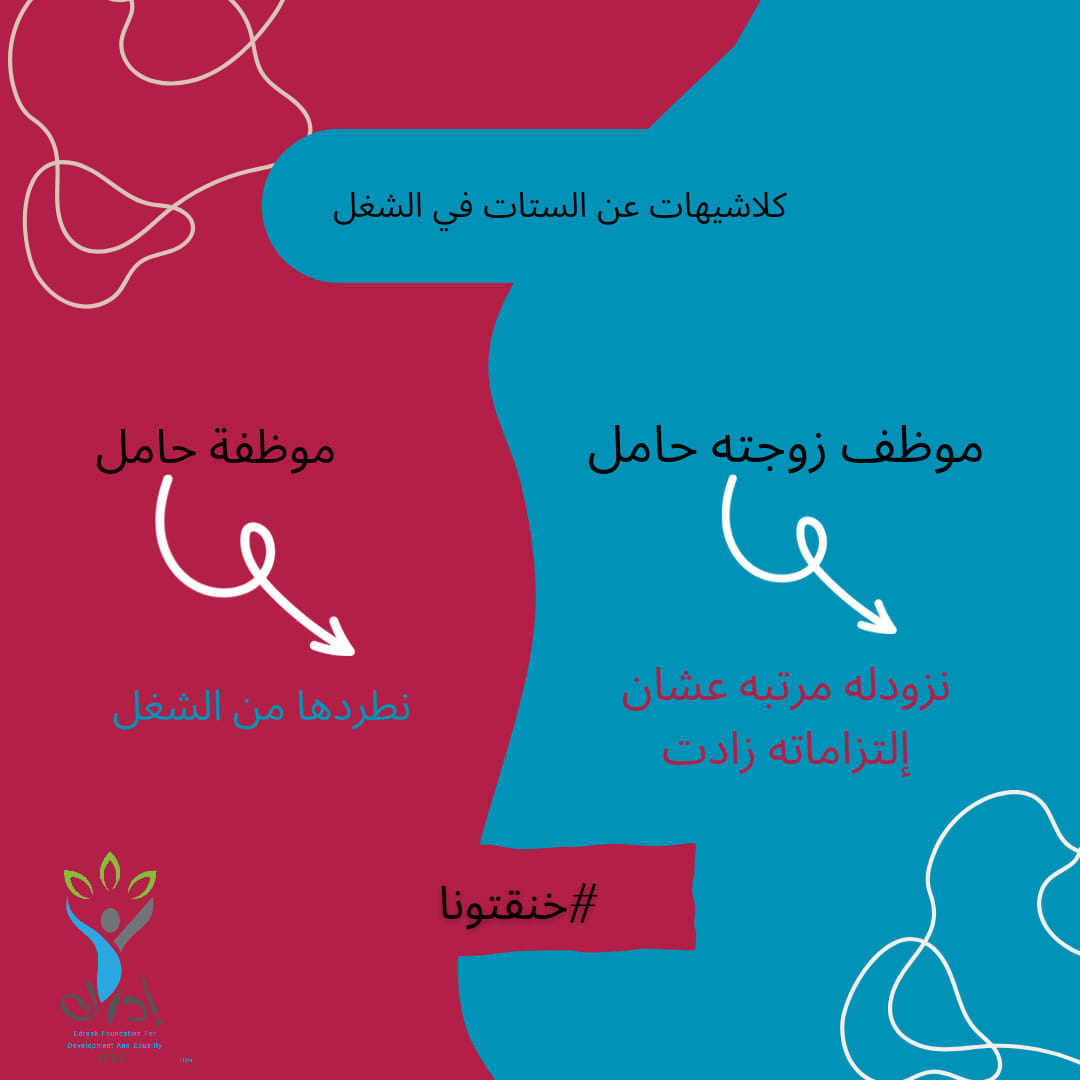
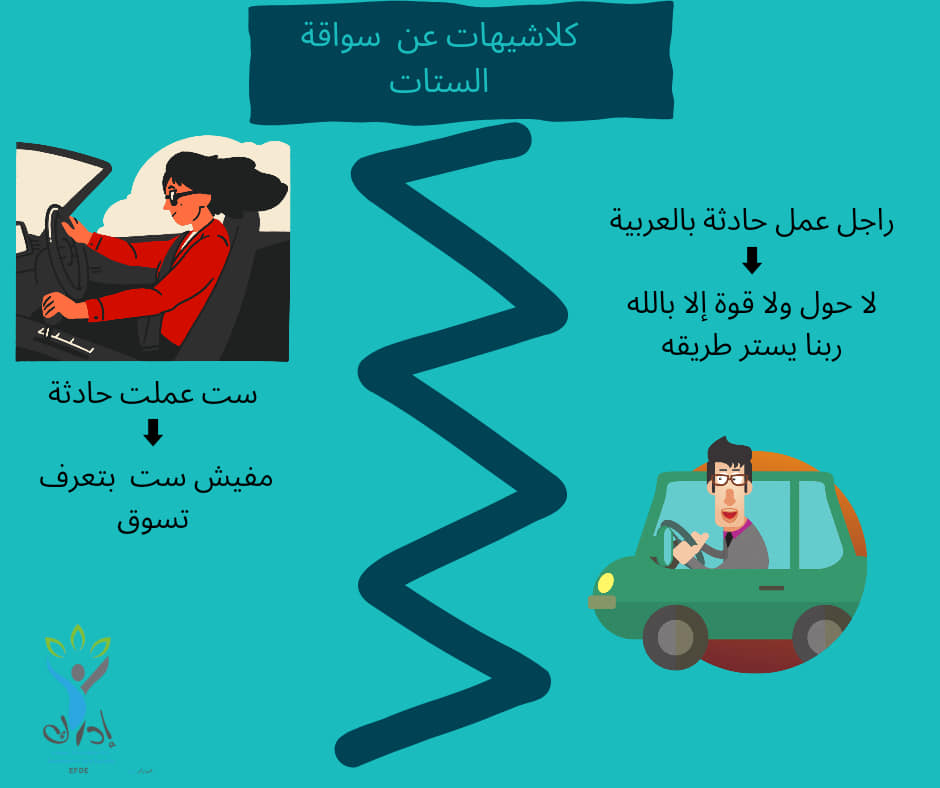
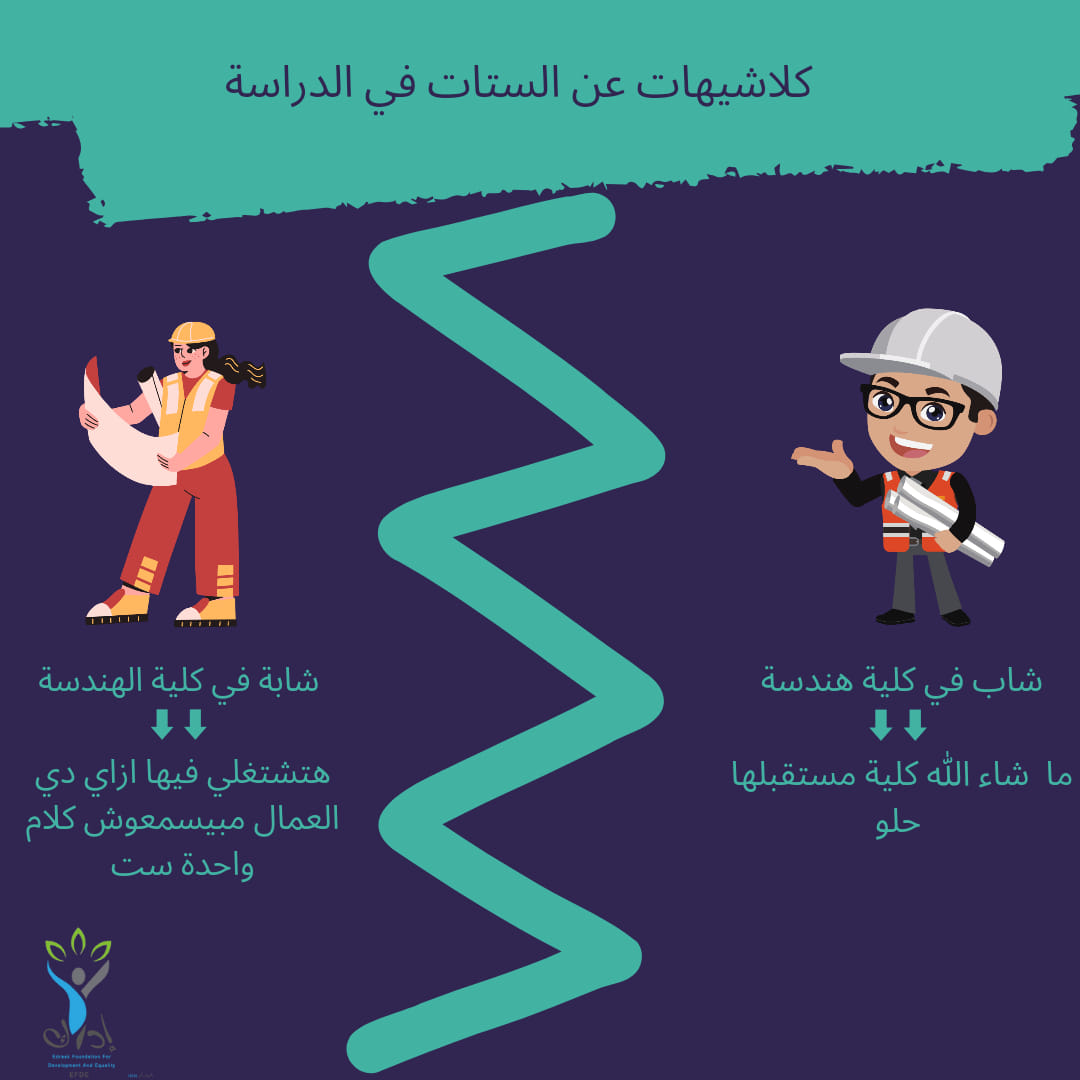
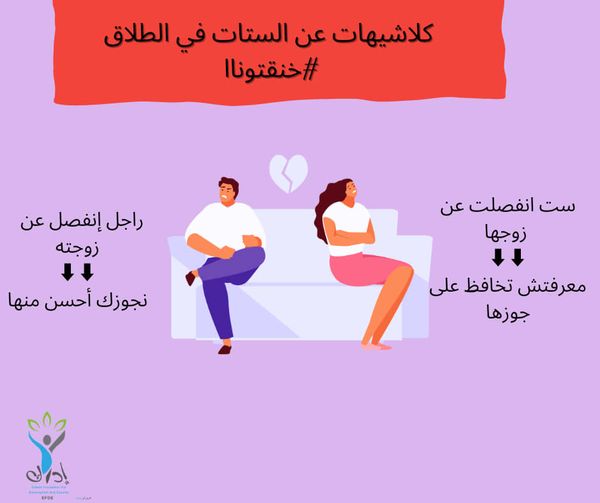
You Suffocated Us!

It is a campaign launched by Edraak Foundation for Development and Equality about the most common forms of stereotyping that women are placed in in the public and private spheres. This stereotyping and discrimination is fueled by society, customs and traditions that view women as second-class citizens who have duties but have no rights or gains.

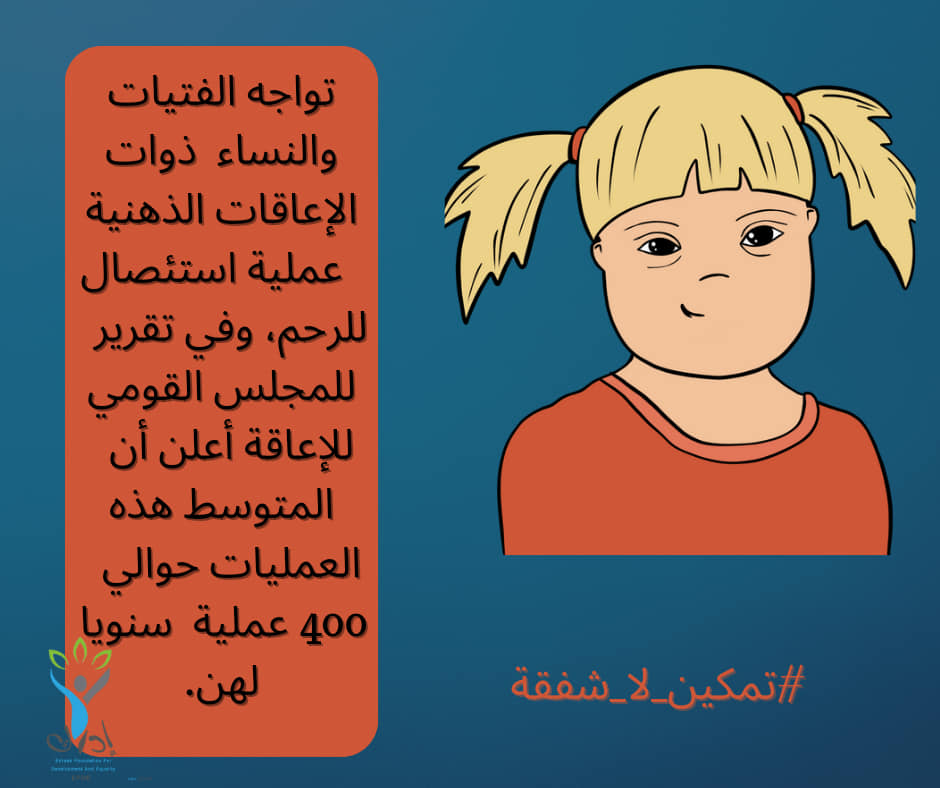
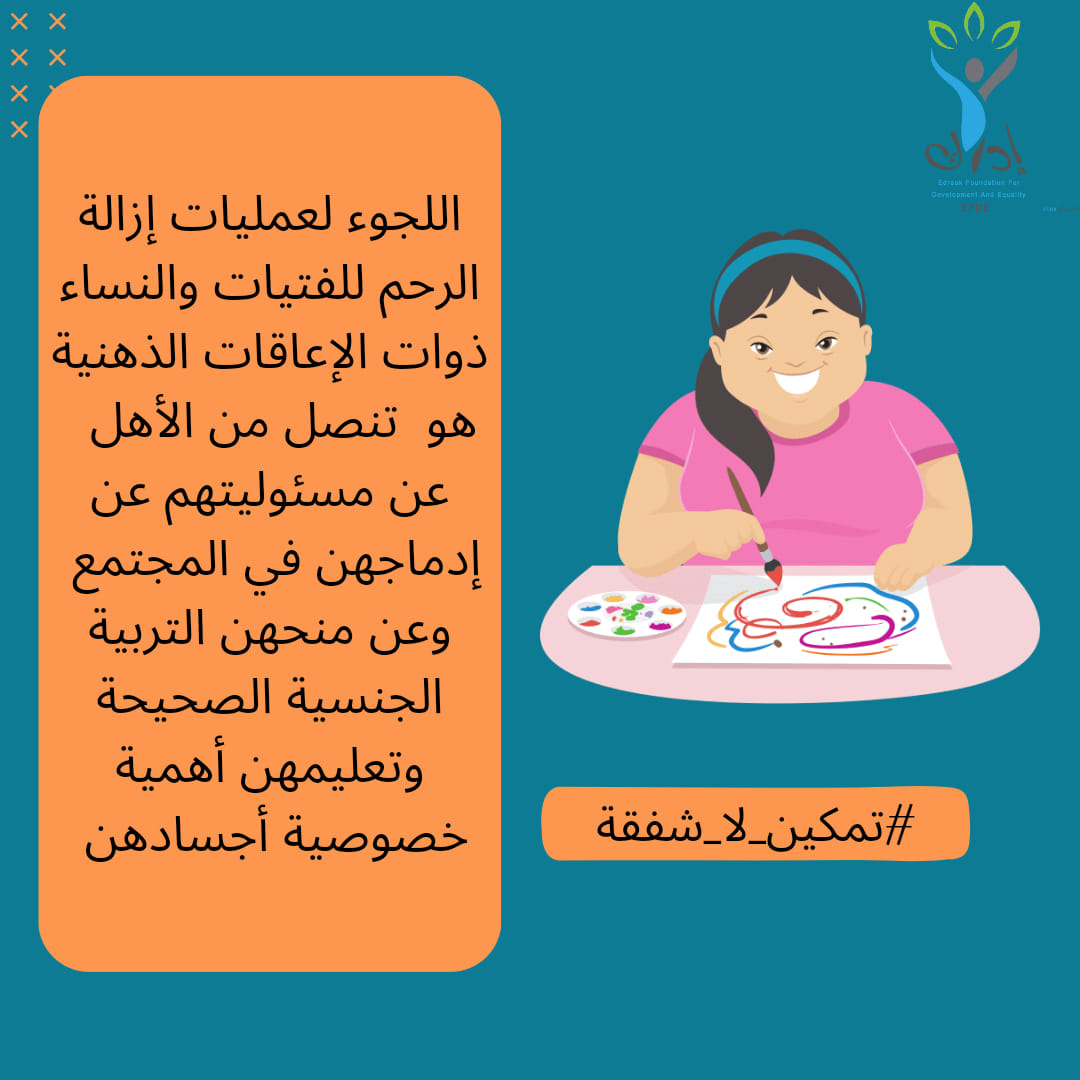
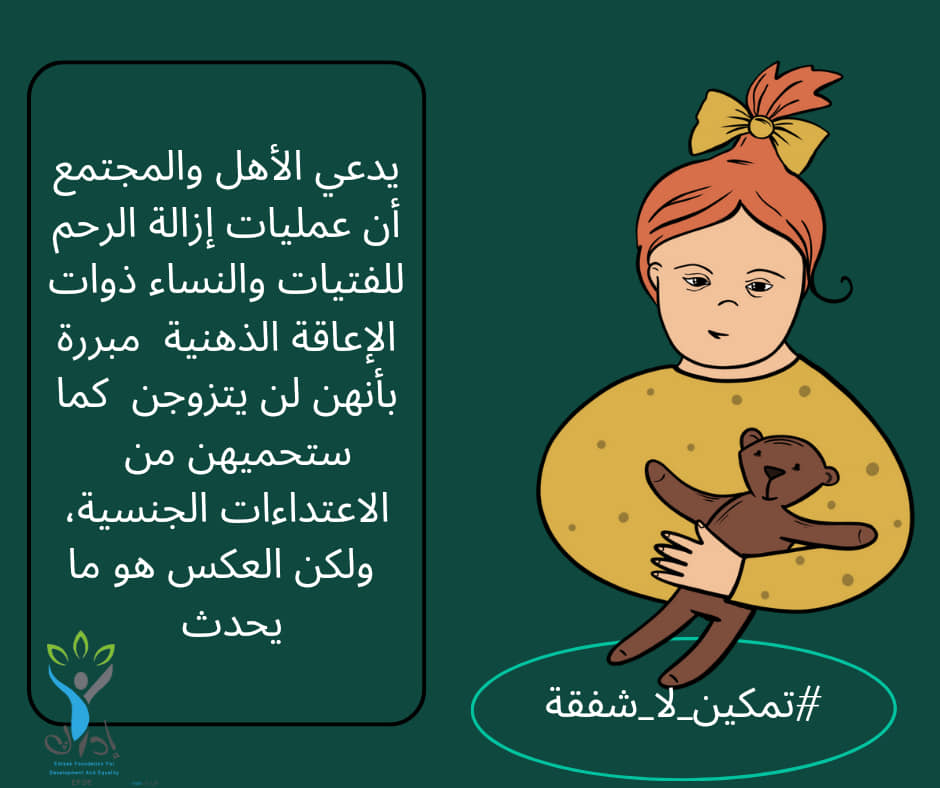
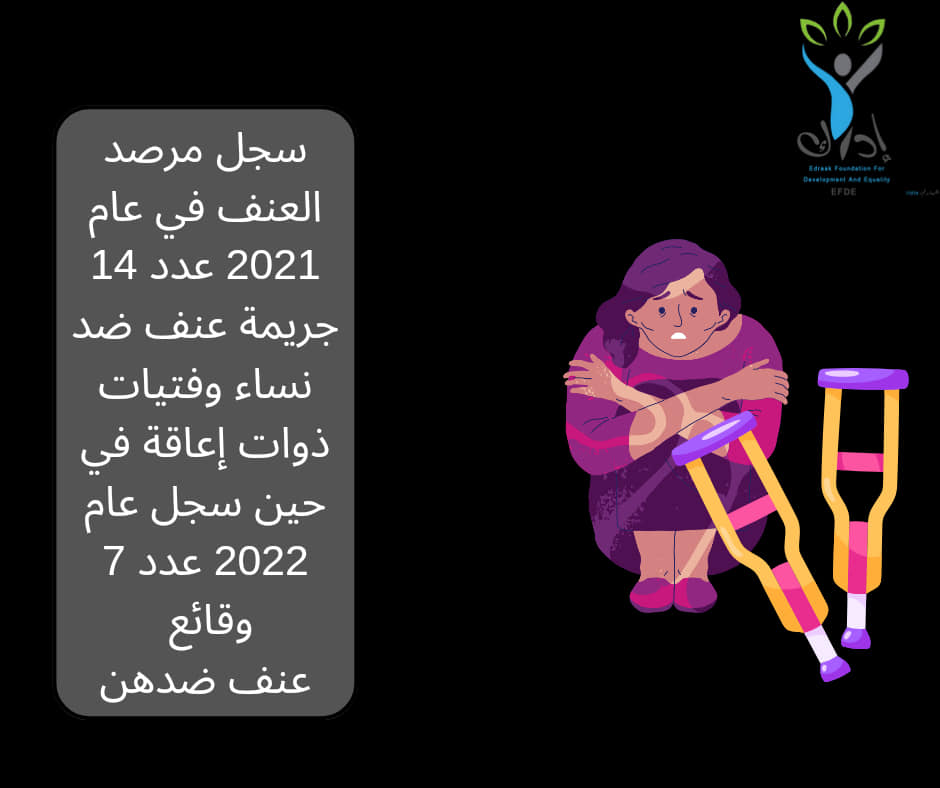
Empowerment, not pity

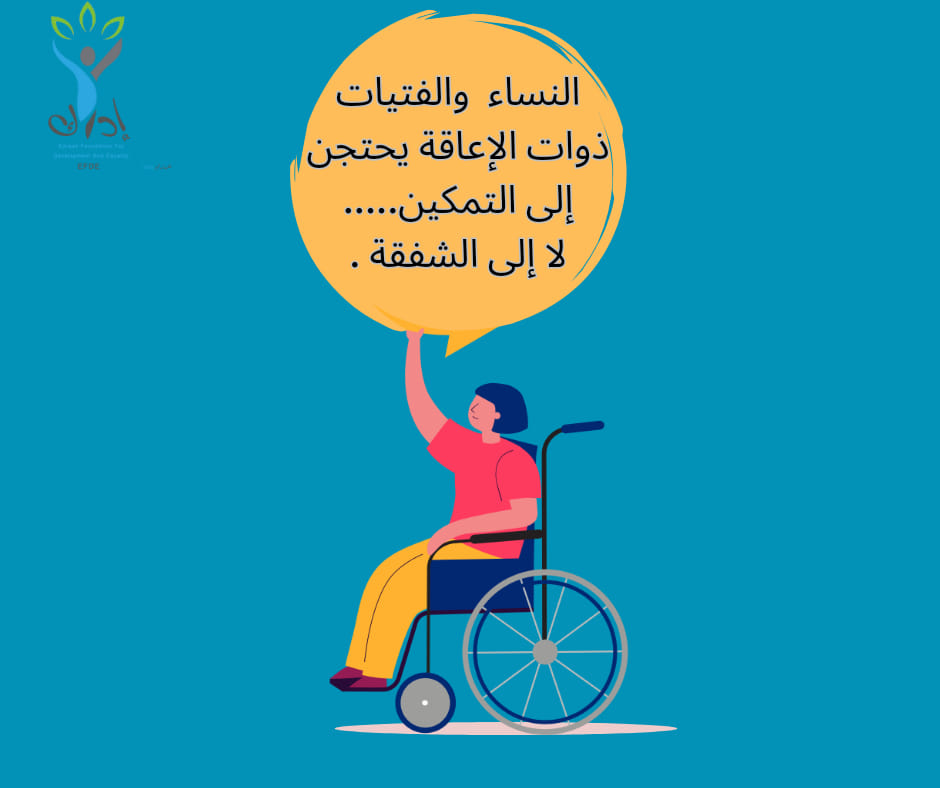
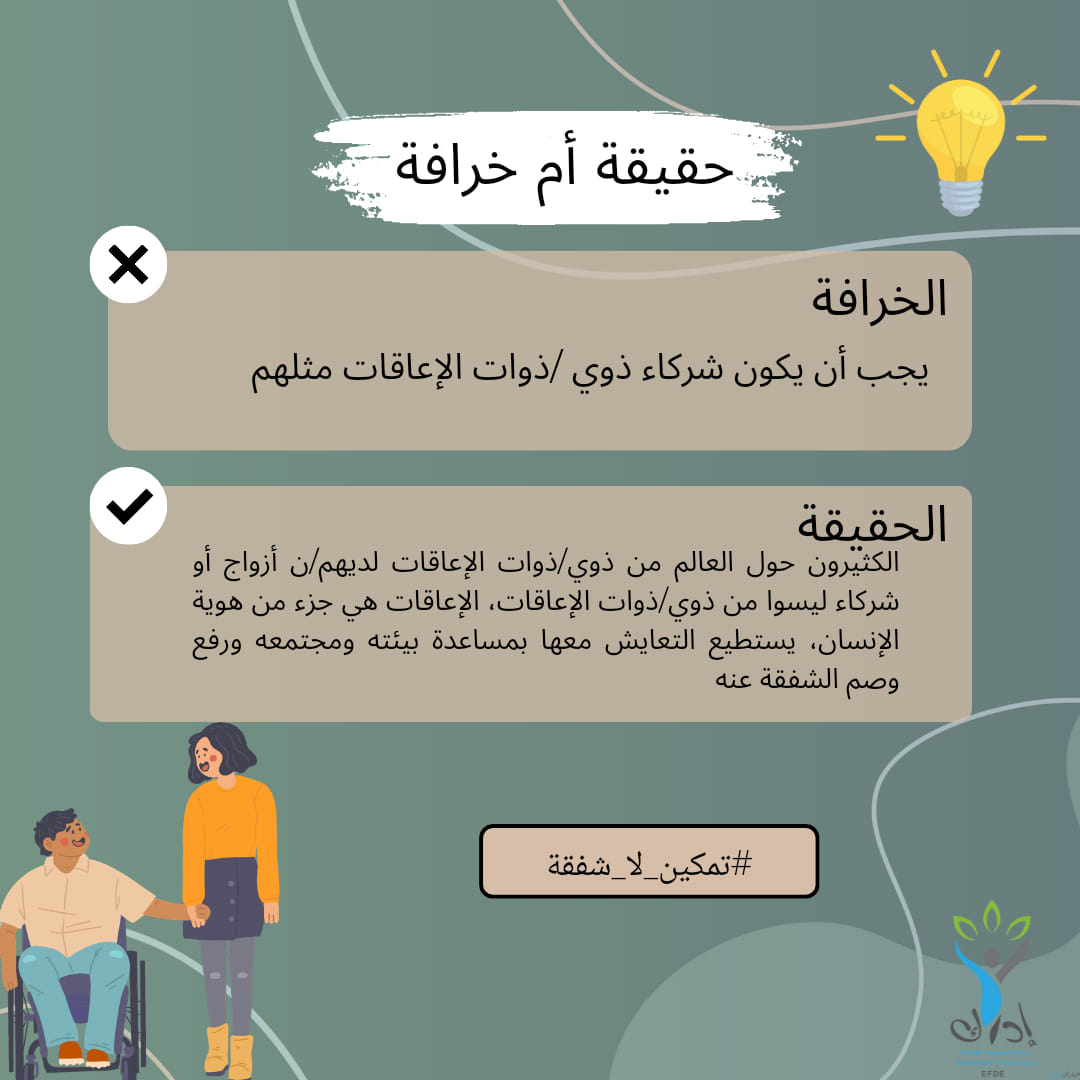
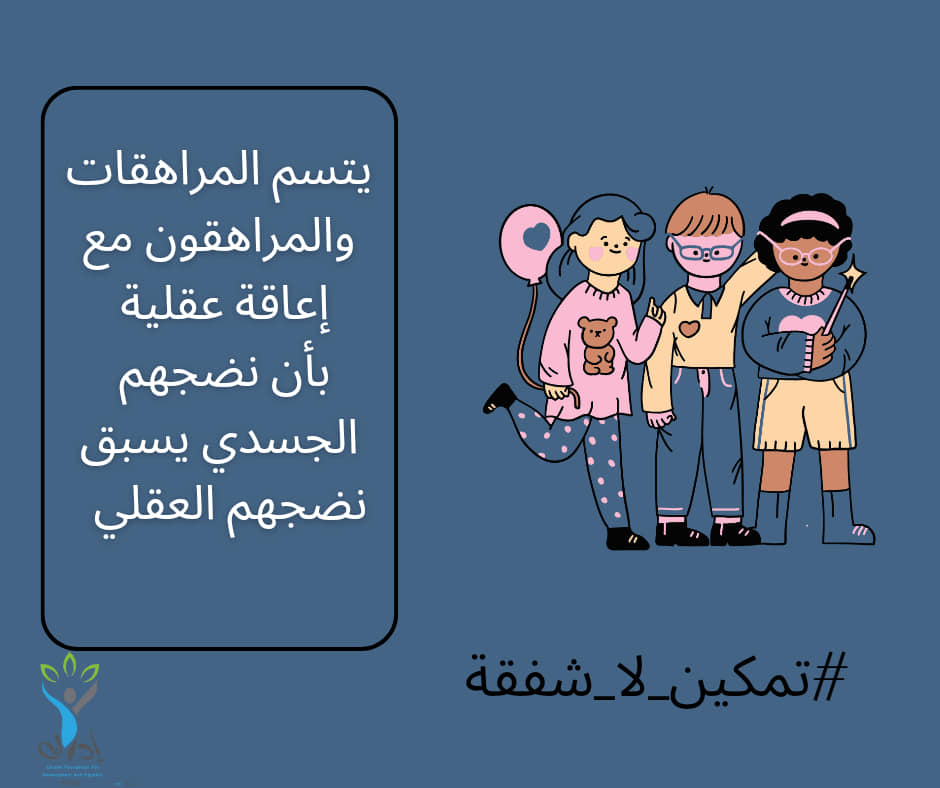
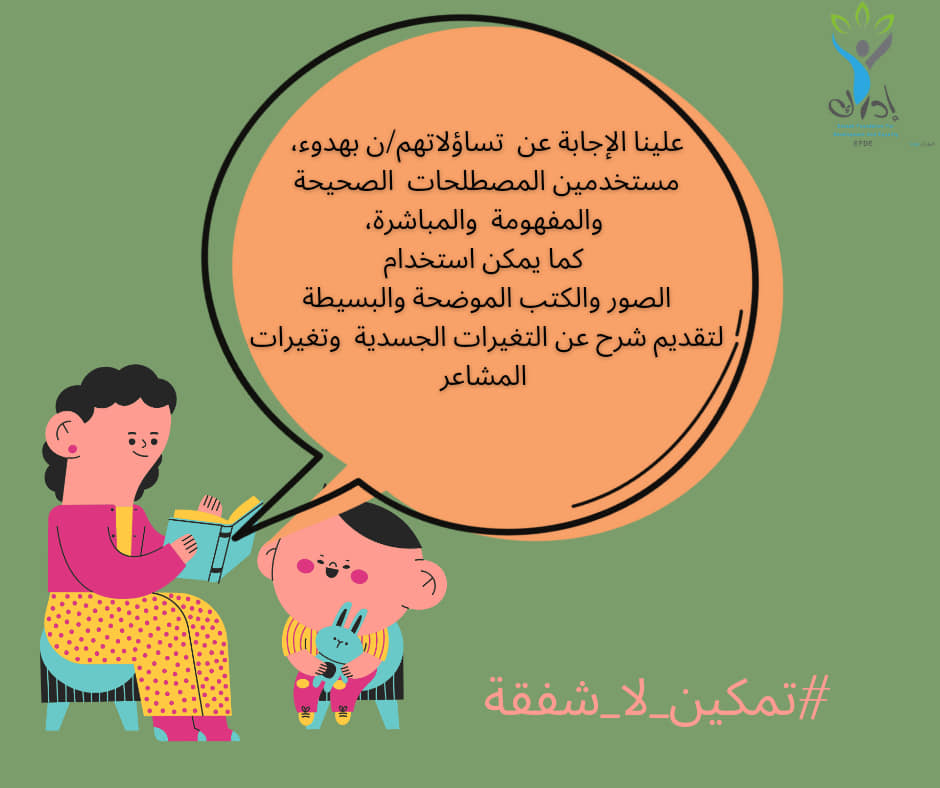
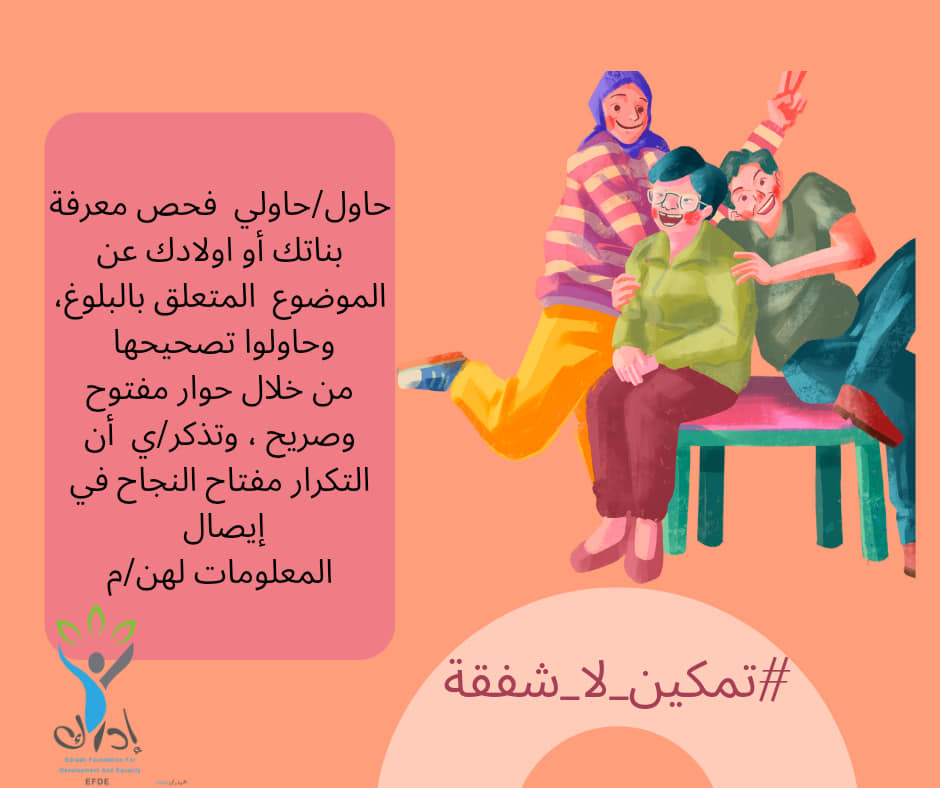
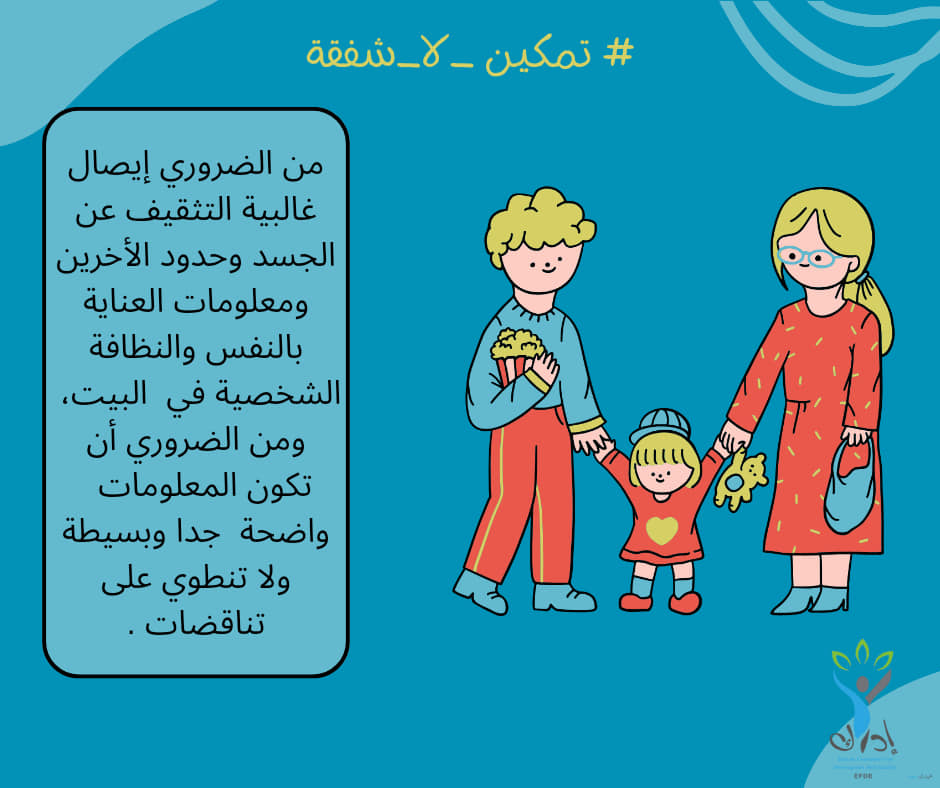
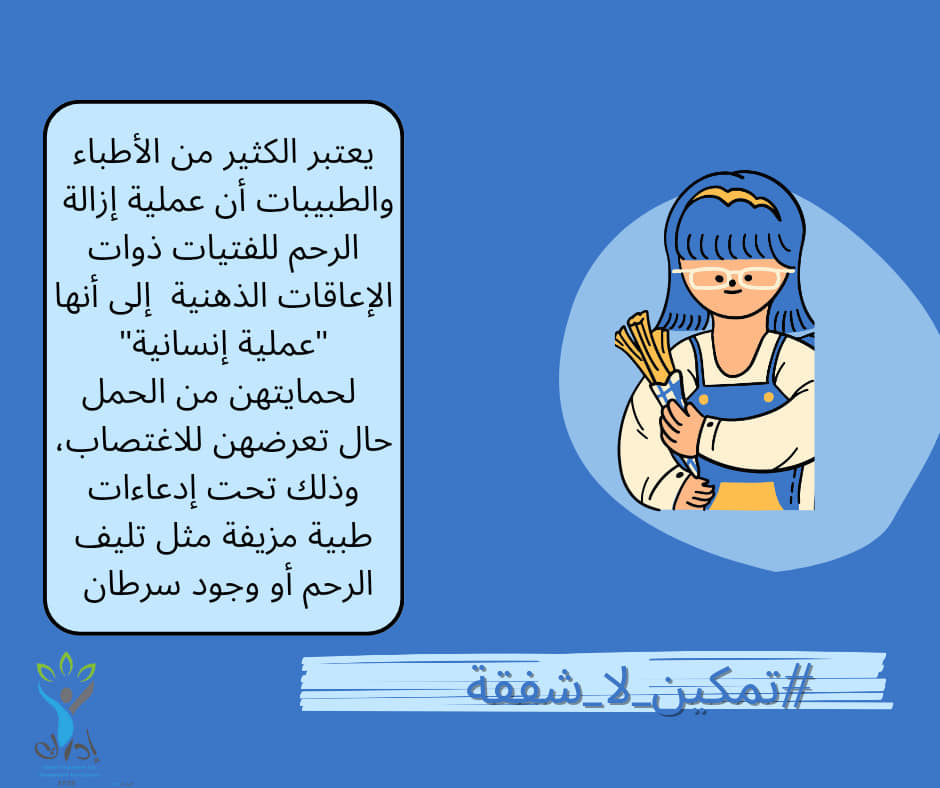
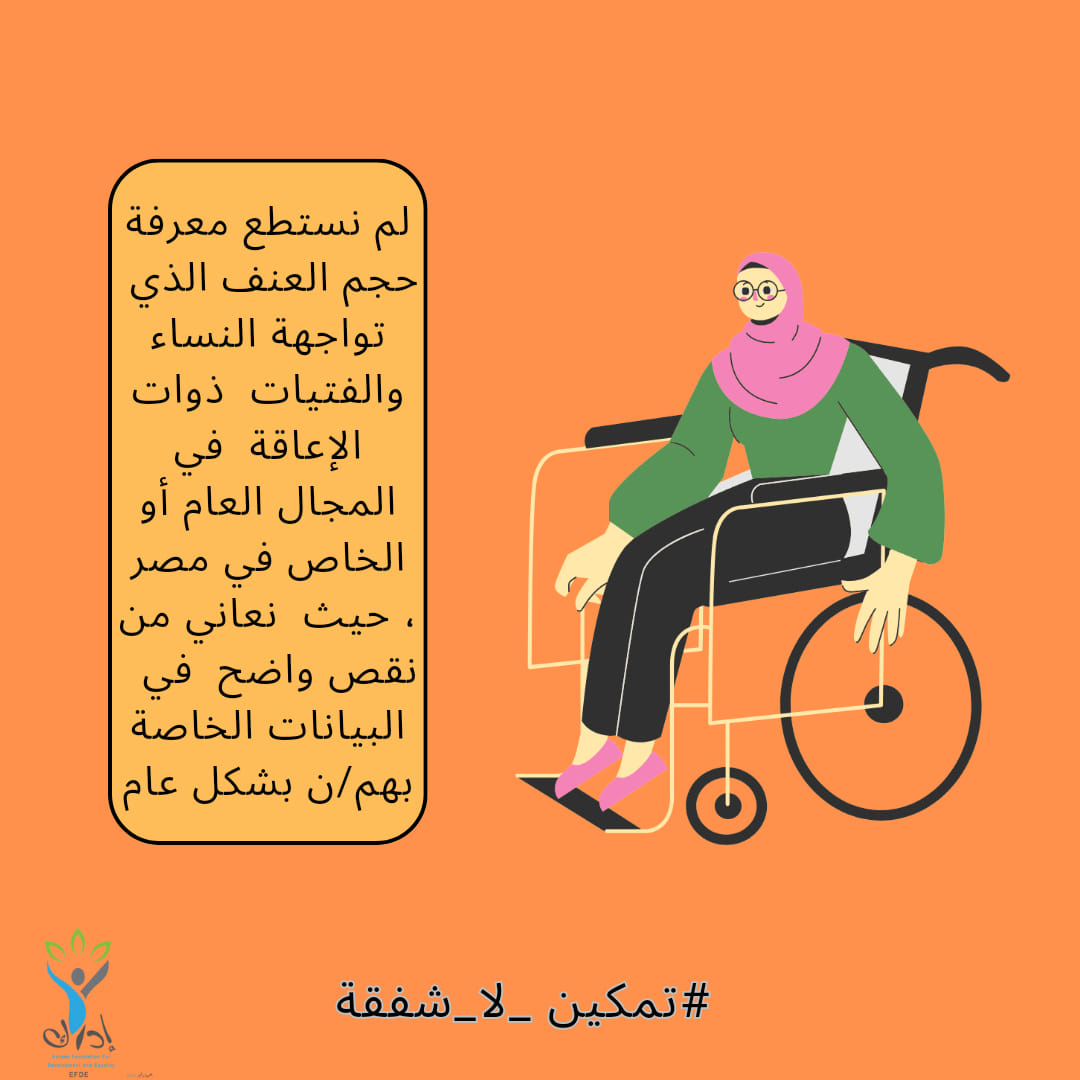
Women and girls with disabilities need empowerment, not pity.

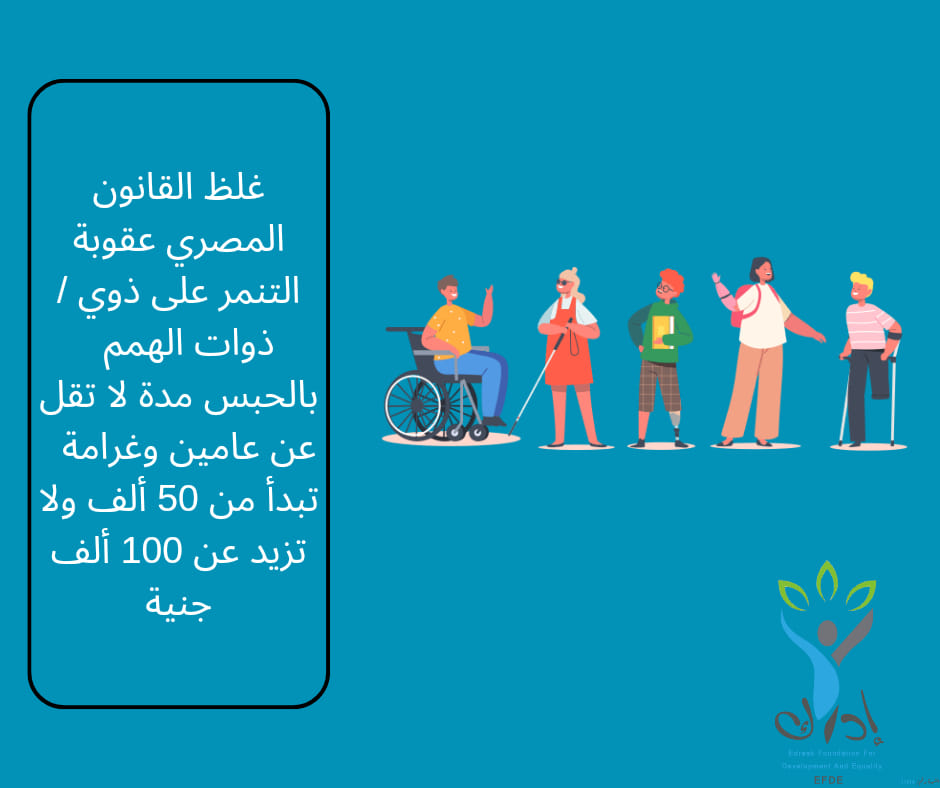
Women and girls with disabilities are often invisible and their ability to enjoy their human rights is limited compared to men and youth with disabilities. Discrimination against women and girls with disabilities is doubled, as they are discriminated against first for being a woman, and second for being disabled.

Through this campaign, Edraak Foundation sought to shed light on the suffering of women with disabilities in Egypt and the gender discrimination they face in society.

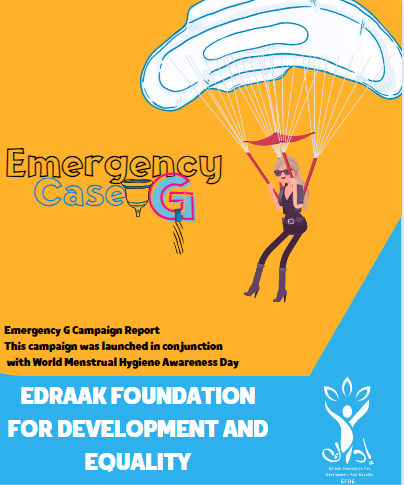
Emergency “G” Campaign Report

This campaign was launched in conjunction with World Menstrual Hygiene Awareness Day on May 28, 2023. The name of the campaign was chosen based on its recent popularity as a reference by girls and women to an important period in their lives, namely menstruation, and here we mean emergency G.

How can women access safe and healthy alternatives to sanitary pads in light of their exorbitant prices?

Our campaign aimed to shed light on the alternatives to sanitary pads that are available and at low cost and how we can use the alternatives safely and easily in a way that preserves our health and personal hygiene. The campaign reviewed the most famous sanitary pads alternatives in the Egyptian market, which products are available, their prices, where they are sold and how to use them and maintain their hygiene. The campaign also tackled the most famous myths about menstruation and sanitary pads alternatives. One of the most popular myths is that girls have to hide their menstrual products in a “brown-black bag” so no one can what is inside. This is based on the culture of shame that prevails in the Egyptian society.

To view the full findings of the campaign, please see the full leaflet in Arabic (for translated versions of the guide, please contact us): emergency-case-G-menstrual-pads-alternatives-newsletter-Ar-2023

Feminist Initiatives and Groups in Egypt

Digital feminist initiatives have played a key role in advocating for women’s issues in recent years, especially with regard to sexual violence and personal status. They have achieved many gains, specifically in raising awareness, increasing community acceptance, putting some issues on the agenda of decision-makers and achieving gains in favor of women. However, many of these initiatives face difficulties in completing their activities or accessing resources and ultimately, they often stop working.

Many women advocates who are active in primarily digital initiatives face challenges related to organizing their initiatives and/or their positions within the feminist movement. Despite the recent spotlight on several women’s issues concerning the digital sphere such as internet accessibility, the creation of safe spaces, advocacy spaces and cyber violence, the journeys of women advocates or activists who primarily rely on digital spaces for their advocacy efforts and overcome a number of spatial, political and economic barriers to form such initiatives and groups that remain digitally active to support and advocate for women, are rarely highlighted. This is what the Safe Link campaign and its outputs, including a Webinar, tried to tackle and work on.

To view the full campaign bulletin:_recommendation paper- feminist groups in the digital sphere in Egypt

Reducing Domestic Violence as an Entry Point to Social Security

The issue of domestic violence is very important because of the contradictions it holds between the function of the family that exists as an educational institution regulating the behaviors of its members within the framework of innate feelings of love and tenderness and the practice of various forms of violence within this institution. Domestic violence forms differ up to the point of psychological and physical abuse.

It is not a local phenomenon, but a global phenomenon. The study tries to explain what domestic violence is, its different forms and consequences. It further includes the status of domestic (family) violence in Egypt and the constitutional and legal framework surrounding it.

To view the full study in Arabic (for the translated version of the study, please contact us): Copy of الحد من العنف الأسري – مدخل إلى الآمن المجتمعى-1

Towards a legislation criminalizing child marriage

Counselor Dr. Moataz Mohamed Abu Zeid, Vice President of the State Council and lecturer of public law subjects, participated in the events of the campaign “Marriage with the mind, not the body.”

In this legal paper, Dr. Moataz talks about the phenomenon of child marriage and the reasons necessitating the issuance of a law to criminalize and punish child marriage as well as the scope of this criminalization and how the legal environment welcomes it. Finally, the paper emphasizes the social necessity to issue a law criminalizing child marriage in Egypt.

To view the full paper in Arabic (for the translated version of the legal paper, please contact us): نحو تشريع يجرم تزويج الأطفال