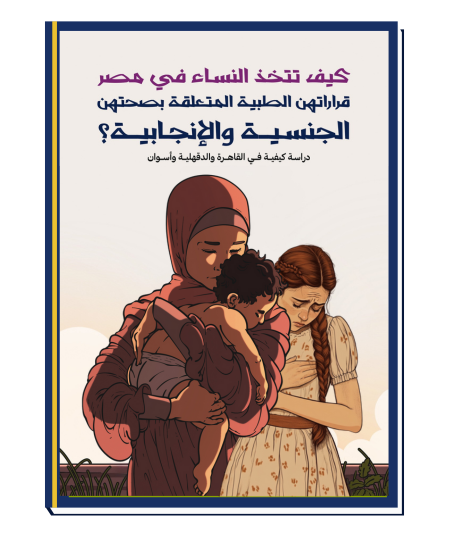
Edraak Foundation has released a qualitative study titled “How Do Women in Egypt Make Their Medical Decisions Regarding Their Sexual and Reproductive Health?” The study draws on the experiences of 135 participants through focus group discussions conducted across three governorates — Cairo, Dakahlia, and Aswan.
The research highlights the social, cultural, and economic factors that influence women’s health-related decisions, including family pressure, the concept of virginity, lack of sexual education, fear of stigma, and the dominance of healthcare providers in medical decision-making.
Findings reveal that the uterus is often perceived as part of a woman’s gender identity, that postponing treatment until after marriage remains common due to prevailing social norms, and that negative personal experiences within the healthcare system deeply affect women’s trust in health services.
The study recommends reforming the relationship between healthcare providers and women, enhancing sexual education, and empowering women to make informed decisions that respect their privacy, autonomy, and dignity.
📎 To read the study summary: How do women in Egypt make medical decisions regarding their sexual and reproductive health
Author: mohamed
A capacity building workshop for young women lawyers
Edraak Foundation for Development and Equality recently conducted a three-day workshop to strengthen the capacities of young women lawyers in providing support to women and girls survivors of violence. The workshop aimed to equip participants with essential skills and knowledge to deliver effective legal assistance and counseling to survivors.Day 1: Focused on the core concepts of human rights and women’s rights. The session was delivered by human rights lawyer Heba Adel.
Day 2 and Day 3: It focused on critical topics included: understanding gender, mapping women’s issues, the core principles of providing legal support to women survivors of violence. The sessions facilitated and delivered by human rights lawyer Aziza Al-Tawil.


Activity summary 2024
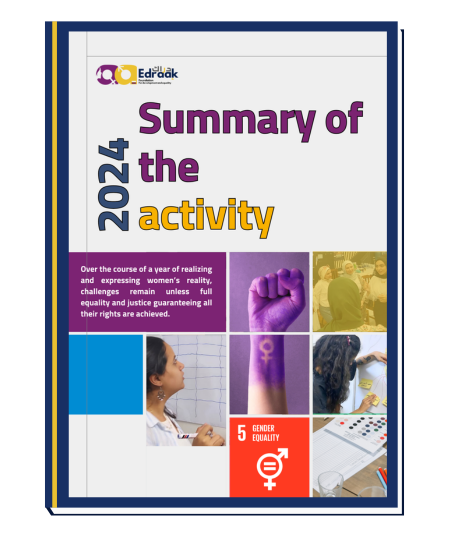
Edraak Foundation for Development and Equality presents a summary of its activities during the year 2024, where the Foundation issued the annual report of the Gender-Based Violence Crimes Observatory during the year, which is one of the mechanisms through which the Foundation monitors the rates of violent crimes directed against women and girls, in addition to many advocacy campaigns with a narrative of its national and regional efforts
:To read the activity summary
Campaign Report: ” Justice of our menstrual”
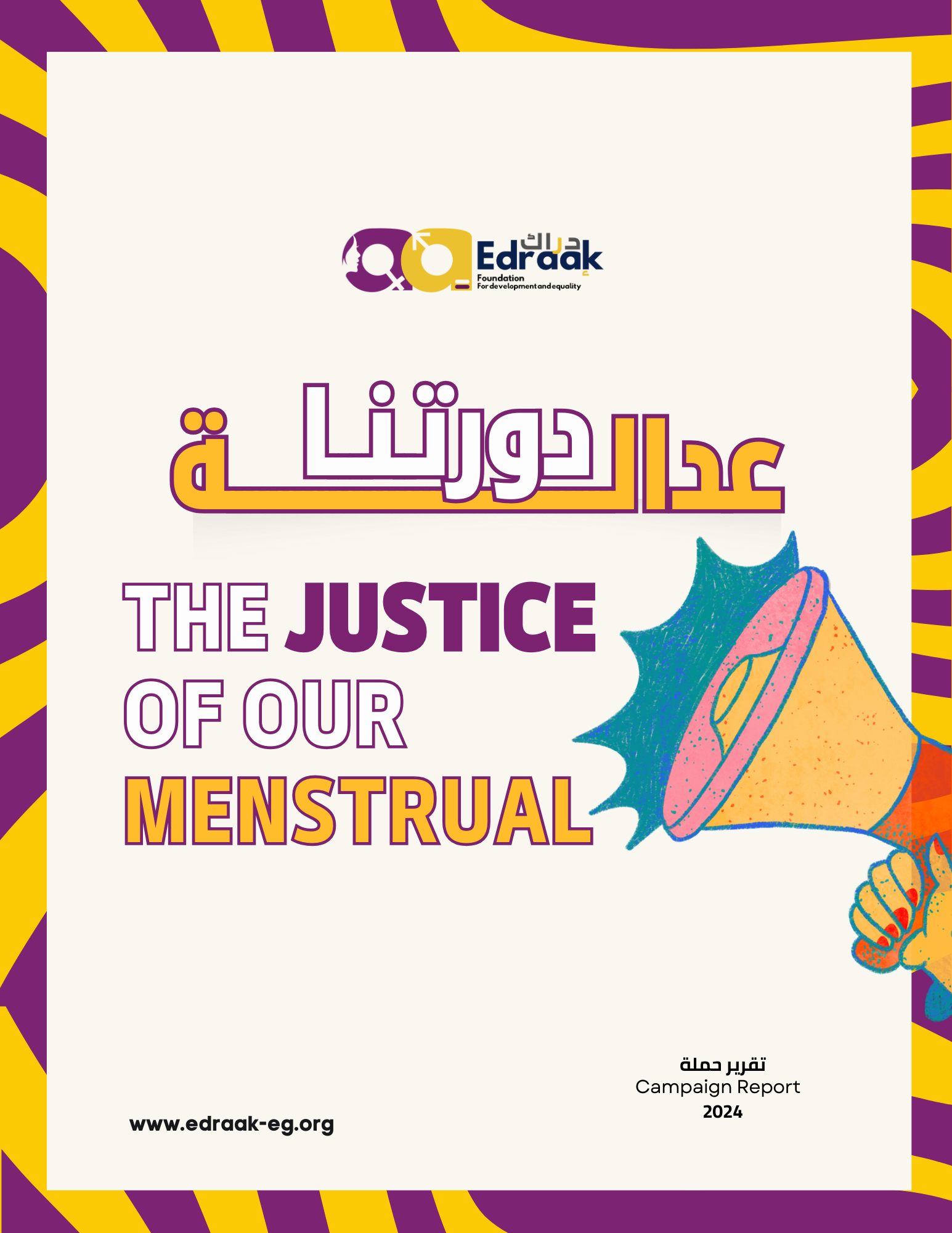
Edraak Foundation for Development and Equality continues its advocacy efforts for the International Day of Action for Women’s Health and Menstrual Hygiene Day by launching the ” Justice of our menstrual” campaign on May 24, 2024. The week-long campaign aims to raise awareness about the importance of adopting a comprehensive gender perspective in practices and legislation at the state, individual, institutional, and community levels. The goal was to achieve menstrual justice, considering it an integral part of health justice and to recognize that access to menstrual hygiene products and health information is a right for all women.
You can view the campaign’s activities in the following report: The Justice of our menstrual
Digital Feminist Movement: Approaches to Digital Advocacy for Feminist Groups
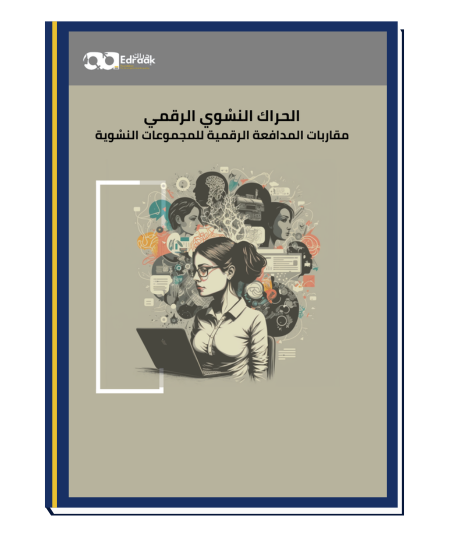
As the world evolves, so do its tools, with the internet being a pivotal one. The feminist movement in the Arab region has harnessed this tool effectively. Before the Arab Spring in 2011, feminist advocacy was largely limited to civil society organizations with a human rights orientation and individual efforts. The societal mobilization during and after the Arab revolutions highlighted issues like sexual harassment, as an entry point to talk about women’s rights, bringing neglected topics into the limelight. This digital activism has led to virtual initiatives that support and pressure the state and institutions to adopt progressive policies, shifting focus from mere damage control to preventing harm altogether.
In this paper, we will discuss the wave of feminist activism on various social media platforms, exploring its role in fostering intellectual change, the reasons for its adoption, the advantages and disadvantages of these platforms, the diverse cultures that have emerged from this activism, and the most notable hashtags and campaigns in the Arab region that have driven legal, intellectual, and societal change.
To view the paper, click on the following link: Digital Feminist Movement: A Digital Advocacy Approches
Guide – Integrating Gender Perspective in Parliamentary Work
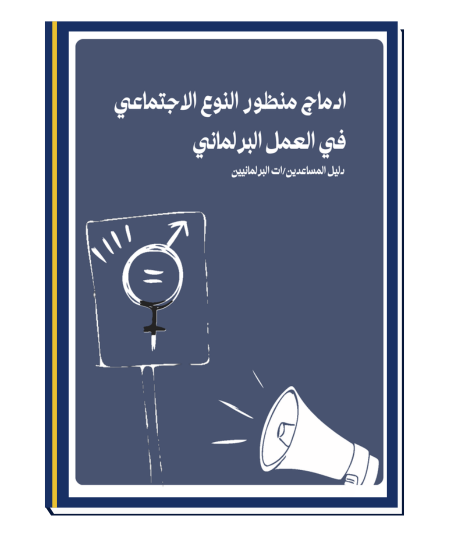
The presence and competence of parliamentary assistants are crucial for the efficiency of parliamentary work. Many countries have parliamentary assistants to aid MPs in performing their legislative duties, especially considering MPs represent the entire population and must address diverse, complex issues. The need for parliamentary assistants has emerged due to the difficulty of MPs familiarizing themselves with the details of all the issues they are working on. This could be due to both their limited time and the complexity of those issues, which require various technical expertise in each issue separately.
This guide focuses on the practical role of parliamentary assistants in advocating for gender equality through two main tasks: preparing fact sheets or background papers for MPs and drafting legislation with a gender-sensitive approach. It also provides a general framework on gender equality, power relations, gender-based discrimination and violence, and reproductive and sexual rights, alongside essential parliamentary concepts and tools. It further introduces the concept of reproductive and sexual rights, in addition to the basic concepts of parliamentary work, the formation of the House of Representatives, its monitoring and legislative tools, and its various roles.
For more details, please visit the following link: https://edraak-eg.org/wp-content/uploads/2024/06/%D8%AF%D9%84%D9%8A%D9%84-%D8%A7%D9%84%D9%85%D8%B3%D8%A7%D8%B9%D8%AF%D9%8A%D9%86-%D8%A7%D8%AA-1.pdf
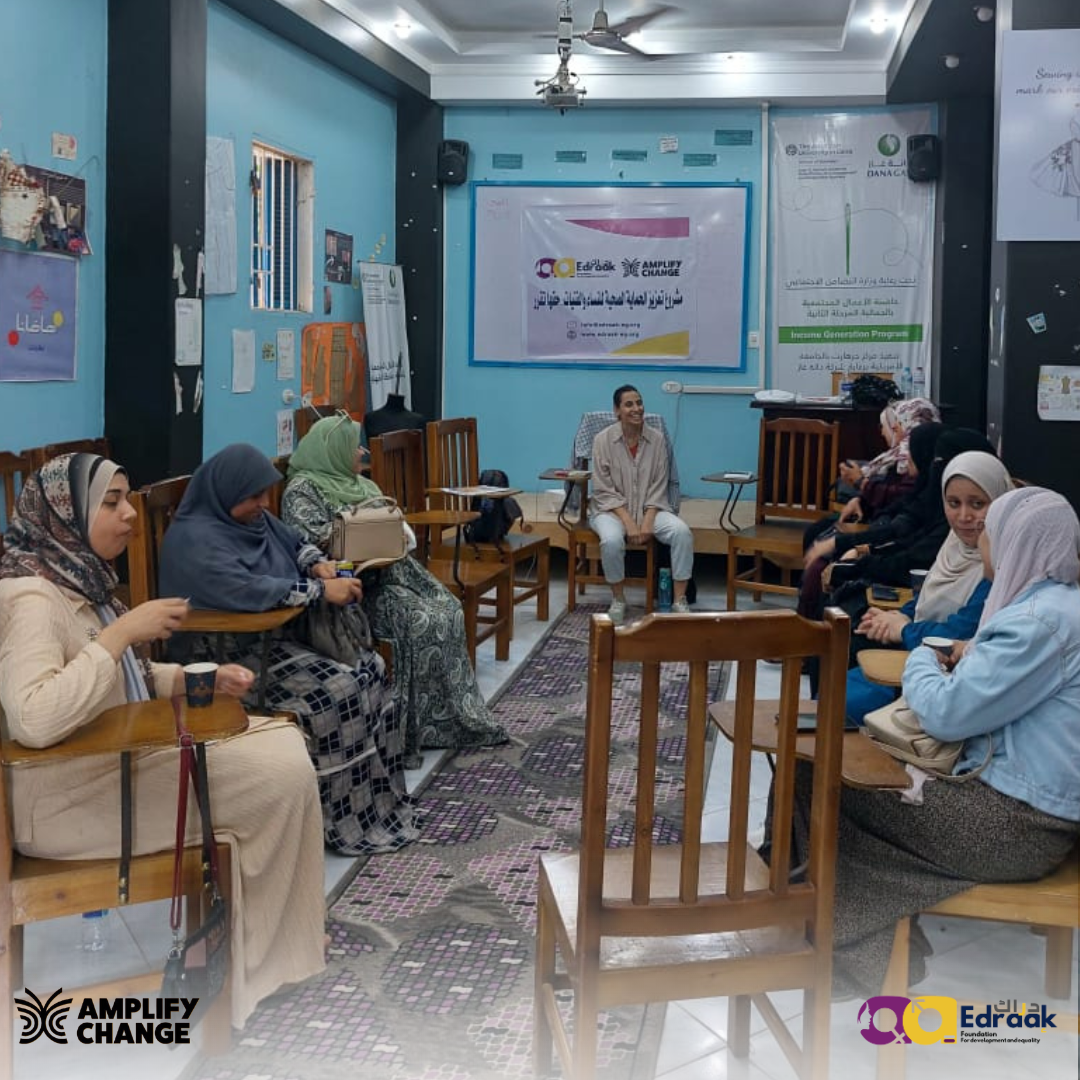
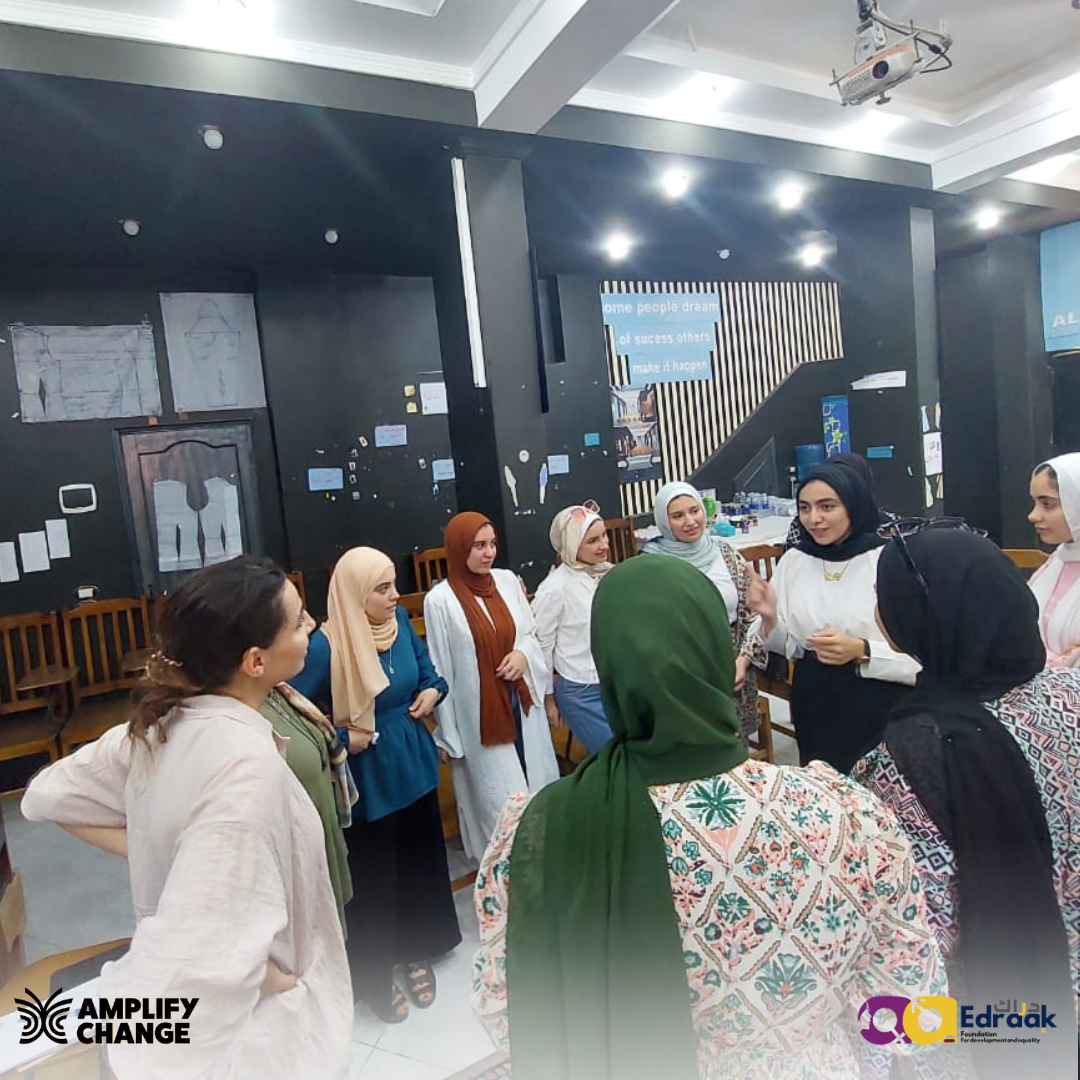
focus Groups to Understand the Relationship Between Women and Healthcare Providers


Marriage with the mind, not the body
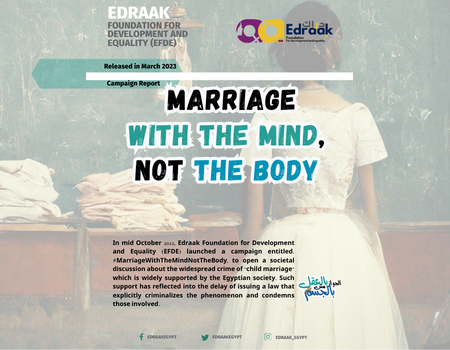
From September 2022 until the end of the 16 Days of Activism to Combat Violence Against Women activities in December 2022, Edraak Foundation for Development and Equality (EFDE) launched a campaign entitled #MarriageWithTheMindNotTheBody, to open a societal discussion about the widespread crime of “child marriage” which is widely supported in the Egyptian society, that consequently led to the delay of issuing a law that explicitly criminalizes the phenomenon and condemns those involved. The campaign’s primary aim is to mobilize for the issuance of legislation criminalizing child marriage in Egypt while shedding light on the efforts of civil society institutions and national councils that have been made over the years to combat the phenomenon of child marriage.
Background:
As part of its social responsibility to combat the crime of “child marriage” in Egypt, EFDE launched the “#MarriageWithTheMindNotTheBody” campaign intending to shape public opinion in favor of legislation criminalizing such crime and establishing effective executive mechanisms to protect girls and their rights.
The end of 2021 witnessed the first legislative action when MP ‘Enas Abdel Halim’ introduced the first clear and explicit legislation criminalizing child marriage. Despite the importance of this legislation in contributing to combatting such crime, it only gained attention in April 2022 after the government approved a draft law submitted to the Egyptian parliament on the criminalization of child marriage.
The first half of the following year (2022) saw a widespread movement, with positive steps taken by the Parliament in referring several draft laws submitted by MPs for discussion, aimed at criminalizing child marriage. These included the draft law submitted by MP ‘Amira Al-Adly’, which criminalizes the forcing of children into marriage with penalties for those involved. Additionally, there was the draft law by MP ‘Bilal Al-Baroulsi’, which sought to increase and aggravate the penalties for anyone inciting the commission of the crime of child marriage, as well as the one submitted by MP ‘Suhair Abdel Hamid’ regarding the legal capacity to marry.
The parliamentary movements coincided with the foundation’s efforts towards criminalizing child marriage. Through its campaign, the foundation sought to unify societal efforts in issuing legislation criminalizing child marriage in Egypt, which is one of the most important decisive factors in confronting this crime. Additionally, the campaign aims to shed light on the social and religious justifications that contribute to the prevalence of child marriage in society, as well as highlighting the efforts of civil society and governmental councils made over the years to combat this crime.
Campaign activities:
- We produced a number of infographics and comics on the cultural legacies and sayings that are told and taught to girls from a young age to persuade them to marry early.
- The campaign included a round table titled “Joint action and strengthening the efforts for criminalizing child marriage through legislation” which was attended by a number of parliament members who submitted draft laws to criminalize child marriage, representatives of development agencies in Egypt and a number of civil society practitioners who are interested in women’s and children’s issues, as well as representatives of a number of judicial and medical governmental bodies.
- One of the campaign’s outcomes was the publication of a legal paper by Counselor Moataz Abu Zeid – Vice President of the Egyptian State Council and Public Law Lecturer- entitled “Towards an effective movement to issue a law to criminalize child marriage.”
- Additionally, we were keen on engaging other initiatives and organizations to work on the campaign such as “Love Matters” and “Your Voice”. We held a number of discussion sessions via Zoom with a number of decision-makers, parliamentarians and Senate members, social media influencers, and activists working in civil society organizations, government research centers, and psychiatrists.
- Believing in the importance of unifying efforts to work on such issues, we highlighted the influential campaigns recently carried out by other organizations, such as the #Not_Before_18 campaign, the Egyptian Women Lawyers Initiative’s Campaign and New Woman Foundation’s Campaign.
- Furthermore, we produced a series of graphic stories depicting documented cases of child marriage from the “Violence Against Women Crimes Observatory” in 2021, which tragically ended with the victim’s murder or marriage disownment. These stories portray real-life accounts of girls and women who were either killed or committed suicide due to being married off or forced into early marriages, sourced from the observatory’s report.
- The campaign also included a number of written articles on the legal, social and economic implications of child marriage, and was concluded with an article by journalist “Esra Saleh”, titled “How do minor girls learn about marital sexual relations?” that was published on “Al Manassa” platform where it received great interaction and various feedbacks.
To view the full campaign flyer: child marriage campaign – Newsletter Ar october 2022 (1)
For more information on the campaign: newsletter_Marriage with the mind, not the body advocacy campaign En (1)
SafeComm4women
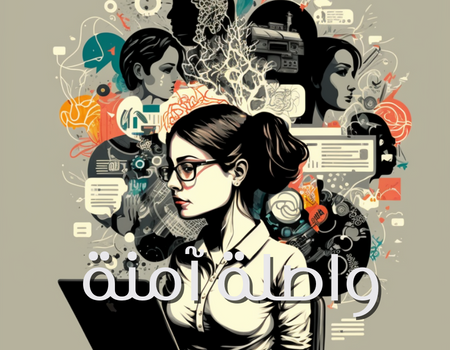
In celebration of International Women’s Day on 8 March 2023, Edraak Foundation for Development and Equality (EFDE) launched the “#SafeComm4women” campaign, which extended until the 20th of March and engaged with the CSW67 theme “Innovation and Technological Change and Education in the Digital Age for Achieving Gender Equality and the Empowerment of All Women and Girls.”
Technology and digital spaces have empowered women in Egypt and the MENA region at several levels. In many societies where women and girls experience restrictions on their fundamental rights, internet access and opportunities brought by digital spaces have supported them in overcoming these restrictions and challenges. Many women in our communities still struggle to travel, go out to work, access educational opportunities, or participate actively in the public sphere. Internet access has enabled them to communicate, learn, work, build networks, and create “safe” spaces to discuss their issues and tell their stories. Feminist movements have also benefited from digital tools and spaces in reaching women everywhere and overcoming many challenges related to resources and organization.
Despite all the gains and since digital spaces are an extension of people’s behavior and culture in the actual sphere, digital spaces have also been a room for exposure to GBV, discrimination, and imbalance in power relations. Accordingly, women are exposed to violence and discrimination regarding equal and safe access to the digital sphere. Therefore, women’s rights defenders in the MENA region are working extensively to raise awareness, advocate for women’s rights on safety and security in digital spaces, and push for more responsive policies and services that support women against GBV in the digital sphere.
Consequently, EFDE has launched this campaign to shed light on violence against women in the digital sphere and to highlight the significant role of digital feminist groups and women’s rights defenders (WHRDs) who mainly rely on digital tools and spaces in their work and the challenges they face to sustain their activities. The campaign also aims to reflect the reality of their efforts and the digital feminist initiatives and groups in Egypt. This included posting of real cases of violence against women related to the digital sphere (cyber violence against women), visual materials, and infographics on the context-related statistics and percentages from our VAW Crimes Observatory, a webinar on the reality and future of digital feminist groups in Egypt and tweeting about the achievements and challenges of advocating women’s rights in the digital sphere as well as presenting the different definitions of digital violence and the methods of assistance that women can resort to.
For more information, please visit:
newsletter- SafeComm4women webinar, activites & recommendations -March 2023 En